What a backup system covers
Our solar backup installation service is aimed at keeping the lights on, the fridge cold and essential equipment running when the supply drops out. In many Kimberley homes and small businesses, that means a battery bank, inverter, changeover protection and a solar array sized to suit the daily load. For pump support, we can also set up systems that help with borehole or pressure pump operation, subject to the starting current and duty cycle of the pump.
We work with compact systems for a few circuits and larger setups for offices, shops, guesthouses and agricultural use around the Northern Cape. If your priority is backup during load-shedding, the design is different from a full daytime solar arrangement, so we look at both the essential load and how long you want it to run.
- Lights, routers, gates and CCTV support
- Fridges, freezers and selected plug circuits
- Pump backup for short duty cycles
- Solar charging for daytime battery recovery
Equipment we supply and fit
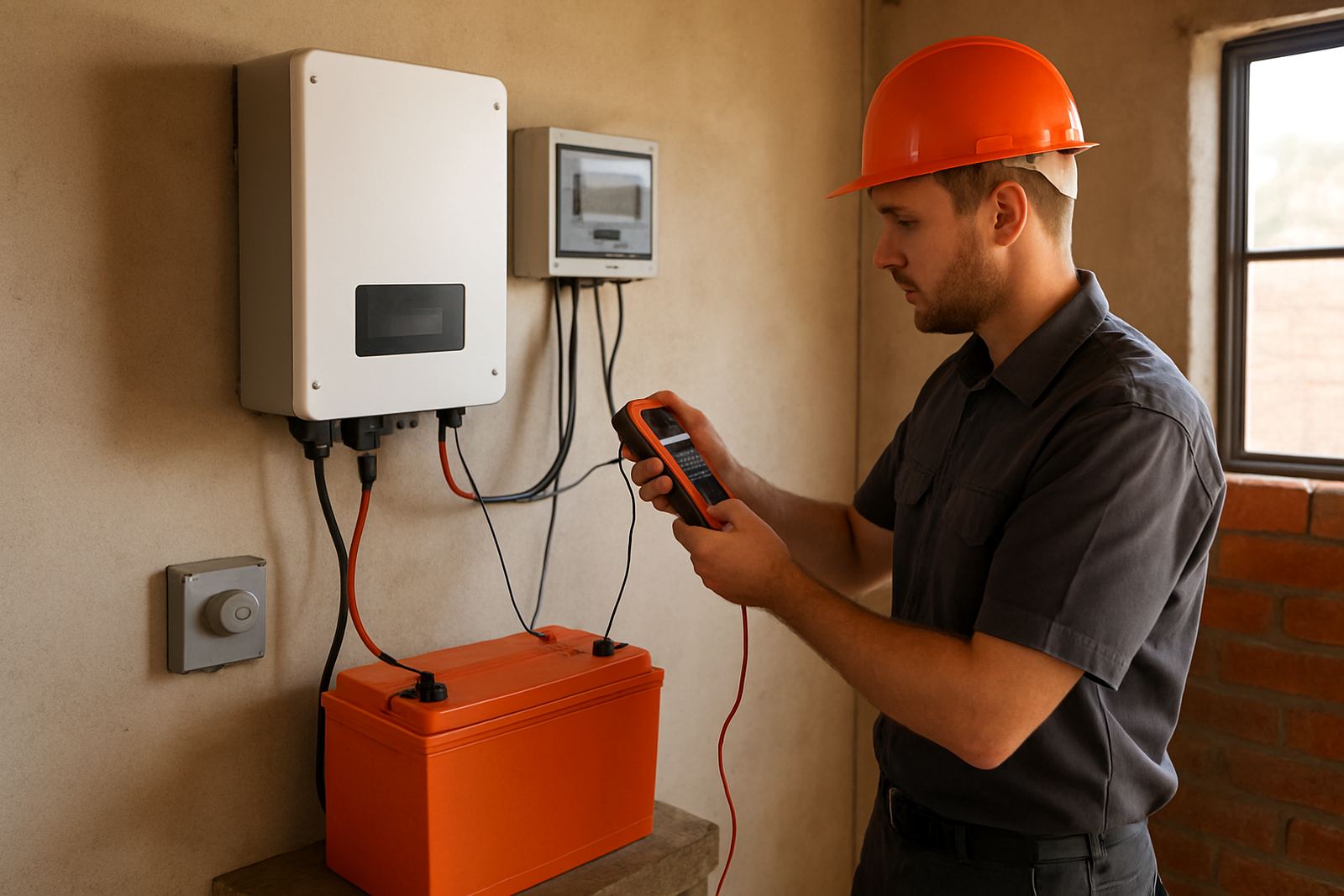
We supply and install the core parts needed for a clean and safe backup setup. That usually includes lithium or lead-acid batteries, a hybrid or off-grid inverter, DC isolators, breakers, surge protection, mounting gear and cabling sized correctly for the load. Where roof space allows, we fit solar panels on suitable brackets and align the array for solid daytime charging in the Kimberley sun.
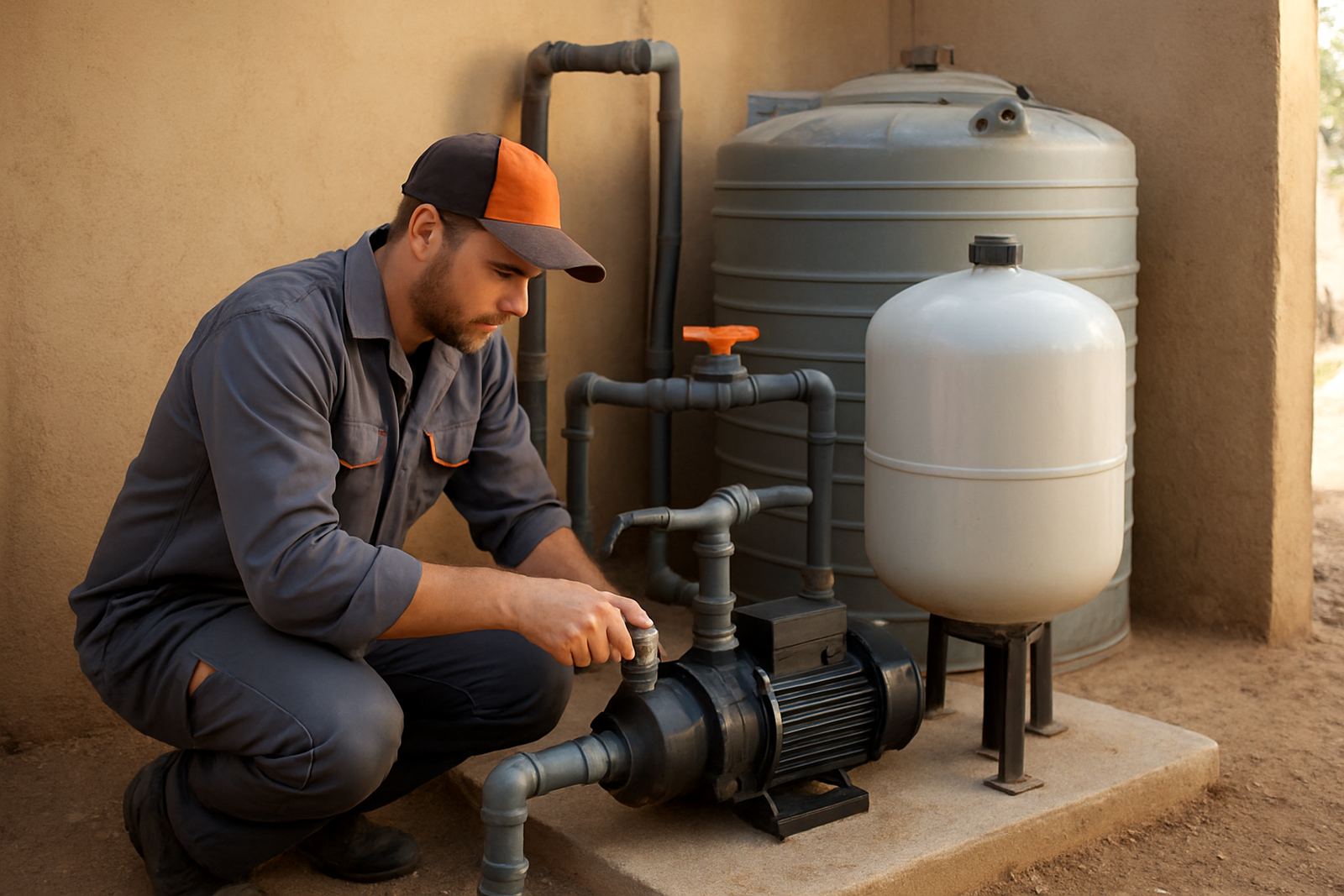
For pump support, we check motor rating, start-up surge and cable distance before recommending any equipment. A 750 W pump is not the same as a 1.5 kW unit, and the wrong inverter size will trip out fast. We also look at heat, dust and ventilation around the battery location, especially in a workshop or plant room.
- Inverters from 3 kVA to 8 kVA for small and medium sites
- Batteries from 5 kWh to 20 kWh, depending on runtime target
- PV arrays from 2 kW to 8 kW for backup charging
- Surge and overcurrent protection on AC and DC sides
How we plan the installation
We start with a load assessment. That means checking which appliances or circuits must stay on, how much power they draw and how long you want support during outages. We then match the inverter, battery storage and panel count to the budget and the site conditions. If you are running a pump, we also note whether it starts direct-on-line or with soft start controls.
Once the design is agreed, we schedule the installation, position the equipment, run cabling and label the circuits. After that we commission the system, test changeover and confirm charging performance. If municipal or landlord approval is needed, we can assist with the information required for the application, because in some buildings the fitting point and cable route matter as much as the equipment itself.
- Load survey and site check
- Equipment selection and quotation
- Installation, testing and handover
- Basic user training for safe operation
Typical turnaround in Kimberley and nearby areas
Smaller backup jobs can often be turned around within a few working days once stock is confirmed and the site is ready. Larger systems, or jobs that need roof work, additional circuits or pump integration, may take longer. In busy periods after major outages, lead times can stretch a bit, so it helps to book early.
We cover New Park, Roodepan, Galeshewe and the wider Kimberley area, plus Kuruman and Upington by arrangement. For remote sites, we factor in travel, access, and whether there is proper storage for batteries and panels before arrival. That keeps the job moving and avoids delays on installation day.
- Small backup systems: often 2 to 5 working days
- Medium systems with solar panels: usually 1 to 2 weeks
- Remote or multi circuit jobs: scheduled after site check
Pricing that matches the actual load
We do not price solar backup by guesswork. The quote depends on inverter size, battery capacity, panel count, cable lengths, protection gear and the amount of labour required. A simple backup system for a few circuits costs less than a setup that must carry fridge, lights and a pump, so we quote from the site data rather than a one-size-fits-all figure.
For customers comparing options, we can price good, better and best configurations. That helps you see the difference between pure backup and a system that also reduces daytime grid use. If you need the installation split into stages, for example batteries first and panels later, we can plan that too.
- Fixed quote after load check and site assessment
- Options for staged installation
- Clear breakdown of equipment, labour and protection items
Maintenance to keep the system ready
Backup systems need less upkeep than generators, but they still need attention. We recommend a check every 6 to 12 months, depending on dust, heat and how often the system cycles. In Kimberley conditions, terminals, filters and ventilation points should be inspected regularly, and batteries need monitoring so you catch problems before they become costly.
During a service visit we check battery health, torque on terminals, inverter error logs, panel output where fitted, and the condition of isolators and breakers. If the system supports a pump, we also confirm that the motor start is still within limits. A small loose connection can create heat and nuisance tripping, so routine checks matter more than most people think.
- Battery and cable inspection every 6 to 12 months
- Panel cleaning when dust build-up reduces output
- Firmware and settings check during scheduled servicing
Key facts
| Typical system size | 3 kVA to 8 kVA inverter with 5 kWh to 20 kWh battery storage |
|---|---|
| Battery options | Lithium or lead-acid, selected for runtime and cycle life |
| Solar array range | 2 kW to 8 kW depending on roof space and charge needs |
| Best for | Load-shedding backup, fridges, lights, routers and pump support |
| Site coverage | Kimberley, New Park, Roodepan, Galeshewe, Kuruman and Upington |
| Service interval | 6 to 12 months, depending on dust, heat and usage |