What our refrigeration repairs cover
We repair commercial refrigeration systems used in shops, restaurants, butcheries, bottle stores, schools and small industrial sites. That includes cold rooms, freezer rooms, upright display fridges, underbar fridges, prep counters, ice machines and package units. If the unit is not holding temperature, icing up, cycling too often or running flat out, we can trace the cause and sort the repair.
Common faults in Kimberley include blocked condensers from dust, damaged door seals, low refrigerant charge, failed contactors, noisy fans, worn compressors and control issues after power dips. In hotter months, a unit that should hold 2°C to 5°C can struggle if airflow is poor or the door is opening too often. We look at the full system, not only the obvious symptom, because a quick gas top-up without checking the leak just brings the same problem back.
- Leak checks and refrigerant fault finding
- Compressor, fan motor and relay repairs
- Thermostat, controller and sensor replacement
- Door seal, hinge and closure adjustments
- Electrical fault tracing on starters, contactors and protection devices
- Defrost system repairs for ice build-up and poor recovery
Our fault finding process on site
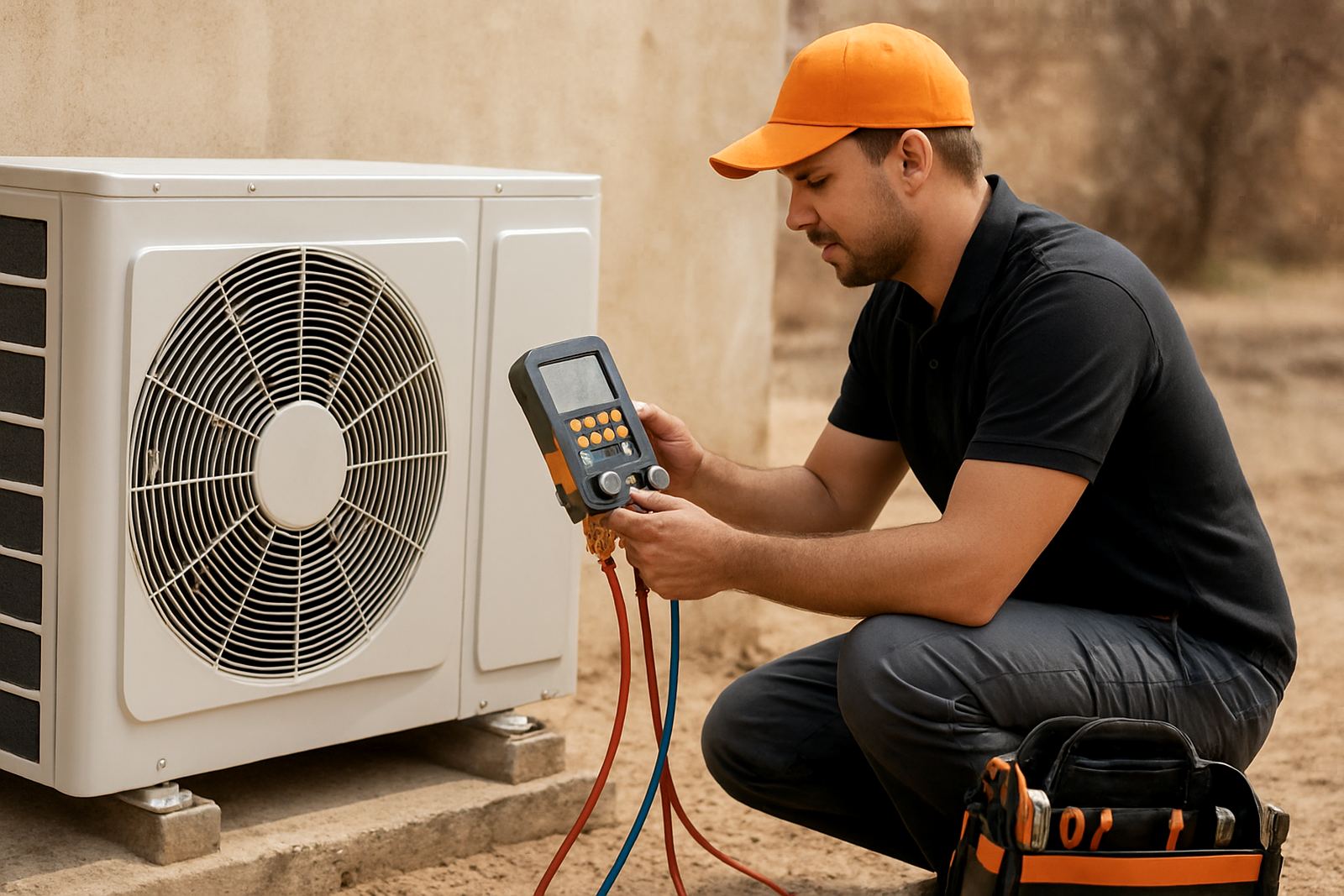
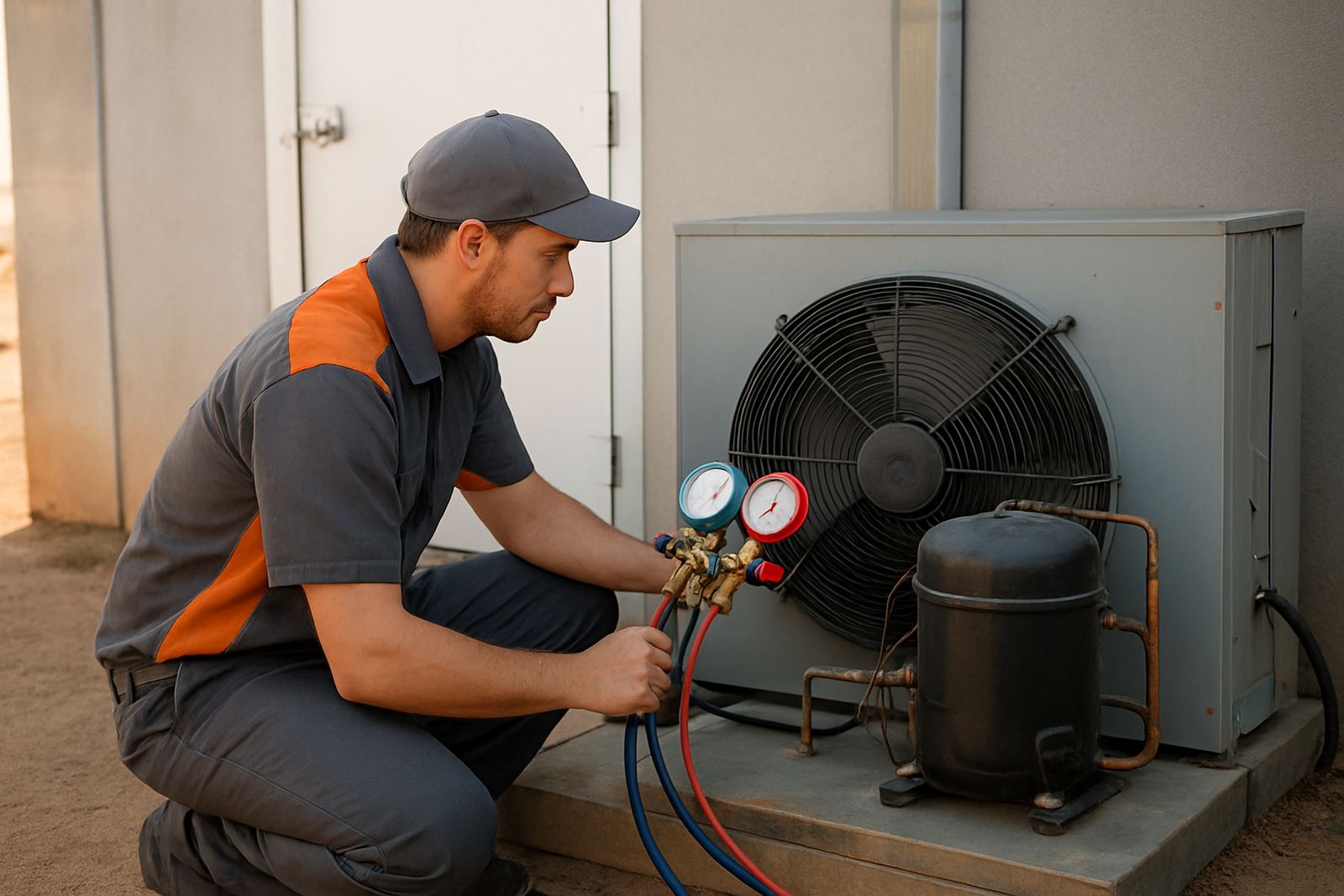
We start with a visual check, a discussion about the symptoms and a review of recent issues such as trips, warm spots or product spoilage. Then we measure operating temperatures, suction and discharge pressure where relevant, inspect airflow, and test the electrical components. This helps us decide whether the issue is mechanical, electrical or related to installation conditions.
For cold rooms, we also check the room size, insulation condition, door usage, evaporator condition and any signs of water ingress. A 6 m by 4 m room with a busy delivery schedule will behave differently from a small storage room used twice a day, so we match the repair to the real working conditions. If a repair can be completed on site, we do that. If the unit needs workshop attention, we remove the affected part and advise on the next step before work continues.
- Initial inspection and temperature readings
- Pressure tests and leak detection where needed
- Component testing with multimeter and meter clamp checks
- Repair recommendation with parts and labour breakdown
- Final test run under load before handover
Parts, tools and repair standards
We carry common refrigeration spares and service parts for the units we see most often in the Northern Cape. That includes contactors, overloads, capacitors, thermostats, defrost timers, fans, valves, filters, sensors and wiring components. When a compressor, controller board or specialised valve is required, we source it and confirm compatibility before fitting. This avoids mismatched parts and repeat call-backs.
Our workshop is set up for practical repair work, pressure testing and evacuation checks. Where gas work is needed, we follow the correct recovery, leak repair and recharging procedure, then verify superheat, subcooling and temperature pull-down. We also check that drain lines are clear and that the cabinet or room is not losing cold through obvious air leaks. Small issues like a warped seal or a blocked drain can push energy use up quickly, especially in summer.
- Common spares kept for fast turnaround
- Recovery and recharge procedure followed where refrigerant work is required
- Electrical components tested before replacement
- System performance checked after repair
Turnaround times for Kimberley and beyond
For sites in New Park, Roodepan, Galeshewe and central Kimberley, we aim for quick attendance during working hours, subject to the job queue and the fault type. Simple electrical faults, fan replacements and seal repairs can often be completed the same day if the parts are available. More involved jobs such as leak repairs, compressor swaps or cold room controller faults may take longer, particularly when the equipment needs to be isolated and tested carefully.
For Kuruman, Upington and outlying Northern Cape areas, we plan repairs in a way that limits return trips and avoids wasting your trading time. If the equipment is critical to stock holding, tell us the room size, temperature target and any recent changes. That helps us arrive with the right spares and tools. We would rather do one proper visit than keep coming back for the same fault.
How we price refrigeration repairs
Pricing depends on the fault, access, parts required and whether the job can be completed on site. We quote on a case by case basis after diagnosis, because two fridges with the same symptom can need very different repairs. A failed sensor and a leaking evaporator are not priced the same, and it would be unfair to pretend otherwise.
Our approach is straightforward: assessment, findings, repair plan, then approval before major work continues. Where a client needs to compare options, we can separate labour, call-out, consumables and parts. For businesses managing stock loss, it is usually cheaper to repair early than to let a unit run inefficiently for weeks. A compressor working against a dirty condenser can cost more in electricity and breakdowns than the actual repair itself.
Maintenance intervals that reduce breakdowns
Refrigeration equipment in the Northern Cape needs regular attention because dust, heat and door traffic all shorten service life. For most commercial systems, we recommend a basic service every 3 to 6 months, with more frequent checks for busy cold rooms, butchery fridges and display units that run all day. If the site is near a dusty yard or has frequent power interruptions, shorter intervals make sense.
A proper maintenance schedule should include coil cleaning, fan checks, drain clearing, seal inspection, electrical testing and temperature verification. Cold rooms also need door alignment checks and an inspection of the insulation edges, especially where the room is opened many times a day. Regular servicing helps keep product temperatures stable, cuts compressor strain and gives you time to plan repairs before a full breakdown. It is a small cost compared with spoiled stock or an emergency after-hours call.
- Display fridges: every 3 to 4 months
- Cold rooms and freezer rooms: every 4 to 6 months
- High-use food sites: monthly visual checks, quarterly service
- After load-shedding or power dips: inspect controls and restart performance
Key facts
| Service area | Kimberley, New Park, Roodepan, Galeshewe, Kuruman and Upington |
|---|---|
| Equipment covered | Cold rooms, display fridges, freezer rooms, prep counters, ice machines and related refrigeration equipment |
| Typical temperature checks | Chilled storage usually 2°C to 5°C, frozen storage typically -18°C to -22°C |
| Repair methods | Leak detection, component replacement, electrical fault tracing, evacuation, recharge and performance testing |
| Turnaround | Same-day for simple faults when parts are available, longer for leak or compressor work |
| Maintenance interval | Every 3 to 6 months, with shorter intervals for dusty or high-use sites |