What our pump repair service covers
Our pump repair work covers a wide range of water transfer and pressure systems used in Kimberley, Roodepan, Galeshewe, Kuruman and Upington. We deal with pumps that have stopped starting, are losing pressure, running hot, tripping breakers, making noise or cycling too often. We also check the parts around the pump, because many faults are in the controls, seals, pipework or fittings rather than the pump body itself.
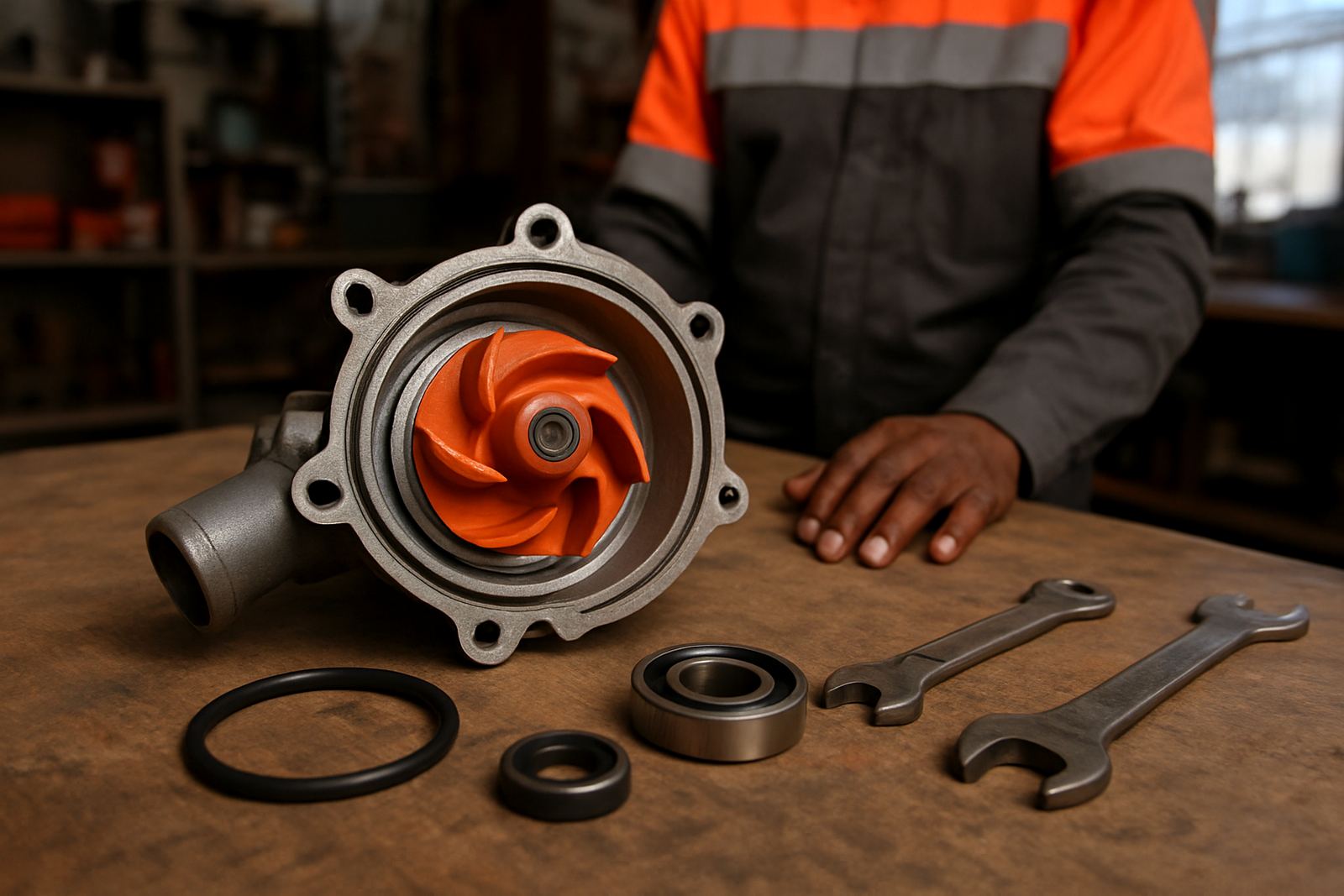
Depending on the unit, we can inspect centrifugal pumps, pressure pumps, booster sets, submersible pumps, borehole-related accessories and small irrigation pumps. We test switches, capacitors, pressure switches, non-return valves, float switches, wiring, bearings and mechanical seals. If the issue is electrical, mechanical or caused by installation problems, we will say so plainly and suggest the right fix.
- Fault finding and strip-down inspection
- Seal, bearing and impeller replacement where suitable
- Control and starter checks
- Pressure switch and float switch testing
- Pipe, valve and fitting checks
How we diagnose pump faults
We start by asking how the pump behaved before it failed. That tells us a lot. A pump that lost pressure overnight is different from one that was dry-run on a hot day, and a unit that trips as soon as it starts points to another set of causes. In the workshop, we test the pump under controlled conditions so we can separate a weak motor from a blocked impeller or a worn seal.
Our team also looks at the installation itself. In the Northern Cape, we often see suction lines drawing air, poor foot valve seating, undersized piping, loose fittings and power fluctuations from load-shedding or unstable supply. A pump can be repaired properly and still fail again if those issues are left in place. That is why we check the full system, not just the pump housing.
- Visual inspection for leaks, scorch marks and wear
- Electrical checks on cables, terminals and protection devices
- Pressure and flow assessment where practical
- Mechanical inspection of bearings, shaft and seal surfaces
Repair process from drop-off to testing
Most repairs follow a simple process. You bring the pump to our New Park workshop, or we assess it on site when the situation calls for field support. We record the fault, open the unit if needed, and confirm which parts can be reused and which parts must be replaced. If parts are available locally, turnaround is usually quicker. If special items must be sourced, we will tell you upfront so there are no surprises.
Once the repair is complete, we bench test the pump where possible. That includes start-up, current draw, pressure build-up and leak checks. For systems with controllers or pressure vessels, we also verify that the cut-in and cut-out settings make sense for the site. Before handover, we explain what failed and what the owner should watch for next time.
- Intake and fault logging
- Strip, repair and parts replacement
- Reassembly and bench testing
- Handover with practical feedback
Turnaround times and pricing approach
Turnaround depends on the fault and parts needed. A basic pressure switch change or wiring repair can be handled quickly, while a pump with a worn shaft, damaged windings or severe rusting may take longer. On average, simple workshop repairs are handled in a few working days, while more involved jobs can take longer if parts must be ordered. We give a realistic time line, not a hopeful one.
Our pricing is based on the actual work required. That means an inspection fee where applicable, labour for repair, and parts at the correct specification. We do not guess at a quote on a complicated fault. We inspect first, then price the job clearly. If a repair is uneconomical, we will say so and help you compare repair versus replacement so you can make the right call for the site and budget.
When pump repairs are worth it
Repairs often make sense when the motor is sound, the casing is usable and the fault is limited to seals, bearings, switches or controls. That is common on pumps in homes, small businesses, irrigation lines and workshop water systems. If the unit has a cracked casing, burnt windings and heavy corrosion, replacement may be better value. We look at the age, duty cycle, water quality and whether the pump has been overloaded or installed badly.
In the Northern Cape, water quality and dust can shorten service life, especially on systems that run daily. High mineral content can cause seal wear, while poor ventilation around the motor can lead to overheating. If a pump is being used for borehole water, garden supply, tank transfer or pressure boosting, the operating conditions matter just as much as the brandless hardware itself.
Preventative maintenance for longer service life
Most pump failures do not happen without warning. They usually start with small signs such as pressure drop, extra noise, longer running times or the motor getting warmer than normal. A planned maintenance visit can catch those issues early and save a full shutdown. For properties that depend on steady water supply, this is especially important during load-shedding or after mains interruptions.
Typical maintenance intervals depend on use. A lightly used domestic pump may only need a check every 6 to 12 months, while a farm, commercial property or pressure system running daily should be looked at more often. We recommend regular inspection of the strainer, pressure settings, seals, electrical connections and pipe supports. It is a small effort compared with an unexpected failure at peak demand.
- Inspect seals and joints every 6 months on busy systems
- Check pressure switches and vessels at least yearly
- Clean strainers and pump housings when sediment builds up
- Test electrical protection after power interruptions
Key facts
| Pump types serviced | Centrifugal, booster, submersible, pressure and small irrigation pumps |
|---|---|
| Faults handled | No-start, low pressure, overheating, tripping, leaks, noise and cycling |
| Workshop testing | Bench checks for start-up, current draw, pressure build-up and leaks |
| Common parts | Seals, bearings, capacitors, switches, valves, impellers and fittings |
| Turnaround | Simple repairs in a few working days, complex jobs subject to parts availability |
| Service area | Kimberley, New Park, Roodepan, Galeshewe, Kuruman, Upington and nearby areas |