What the Roodepan client needed
The brief came from a family home in Roodepan, Kimberley, where the main concern was summer heat and the usual Northern Cape power interruptions. They did not want a noisy generator running at night, and they wanted a practical setup that could keep selected lights, plugs, internet and a cooling system going without constant attention.
The homeowner also wanted lower running costs over time. That meant a solar and battery arrangement sized for daily use, not just a quick emergency patch. We worked around a normal residential roof, limited yard space and the fact that the household still needed to live in the property while the work was done. The family asked for something tidy, safe and easy to explain to anyone using it, including older relatives and school children.
Site limits and planning for a Kimberley home
Roodepan homes can vary quite a bit, and this property had a few practical limits. Roof orientation was not ideal for full afternoon sun, there was some shading from nearby boundary structures, and the existing distribution board needed careful checking before any new circuits were added. Summer temperatures in Kimberley push cooling gear hard, so we also had to think about duty cycle and not just power capacity.
Before we started, our team checked the likely load during the evening peak, the start current of the cooling equipment and the space available for battery mounting and protection. We also made sure the homeowner understood which appliances could run together and which should be staggered when the grid was down. That conversation matters because a battery bank can be drained quickly if someone switches on a kettle, iron and cooler at the same time.
- Location: Roodepan, Kimberley
- Property type: Private family home
- Main concern: Summer cooling and backup during load shedding
- Constraint: Limited roof space and existing electrical layout
What we supplied and installed
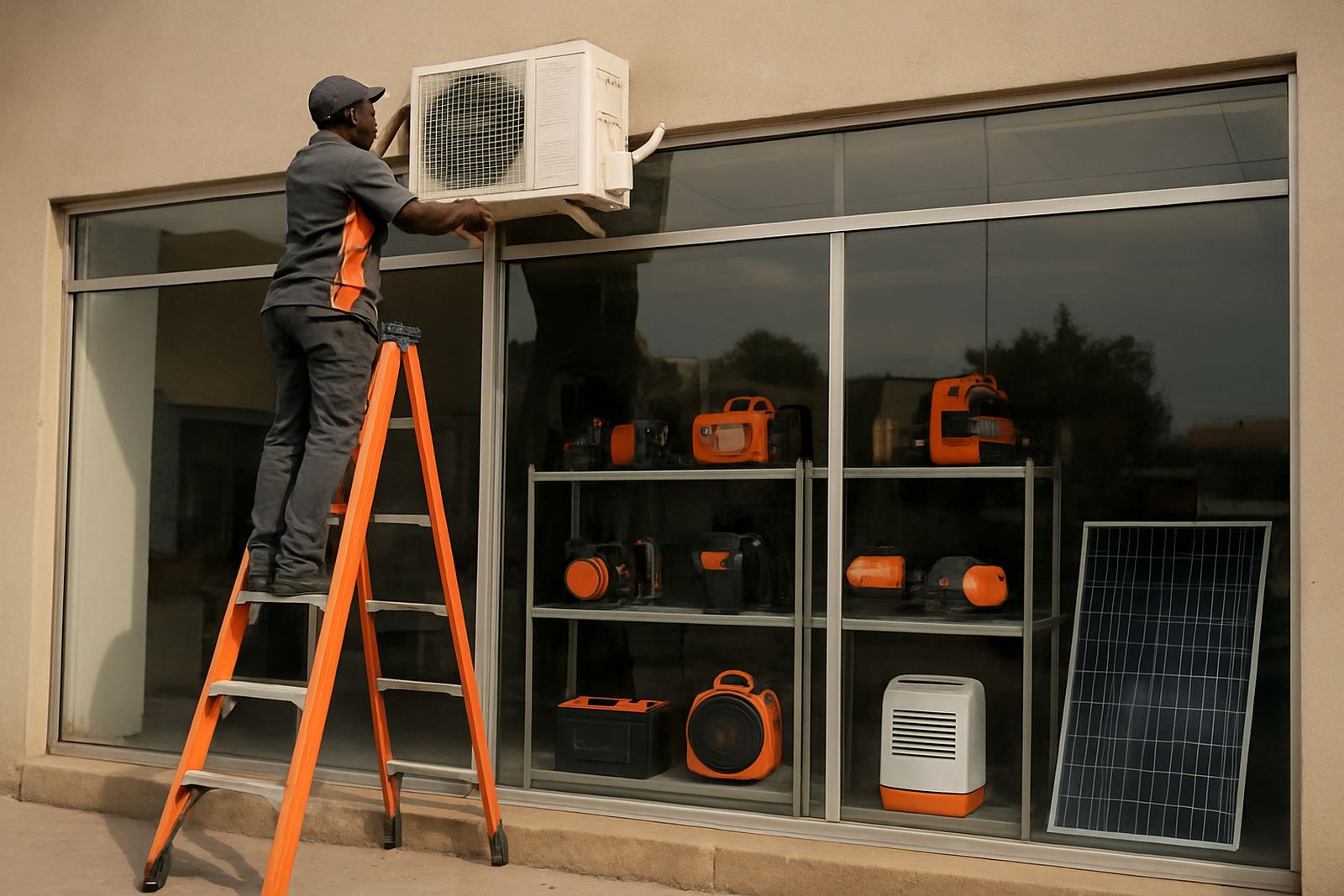
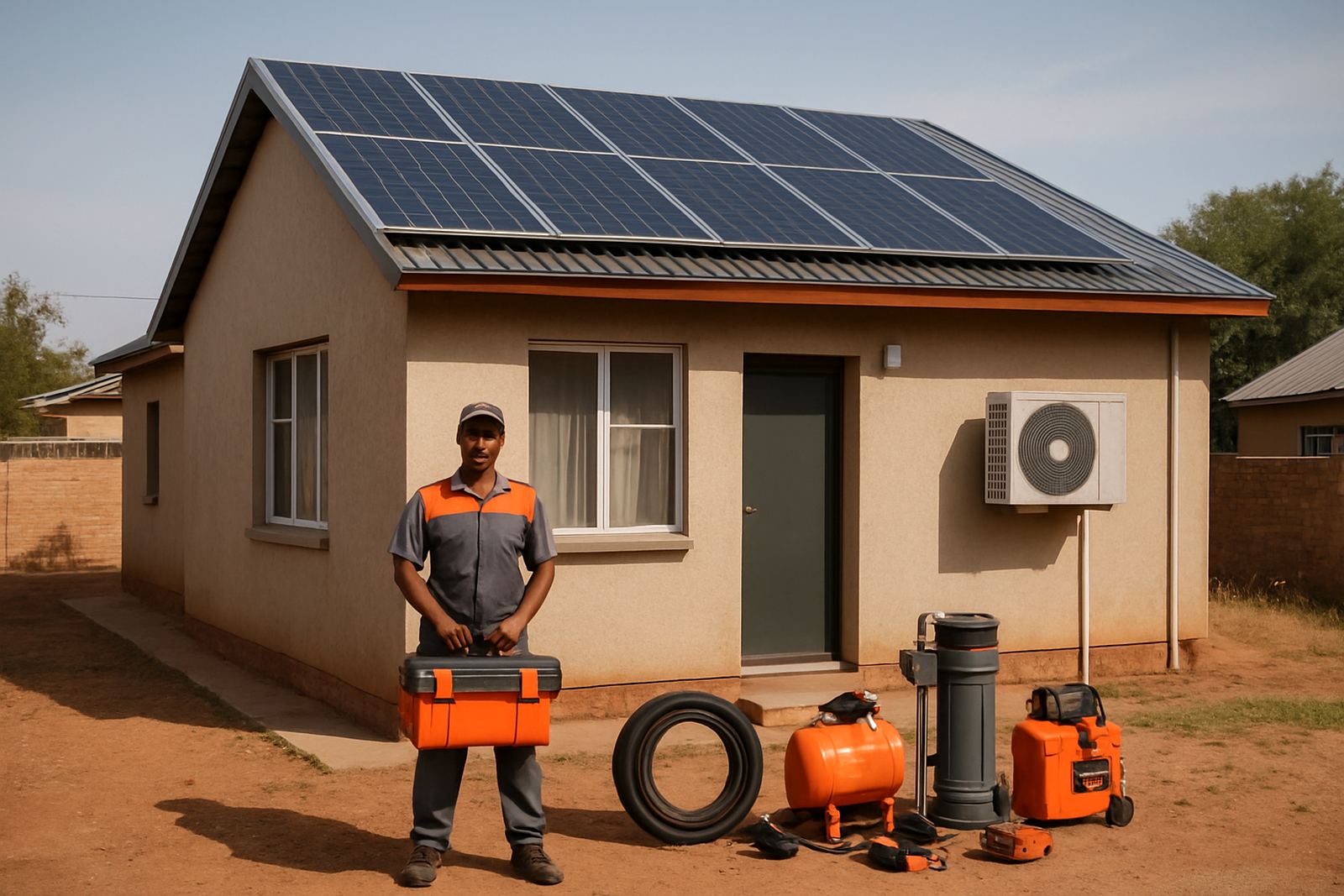
We supplied a residential solar backup package with battery storage, changeover protection and efficient cooling equipment sized for home comfort. The system was built to support day-to-day living essentials and reduce dependence on the grid during outages. We also fitted the cooling side so the family could get real relief in the hottest rooms without oversizing the whole setup.
On the electrical side, we installed the inverter, battery bank, solar panels, isolators, protection gear and labelled the circuits so the load was easy to manage. On the comfort side, we supplied and commissioned a high-efficiency air-conditioning unit matched to the room size, rather than forcing a larger unit to cycle too often. That gave better comfort and lower power draw. The battery system was configured for sensible depth of discharge and an automatic switchover that kept the home running when the supply dropped.
- Solar array: 4.5 kW installed capacity
- Battery storage: 10 kWh usable capacity
- Backup circuits: lights, plugs, internet and cooling
- Cooling: 1 inverter-driven room unit sized for the main living area
How the work ran over three weeks
The full job took three weeks from site check to handover. Week one covered assessment, measurements and final load planning. Week two was for supply, mounting and the main electrical installation. Week three was commissioning, testing and explaining the system to the family. We kept the work staged so the home remained usable and there was no long stretch without power to important areas.
Our workshop and field teams stayed in step through the job. Charlene handled parts and stores so fittings and protection items were on site when needed, while Thabo handled the field-side work and final checks. Pieter supervised the workshop prep, and Ayanda coordinated the sequence so the backup gear and cooling installation did not clash with the household routine. It sounds simple, but that planning saves time and avoids repeat visits.
One thing we always watch for in residential work is a tidy finish. Cables need to be clipped properly, labels need to make sense and the changeover arrangement should be easy enough for the homeowner to follow without guesswork. The final result was neat and practical, with the battery and inverter placed where they could be serviced later if required.
Results after commissioning
After commissioning, the homeowner had stable backup power for the selected household circuits and enough stored energy to carry the evening peak when managed properly. The cooling unit brought the main living space down to a bearable temperature on the worst Kimberley afternoons, which made a real difference for the family. During load-shedding, the changeover was smooth and the home stayed usable without dragging out extension leads or scrambling for candles.
The family also noticed better control over power use. Because the cooling system was efficient, the battery did not empty as quickly as it would have with an oversized older unit. That helped the setup feel less like an emergency measure and more like a practical part of everyday living. The homeowner told us the house was finally realy comfortable through the hottest stretch of the day, even when the grid was not helping.
- Steady backup for evening load-shedding periods
- Improved indoor comfort during Kimberley heat
- Lower pressure on the household bill from efficient cooling
- Cleaner, safer switching with proper labelling and protection
What we would do again on a similar job
If we were doing the same type of Roodepan project again, we would follow the same approach: check the load first, size the battery for real use, and keep the cooling side efficient rather than overspecifying everything. In a home backup system, the best outcome is not the biggest equipment list. It is the setup that matches the house, the family routine and the local weather.
For Kimberley homes in particular, we would again make sure the owner understands what can run together during outages and what should be left off. That simple step protects the battery and keeps the system working for longer. We would also keep the cabling routes short where possible, plan for future maintenance access and leave the installation neat enough for the municipal electrician or future homeowner to follow later.
This kind of work suits households in Roodepan, Galeshewe, New Park and across the city where summer heat and outages are part of normal life. The right mix of solar, battery storage and efficient cooling gives a home a far better chance of staying comfortable when the power is unreliable.
Key facts
| Project | Roodepan Home Backup |
|---|---|
| Town | Kimberley, Northern Cape |
| Client type | Private family home |
| Timeline | 3 weeks |
| Solar array | 4.5 kW installed capacity |
| Battery storage | 10 kWh usable capacity |