What the shop needed in New Park
The client was a small retail space in New Park serving daily walk-in trade, with a stockroom, sales floor and a back prep area that all warmed up quickly in the Kimberley sun. The old cooling setup was uneven, noisy and drawing more power than it should, which meant the front of the shop felt cold while the back stayed sticky by mid-afternoon.
The brief was simple but practical: improve comfort across the whole shop, cut fan noise, and keep the system manageable during summer peaks and short supply dips caused by load-shedding. The owner also wanted equipment that could be serviced locally without long delays for parts or call-outs.
Site limits and working around trading hours
This was not a blank-slate install. The ceiling void was tight, the roof space had limited access and the shop had to remain open for most of the week. That meant our team had to stage the work in clear sections and keep dust, drilling and shutdowns to short windows outside the busiest customer periods.
Noise mattered as much as cooling. The retailer had asked for a quieter system because the previous units made it difficult for staff to hear customers at the till. We also had to work around the building layout, which included an older power feed and a small outdoor area with limited clearance for condenser placement.
- Short shutdowns only, with work split over off-peak hours
- Protection for retail stock, counters and floor finishes
- Equipment positioned for access, airflow and easier maintenance
- Power checks before restart to avoid nuisance trips during load-shedding recovery
What we supplied and installed
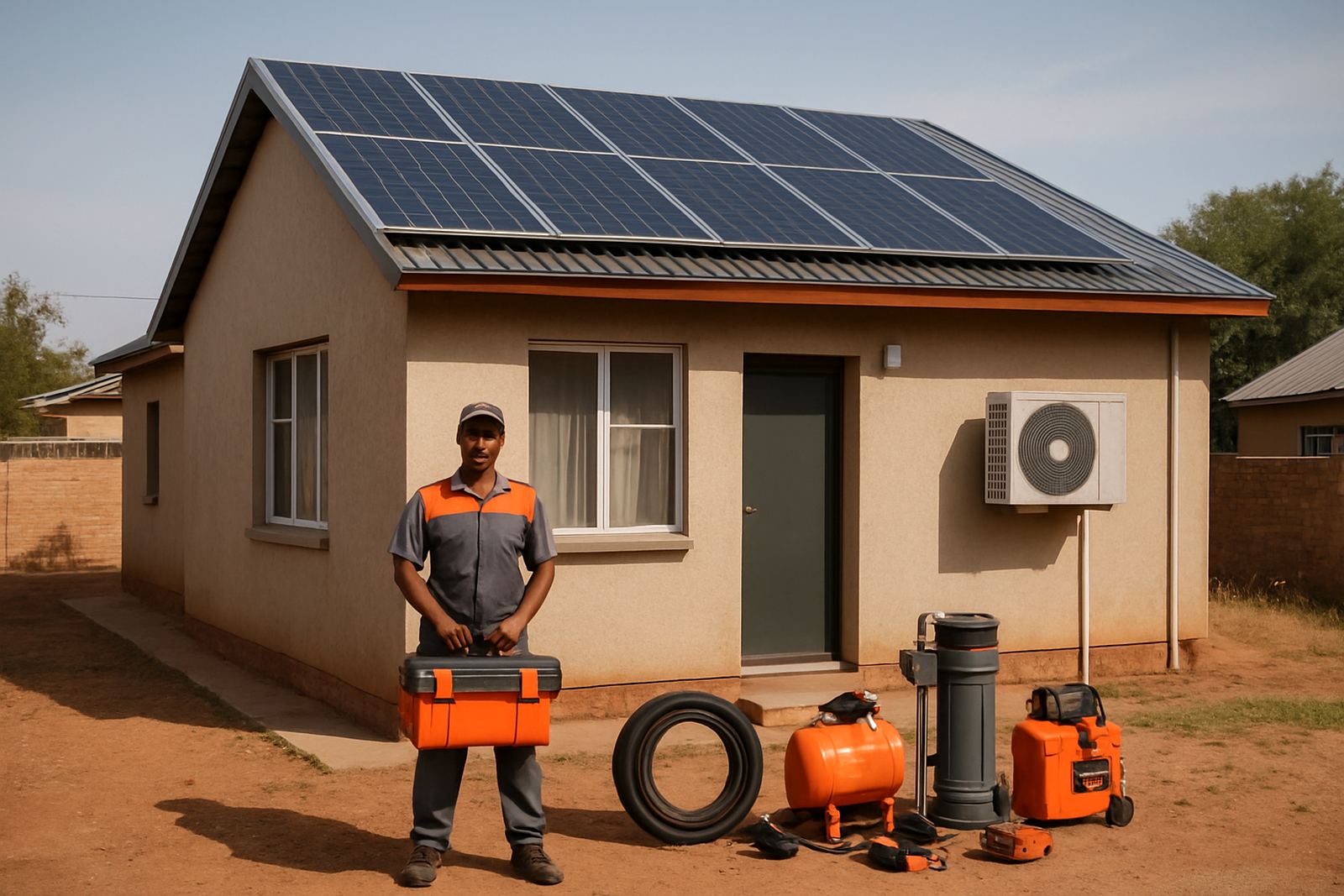
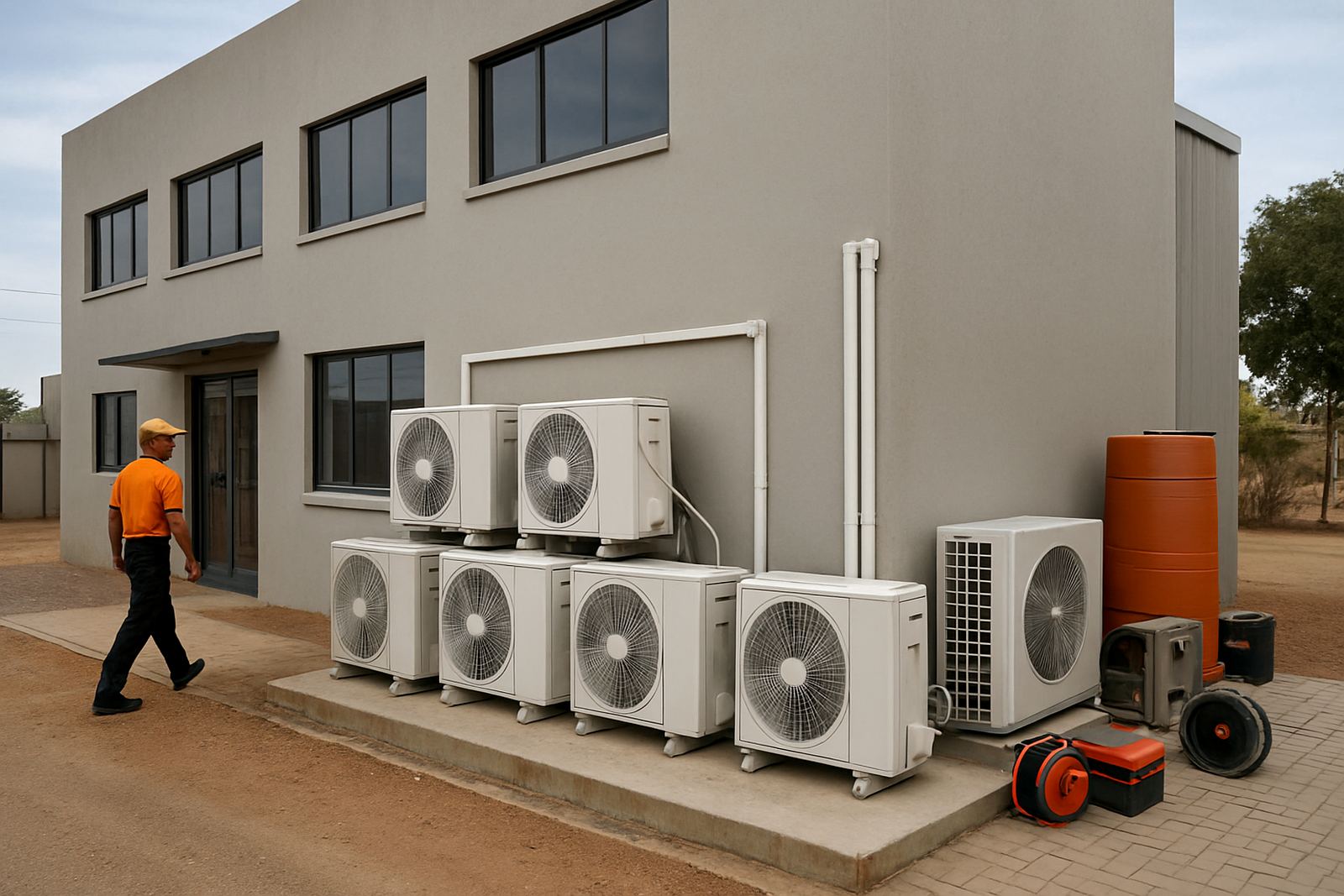
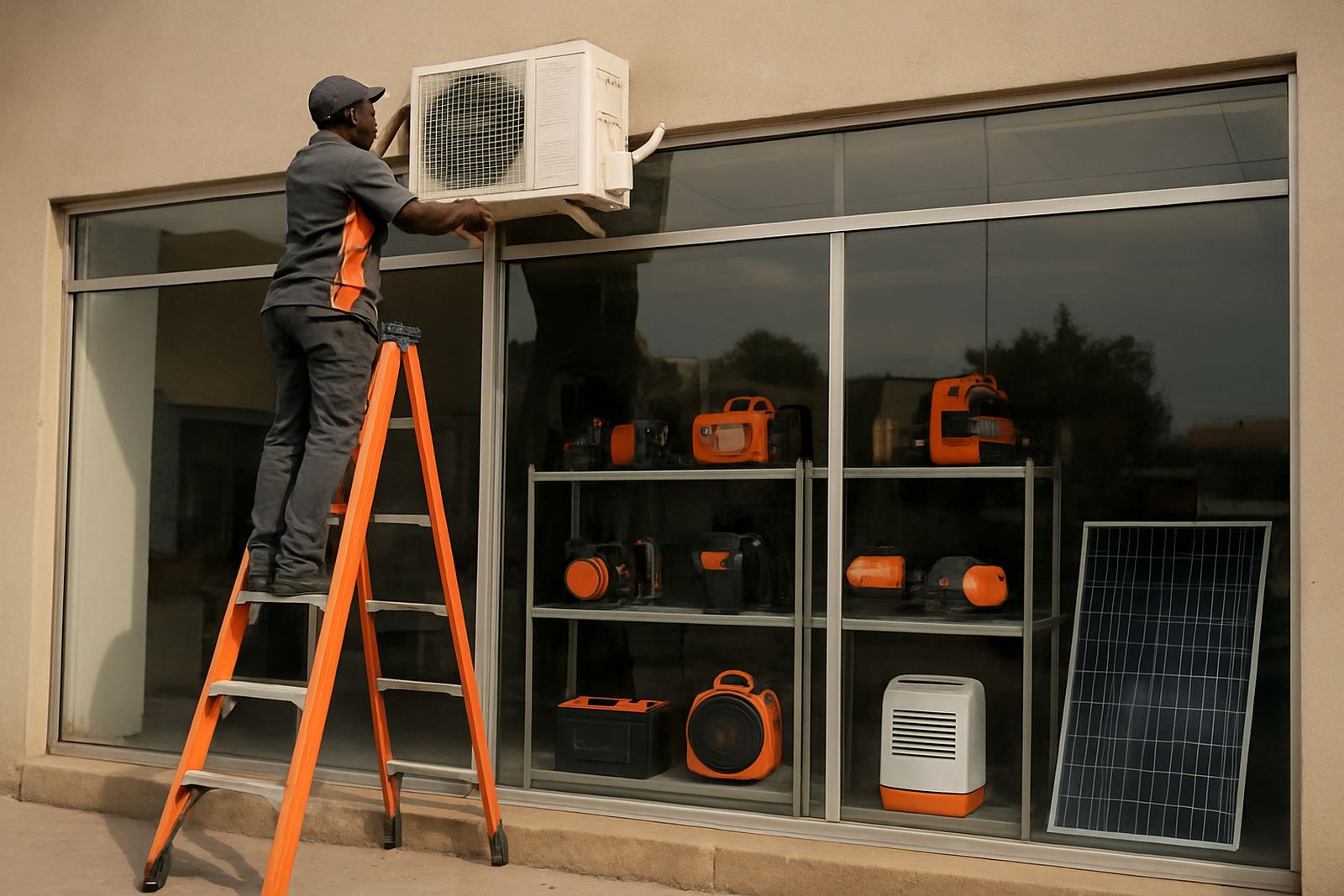
We supplied a matched split cooling arrangement sized for the floor area and expected foot traffic, with a quieter indoor air delivery setup and externally mounted condenser units placed for better ventilation. The installation included new copper pipework, insulated lines, drain runs and electrical connections, plus isolators and proper supports to keep the system tidy and serviceable.
Where the existing layout made airflow uneven, we adjusted diffuser positions and balanced the air distribution so the cooler air reached the sales floor and the rear section more evenly. The new setup was selected for lower sound levels, stable operation and easier maintenance in a North Cape climate where dust and heat can punish poorly maintained equipment.
- New cooling capacity matched to retail floor load and summer heat gain
- Reworked refrigerant pipe runs and condensate drainage
- Mounted and levelled outdoor units with vibration reduction
- Electrical isolation and commissioning checks on all circuits
- Final clean-up and staff handover on filter care and temperature settings
Installation timeline and site coordination
The full upgrade took two weeks from site measure-up to handover. Week one covered inspection, sizing, ordering and planning the sequence so the shop could keep trading. Week two covered the physical install, pressure testing, vacuuming, charging where required and final commissioning once all lines and controls were confirmed.
Because the store could not lose a full day of trade, our field team worked in staged visits. That approach kept disruption down and gave the client time to move stock and clear access where needed. Our workshop team prepared the pipework and fittings in advance, which reduced time on site and helped us stay within the agreed window.
- Week 1: site assessment, sizing and work planning
- Week 2: installation, testing, commissioning and handover
- After commissioning: operating checks under real shop conditions
Results after commissioning
Once the system was running, the difference was clear within the first trading day. The sales floor held a steadier temperature, the back area no longer lagged behind, and the lower fan noise made the shop feel calmer for both staff and customers. The owner also noted that the new arrangement was easier to manage during busy periods because the cooling response was quicker and more even.
The retailer wanted less strain on the system through the hottest parts of the day, and that is exactly what the upgrade delivered. The installation was set up so routine maintenance would be straightforward, with accessible filters and service points. In a town like Kimberley, that matters because dust, heat and power interruptions can shorten equipment life if the system is not planned properly.
What we would repeat on the next retail job
We would approach a similar New Park retail cooling job the same way again: measure properly, keep the client trading where possible, and choose equipment that can handle Kimberley heat without becoming loud or awkward to service. A neat install is only part of the job. The bigger issue is whether staff can live with the system every day and keep it running through summer, maintenance intervals and the odd power interruption.
For this project, the combination of good sizing, careful placement and practical commissioning gave the client a cooler shop with less noise and fewer headaches. That is usually the goal for neighbourhood retail spaces, especially when the building is busy, the ceiling space is tight and the customer flow does not stop for construction.
- Plan around trade, not against it
- Size for real occupancy and afternoon heat gain
- Keep service access clear from day one
- Test the system under normal shop conditions before sign-off
Key facts
| Project type | Retail cooling upgrade |
|---|---|
| Town / area | New Park, Kimberley |
| Programme | 2 weeks |
| Scope | Cooling installation, airflow balancing, electrical tie-in and commissioning |
| Key outcome | Quieter operation with better temperature control across the shop |
| Service focus | Retail comfort with easier maintenance and local support |