Farm water needs outside Kimberley
The client was a livestock farm on the outskirts of Kimberley, with paddocks set some distance from the main yard and a borehole as the primary water source. The old arrangement struggled when power cuts hit, and the owners needed a system that could keep tanks filling without constant manual intervention. In the Northern Cape, when the heat rises and the wind pushes dust through everything, water supply becomes a daily priority not a convenience.
The brief was simple on paper but strict in practice: pump enough water to keep troughs full, use solar support where possible, and keep the system practical for farm staff to run. The borehole had to be protected from dry-running, the line needed to cope with long rural runs, and the setup had to be easy to check from the yard. The client wanted fewer callouts, fewer interruptions and a cleaner way of handling water storage across the property.
- Client type: livestock farm
- Location: farm outside Kimberley, Northern Cape
- Water source: borehole
- Priority: livestock supply during power cuts
What made this site tricky
The biggest constraint was the combination of distance, variable borehole yield and unstable grid power. The farm sits in a dry area with hot daytime temperatures and cold nights in winter, so equipment has to deal with wide swings in conditions. Dust also gets into motors, wiring and control boxes, so the installation needed tidy mounting and proper protection from the start.
We also had to work around the site layout. The storage tanks were not next to the borehole, so pressure loss over the line had to be considered carefully. The owners did not want a system that would need someone standing over it all day, especially when they were busy with animals and feed. Municipal rules were not the main issue here, but proper isolation, safe cabling and clear service access still mattered, because farm equipment still needs to be maintainable and safe.
- Load-shedding meant backup power had to be built into the plan
- Long pipe runs meant pressure and friction loss had to be checked
- Dust and heat required practical protection for electrical parts
- System had to be easy for farm staff to inspect and restart
Pump, solar and controls supplied
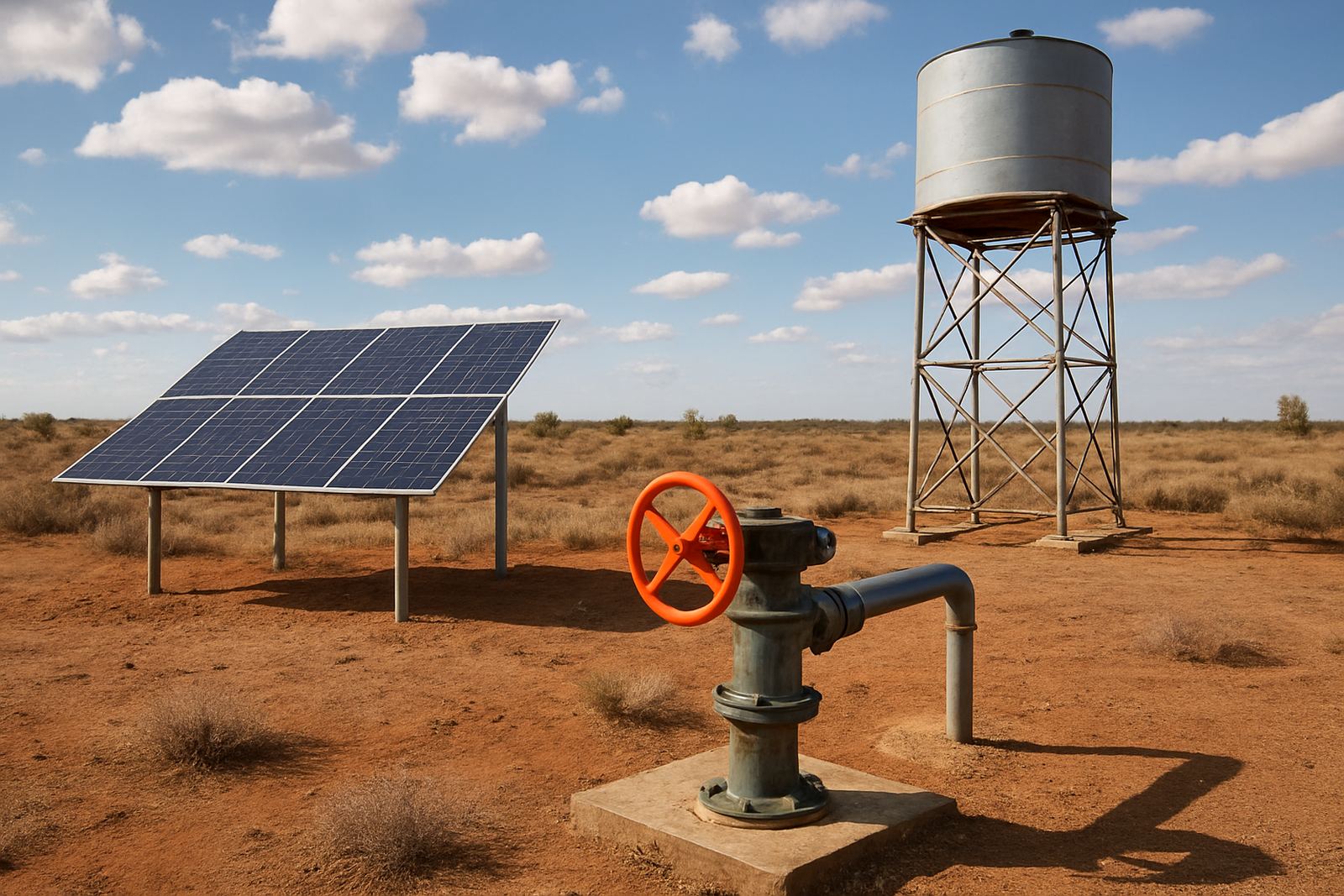
We supplied a pumping package matched to the borehole conditions and the daily water demand. The install included a submersible pump, pressure controls, isolation gear and a solar-supported backup arrangement sized to assist daytime pumping when the sun was available. We also fitted the protection needed to stop the pump from running dry and to keep the motor safe during power fluctuations.
The solar support side was kept straightforward. The goal was not to overcomplicate the farm with extras, but to give reliable daytime assistance and reduce pressure on the grid. We set up the controls so the system could switch cleanly between available solar input and normal supply, with practical settings that would not confuse staff. Cable routing and mounting were done neatly so maintenance teams could reach key points without stripping half the installation apart.
- Submersible borehole pump matched to site demand
- Solar-supported pumping during daylight hours
- Dry-run and overload protection fitted
- Pressure controls and isolation points included
How we handled the installation
Our team completed the work in just under three weeks from site check to final handover. The first week covered measurements, borehole assessment and final selection of pump and control components. In week two we handled the physical installation, pipe connections, cabling and control box mounting. The final week was used for testing, pressure checks, solar support setup and practical training with the client.
Pieter Johannes Botha supervised workshop preparation, while Thabo Molefe handled the field service side on site. Ayanda Ndlovu coordinated the project steps and Nadia September kept the client updated on timing and parts. The result was a tidy installation that worked with the farm layout rather than fighting it. We tested the system through start-up cycles and checked that the borehole recovery time stayed within safe limits.
Because rural sites can be affected by dust and animals moving close to equipment, we made sure exposed components were mounted securely and placed where day-to-day farm activity would not damage them. That sort of detail saves trouble later.
Results for daily livestock watering
Once the system was running, the client had a steadier water supply to troughs and holding tanks, even during periods of load-shedding. The solar support reduced downtime during daylight and made the borehole more useful across the course of the day. The farm team no longer had to manually manage as many switches and workarounds, which freed them up for actual farm work.
The practical gain was not just more water, but less uncertainty. Livestock watering became easier to plan, and the borehole system could be monitored with a quick check instead of a long troubleshooting session. There was also less strain on the pump because the protection settings helped avoid the sort of damage that comes from dry running or unstable supply. The owner told us the main benefit was peace of mind, which is usually what a good farm water system should give.
- More stable livestock water supply
- Reduced disruption during outages
- Less manual intervention from farm staff
- Better protection for the pump and controls
What we would repeat on the next farm
If we were doing this again on another Northern Cape farm, we would keep the same approach: check the borehole properly, size the pump against real demand, and build in solar support from the start rather than as an afterthought. We would also keep the controls simple enough for non-technical staff to use confidently. On remote sites, simple usually means reliable.
We would continue to allow for dusty conditions, long cable runs and future servicing access, because those are the realities of farming outside town. For farms near Kimberley, Roodepan, Galeshewe, Kuruman or Upington, the lesson is the same. If the water system is treated as critical infrastructure from day one, it performs better and costs less to keep going. That approach saves time, fuel and a lot of frustration.
Modern Equipment handled this project as we handle most rural utility work, with practical sizing, neat installation and clear handover. It was not a flashy job, just the sort of solid result a farm can depend on.
Key facts
| Project location | Farm outside Kimberley, Northern Cape |
|---|---|
| Project type | Borehole pumping with solar support |
| Water use | Livestock trough and storage tank supply |
| Timeline | Just under 3 weeks from site check to handover |
| Key protection | Dry-run, overload and power fluctuation control |
| Support method | Solar-assisted daytime pumping with mains backup |