Project brief for a working freezer room
The client was a wholesale storage operation in Upington that needed dependable freezer room equipment replacement, not a full rebuild. Their existing system was struggling to hold temperature evenly, especially during afternoon peaks when ambient temperatures pushed the plant harder than normal. They wanted better control for frozen goods, less spoilage risk and a room that could recover quickly after door openings.
The room was used for palletised stock moving in and out during the week, so the replacement had to fit around active operations. We were asked to keep the existing insulated room structure where possible, replace worn refrigeration components, and make sure the system could be serviced locally without long waits for parts. Because the site sits in a dusty part of the Northern Cape, we also had to think about coil protection, airflow and practical maintenance access.
- Town: Upington
- Client type: Local cold storage and distribution user
- Work type: Freezer room equipment replacement
- Use case: Low-temperature storage for frozen stock
Site constraints that shaped the job
Upington heat and dust are no joke, and that affects freezer plant more than people sometimes expect. The old unit had been running with uneven pull-down times and the client was seeing temperature drift after loading periods. Power stability was another concern because the site had to work around load-shedding and generator changeover at certain times of the day. We also had to respect the existing building layout so the cold room traffic pattern did not get blocked during the works.
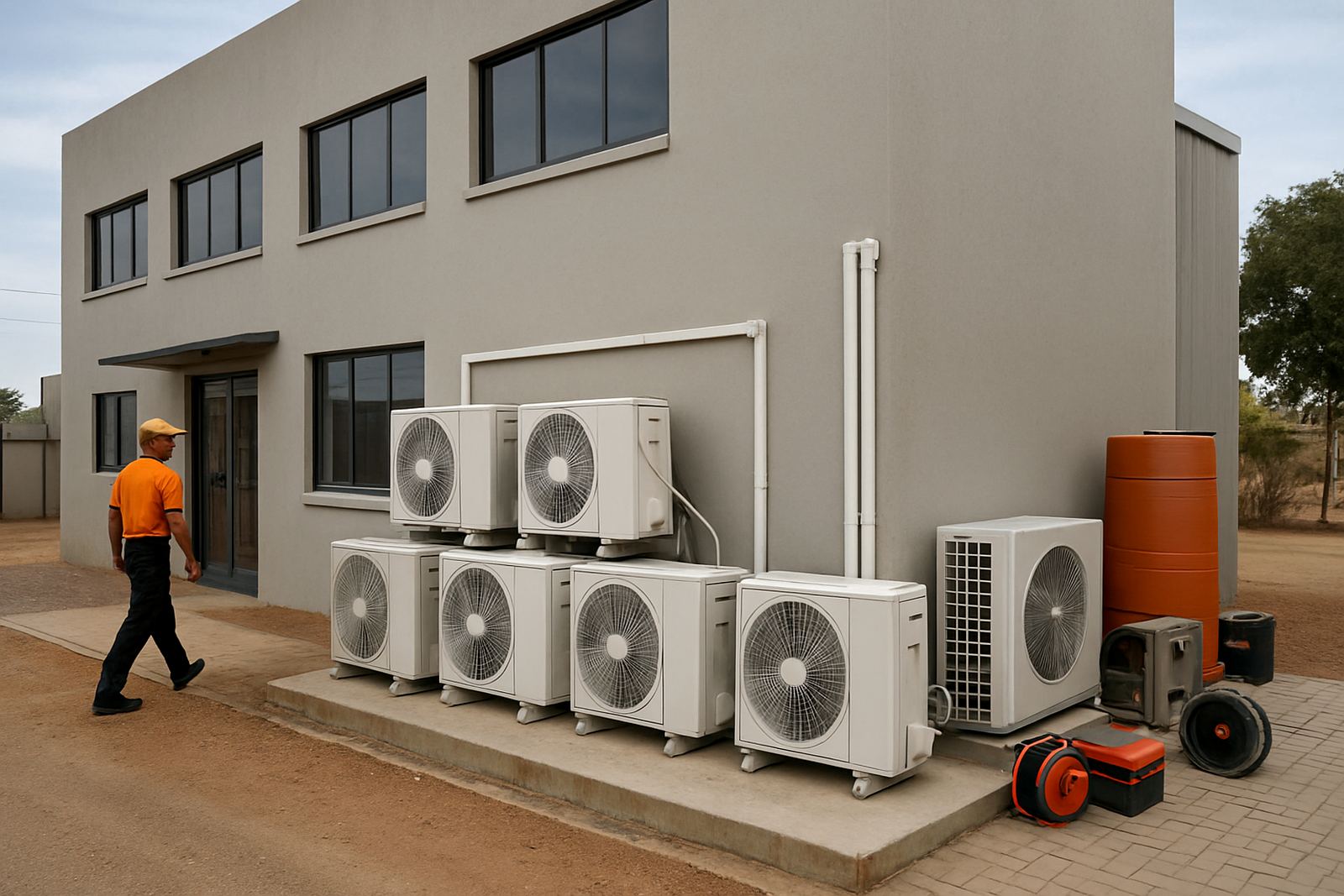
Access was limited at the equipment side of the building, so the team had to stage the changeover in the right sequence. That meant isolating the old system, removing failed components, setting new equipment on the prepared base and then reconnecting controls, electrical supply and refrigerant lines with care. We kept the client informed step by step, which helped them plan stock movement and reduce door openings while the room was out of service.
- Hot weather required allowance for higher condensing load
- Existing room structure was retained to save time and cost
- Load-shedding backup checks were included in the handover
- Maintenance access had to remain clear for future servicing
What we supplied and installed
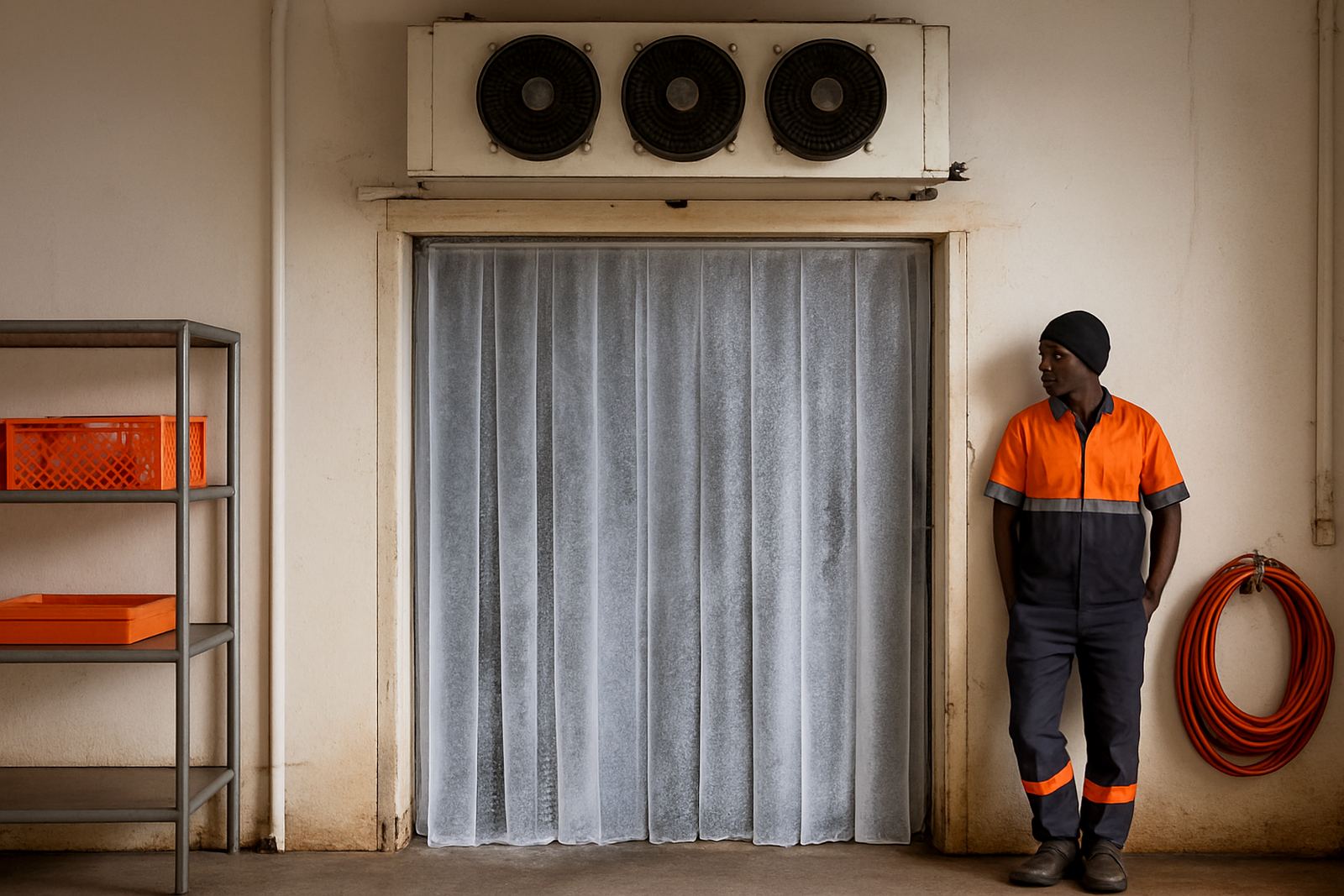
We supplied a matched freezer room refrigeration package sized for dependable low-temperature storage, together with the parts needed for a practical replacement. The scope included a low-temperature condensing unit, evaporator coil, controls, isolation valves, refrigerant pipework sections, electrical protection and new service items where the old fittings had reached the end of their life. We also checked the room sensors and defrost settings so the new plant would cycle correctly from day one.
The refrigerant circuit was set up for stable operation in hot conditions, with attention to suction line insulation and control calibration. We replaced tired componentry that could have caused nuisance trips later, and we tested the plant for consistent pull-down, defrost recovery and holding temperature under load. No fancy extras, just the right parts put in the right place.
- Low-temperature condensing unit matched to the room load
- Evaporator coil sized for freezer duty and regular defrost
- Thermostatic and electrical controls replaced or recalibrated
- New service valves, pipe support and insulation where needed
- Commissioning checks on temperature pull-down and recovery
Replacement timeline and working method
The project ran over 2 weeks from site assessment to final handover. Week 1 covered inspection, measurements, load checks and ordering the replacement kit. Week 2 covered removal, installation, pressure testing, evacuation, charging and live commissioning. That schedule depended on getting the old equipment out without unexpected pipe damage, which fortunately went smoothly.
We worked in a way that reduced disruption to the client’s stock handling, with the team keeping the site tidy and the work area controlled each day. There were a few points where the room had to be isolated for testing, but the client had been briefed on timing and stock movements so the stoppages were brief. The final result was a freezer room that came back into service with far less uncertainty than before.
- Week 1: Survey, sizing, parts selection and procurement
- Week 2: Removal, installation, testing and commissioning
- Final handover: Settings, maintenance notes and operating checks
Results the client could see straight away
After commissioning, the room pulled down faster and held temperature more evenly across the storage cycle. The client noticed fewer swings after loading, which matters when a freezer room is opened and closed through the day. The new equipment also reduced the amount of guessing during operation because the controls were set up properly for the room size and usage pattern.
From a maintenance point of view, the site is now easier to look after. Service access was improved, the electrical and refrigerant components are arranged more logically, and the room no longer depends on old parts that were becoming difficult to support. That gives the client more certainty for peak trading periods, especially when summer heat and load-shedding land on the same week.
- More even temperature control inside the room
- Quicker recovery after door openings and loading
- Lower risk of nuisance downtime from worn parts
- Cleaner maintenance path for future servicing
What we would do again on a similar Upington job
If we were doing this type of freezer room replacement again in Upington, we would follow the same approach. Get the load data right first, verify the room condition, plan around local heat and power interruptions, then match the equipment to actual use instead of oversizing everything. That keeps the installation practical and avoids unnecessary running costs.
For similar Northern Cape sites, we would also recommend a maintenance plan that includes coil cleaning, control checks and regular inspection of door seals and insulation joints. In dusty conditions, a freezer room can lose performance slowly if nobody watches the basics. The gear may look fine from the outside, but once airflow is restricted the system works harder than it should.
- Confirm real storage load before sizing new equipment
- Plan installation around stock movements and power cuts
- Allow for dust control and routine coil cleaning
- Keep spare service parts on hand for busy seasons
Upington freezer room support from Northern Cape technicians
Modern Equipment supports freezer room and cold storage projects from our Kimberley base across the Northern Cape, including Upington, Kuruman, Roodepan, Galeshewe and surrounding areas. For clients who need air-conditioning, refrigeration, ventilation, pumps, solar backup or HVAC tools, we handle installation, servicing, repairs and commissioning support with a practical local approach.
On this project, the value was not only in the equipment supply but in the way the job was planned and finished. The client needed a room that would keep working under real conditions, not just on paper, and that is exactly what the replacement delivered. If your freezer room is underperforming, is this the kind of outcome you need too?
Key facts
| Project location | Upington, Northern Cape |
|---|---|
| Project type | Freezer room equipment replacement |
| Timeline | 2 weeks |
| Client type | Local cold storage and distribution user |
| Main equipment | Low-temperature condensing unit and evaporator coil |
| Outcome | Improved temperature stability and faster pull-down |