Guesthouse cooling brief in Kimberley
The brief came from a guesthouse in Hadison Park, Kimberley, where summer temperatures can push rooms into the high 30s and make it hard for guests to sleep well. The owner wanted a practical solution for individual rooms, not a single central system that would be expensive to run and awkward to manage when some rooms were occupied and others were empty.
The property serves short-stay guests, so the cooling had to be neat, quiet and easy for staff to use. The aim was simple: better comfort, lower complaints and a system that would not fight against load-shedding patterns or recurring power interruptions. We also had to work around occupied rooms and keep disruption low, which is always part of guesthouse work.
Site limits and planning around the building
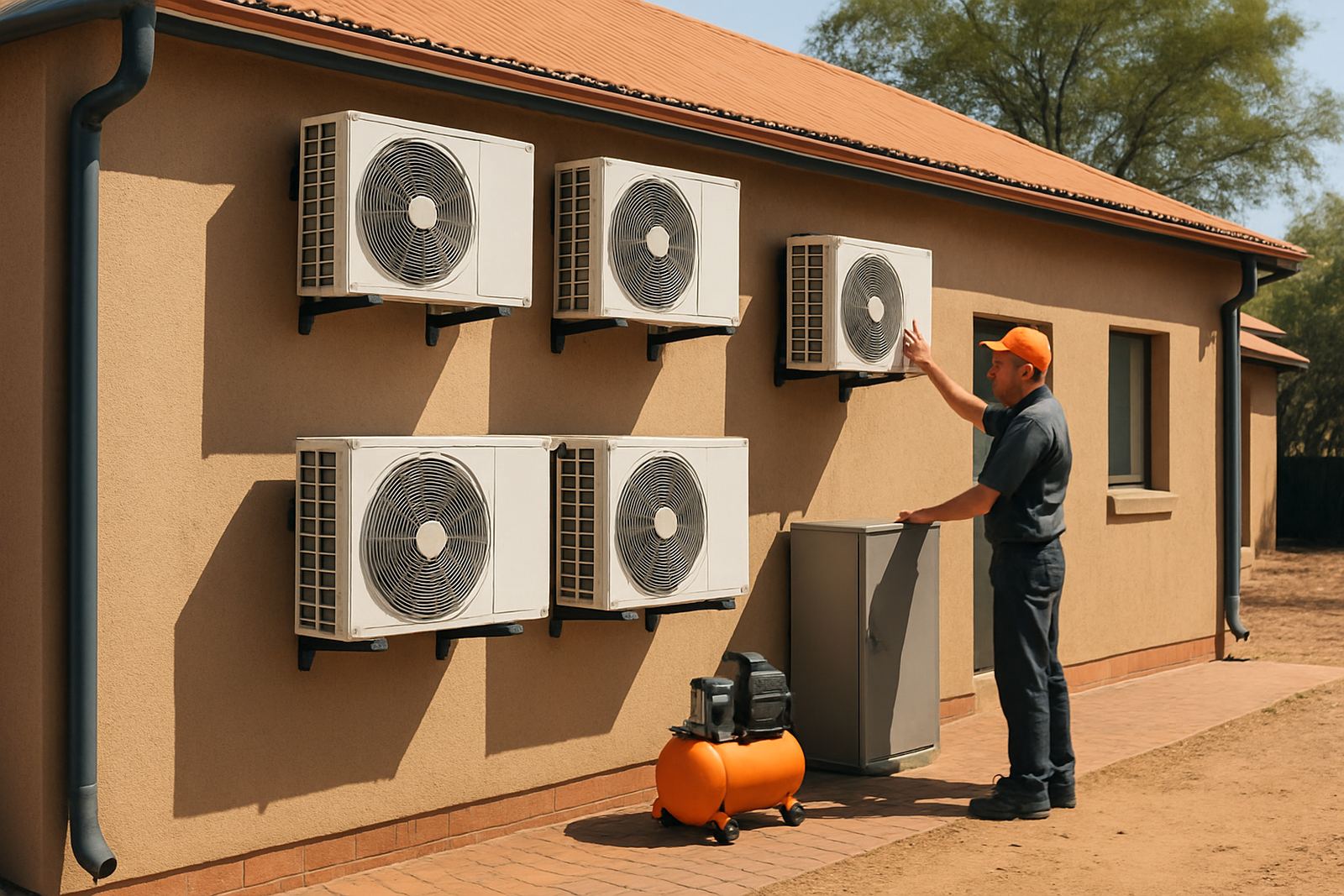
The building layout called for a room-by-room approach with different room sizes and wall positions. Some rooms faced stronger afternoon sun and needed a slightly higher cooling capacity, while other rooms had tighter wall access for pipe routes and outdoor unit placement. We planned the job so that pipe runs stayed as short as possible and the external units were positioned for airflow, service access and low noise near guest areas.
- Rooms were checked one by one for wall space, drainage fall and safe cable routes.
- Outdoor unit positions were planned to allow maintenance access without disturbing guests.
- Electrical supply points were checked before installation to avoid later rewiring delays.
- The install sequence was arranged around guest occupancy to keep the property open during the works.
Because Kimberley can also bring dust and dry heat, the team paid attention to where filters would be easy to clean and where condenser airflow would not be blocked by walls, screens or garden growth.
What we supplied and installed
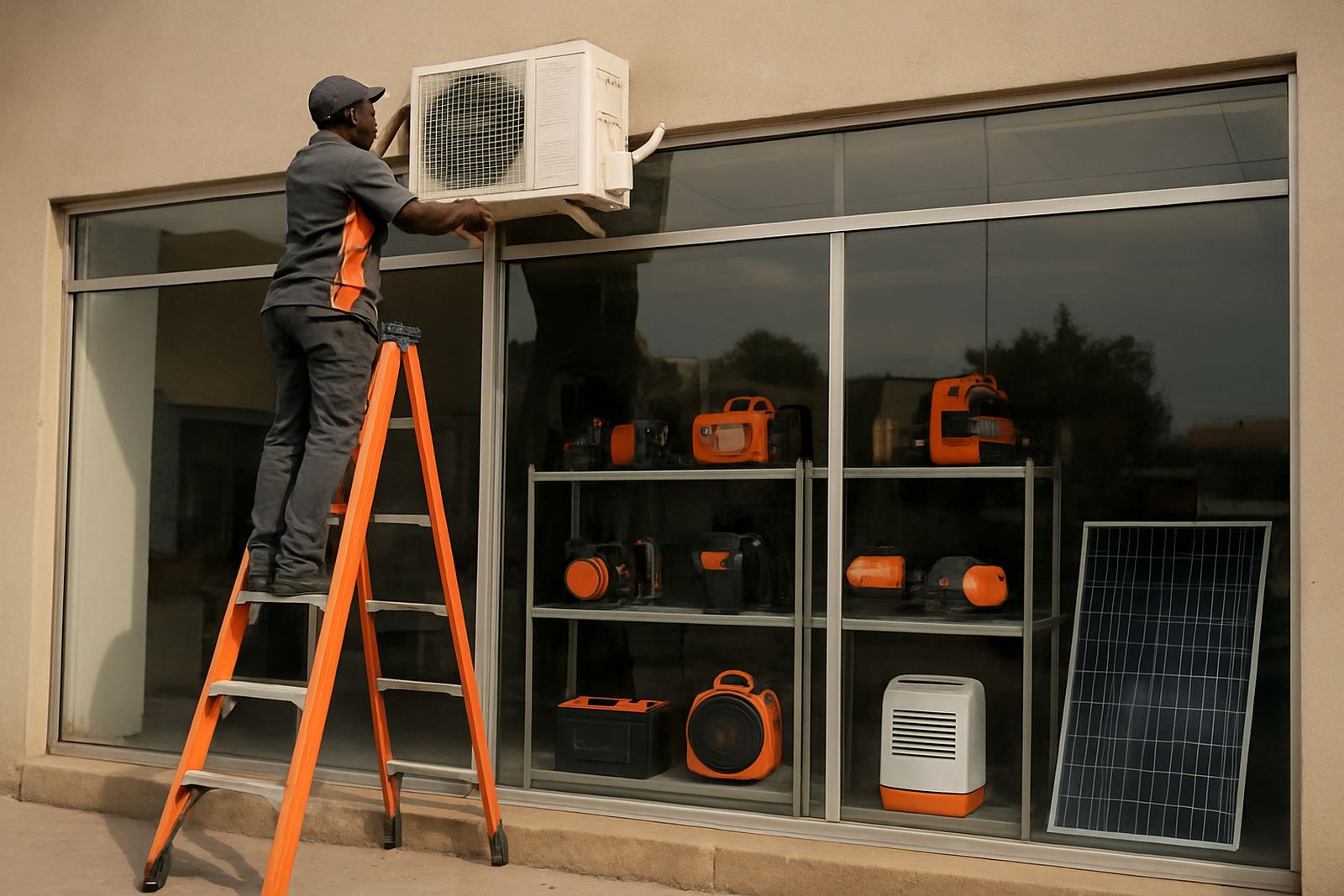
We supplied split air-conditioning units matched to the room sizes and use pattern. The setup included wall-mounted indoor units, outdoor condenser units, copper refrigerant piping, insulated drain lines, isolation points and the necessary power and control connections. In the rooms, the units were placed to give even air throw without blasting directly onto beds, which matters when you are trying to keep guests comfortable through the night.
Our workshop and field teams handled the installation, commissioning and test running. That included pressure testing, vacuuming the lines, checking for leaks, confirming condensate drainage and setting the controls for practical use by staff. We also gave the client basic guidance on filter cleaning and what to watch for if a unit starts making unusual noise or losing cooling output. It sounds small, but those routine checks save money later.
- Room-specific split aircon units sized for different room volumes.
- Neat copper pipework with insulation to reduce heat gain and condensation.
- Proper drainage routing to avoid water marks inside the rooms.
- Commissioning support with system checks and handover to staff.
Installation timeline and working method
The project ran over two weeks from final site measurements to handover. Week one covered assessment, planning, material preparation and agreeing the install sequence with the guesthouse. Week two was the physical fitment, wiring connections, testing and final adjustments. That schedule kept the disruption manageable and allowed us to work cleanly around guest turnover.
We kept the work area tidied each day and closed off rooms as needed so the guesthouse could continue operating. For a hospitality property, that matters just as much as the equipment itself. A room can have good cooling on paper, but if the installation leaves mess or service issues behind, the benefit is lost fast.
- Week 1: site measure, load review, planning and equipment allocation.
- Week 2: installation, electrical tie-in, testing and handover.
- Final stage: staff walk-through on controls, filters and basic care.
Results for guests and staff
Once the system was commissioned, each room had its own cooling control, which gave the guesthouse more flexibility during peak heat. Guests could set the temperature they wanted, and staff could manage empty rooms without cooling the entire building. That helps with electricity use and keeps the property better prepared for busy weekends and summer booking periods.
The owner also got a system that is simpler to maintain than a central plant. If one room needs attention later, it can be isolated without taking the whole guesthouse offline. For a hospitality site in Kimberley, that is a practical advantage, especially when temperatures jump quickly and guests expect quick action if a room feels warm.
- Better guest comfort in sleeping areas during hot afternoons and nights.
- Independent control for each room instead of one shared setting.
- Lower operating waste when rooms are vacant.
- Easier future servicing and fault finding by room.
What we would do again on a similar project
On a project like this, we would again start with room-by-room sizing and a careful check of power supply, wall positions and outdoor unit placement. Guesthouse work is not only about cooling capacity, it is about keeping the place open and tidy while the installation happens. The more accurate the planning, the smoother the handover.
We would also keep the same approach to commissioning. A proper test run and staff handover saves call-outs later and gives the owner confidence that the rooms are ready for peak summer. Small details, like drainage routing and filter access, are worth getting right the first time. It saves on repeat work and helps the system stay trouble free for longer.
Modern Equipment support for hospitality sites
Modern Equipment in New Park, Kimberley, supports air-conditioning, refrigeration, ventilation, pumps, solar backup and HVAC tools across the Northern Cape. For guesthouses, lodges, small hotels and rental properties, we handle installation, servicing, repairs and commissioning support with local response from Kimberley through to Kuruman and Upington.
Our team includes sales, workshop, projects, parts, field service and customer support staff who understand the conditions here, from dusty inland heat to the strain that load-shedding puts on equipment. If a property needs cooling that works room by room, we can plan it, fit it and keep it running with proper after-sales support.
Key facts
| Project | Hadison Park Guesthouse room-by-room split aircon installation |
|---|---|
| Location | Hadison Park, Kimberley, Northern Cape |
| Client type | Guesthouse hospitality property |
| Scope | Split aircon installation, commissioning and staff handover |
| Timeline | 2 weeks |
| System format | Independent wall-mounted indoor units with outdoor condenser units |
| Key outcome | Individual room control and improved guest comfort during peak heat |