What the workshop needed in Kimberley
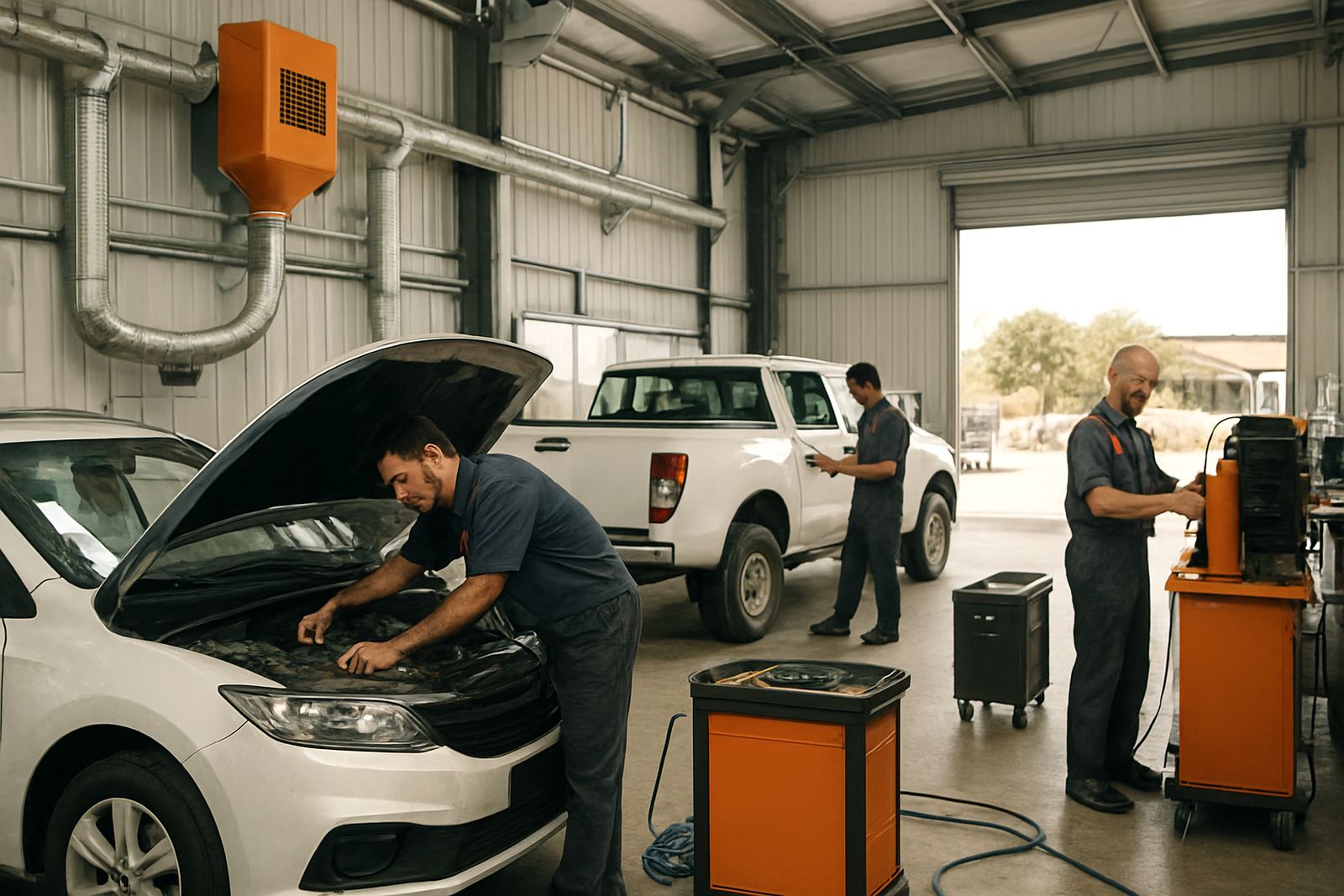
The client was a local industrial workshop in Kimberley handling repair and maintenance work across vehicles and light equipment. The main issue was plain to see by mid-morning, the roof space trapped heat, fumes lingered after jobs, and the bay stayed uncomfortable even with doors open. In summer, the Northern Cape heat made it worse, and during load-shedding the existing air movement dropped right off.
The brief was to improve extraction without getting in the way of the daily work flow. The owner wanted a practical system that would clear hot air from the roof line, pull stale air out of the bay, and keep the floor area more usable for staff. There was also concern about dust, so the setup had to move air cleanly without sucking in more dirt than necessary.
Site constraints and planning
The building had an older roof profile with limited mounting points and a mixed metal deck structure, so we had to work with the existing shell rather than start from scratch. Access was tight around the live workshop, which meant most of the install had to happen around trading hours and with clear safety controls. We also had to allow for Kimberley dust, roof heat expansion and the fact that power interruptions can interrupt a full day’s work at short notice.
- Limited roof access above an active work area
- Heat build-up under a corrugated roof
- Need to keep walkways and lift points clear
- Power cuts that made a backup plan necessary
- Dust control so the system would not spread grit back into the bay
Before we started, we measured the bay dimensions, checked roof pitch and marked the best extraction points. That helped us place the fans where they would draw the hot air up and out instead of just moving it around inside the building.
Extraction fans and roof ventilation installed
We supplied and fitted a set of high-volume extraction fans matched to the workshop size, together with roof ventilation points to let the hot air escape naturally. The setup was aimed at creating a steady air path from the lower work area to the roof space. Where needed, we added ducting and mounting frames to suit the roof structure and keep the installation neat and secure.
Key facts: the main extraction units were sized for continuous workshop duty, with corrosion-resistant housings, weather-shielded roof terminations and motor protection suitable for dusty conditions. We also installed isolators and proper cable routing so maintenance would be straightforward later on.
- Extraction fans positioned for roof-level heat removal
- Ventilation outlets spaced to support cross-flow
- Mounted on purpose-built brackets and roof supports
- Electrical connections completed with isolation points
- Commissioned and tested under normal workshop load
Electrical work and commissioning support
The electrical side was handled carefully because the workshop could not afford long downtime. We coordinated the work in stages, then tested each fan on its own before running the whole system together. That let us check rotation, airflow direction and noise levels before handover. Any loose items, exposed edges or cable runs were sorted before the team moved back into the bay.
We also checked the startup load against the site supply so the system would operate sensibly during normal use. For a business that already manages pumps, tools and service gear, a bad installation can become another maintenance headache. We kept the arrangement simple and serviceable, which is what matters most in a working shop.
Timeline and handover in four weeks
The full project ran over four weeks from site measure-up to final commissioning. Week one was assessment and planning. Week two covered supply of the fan units, brackets and electrical materials. Week three was the main installation phase, and week four was testing, adjustment and handover. That schedule worked well because it allowed the workshop to keep operating without a long shutdown.
During handover we walked the client through switch points, basic checks and what to look out for if dust starts building up on the fan guards. A quick clean now and then goes a long way, especially in Kimberley where fine dust can appear after a windy afternoon.
- Week 1: site survey and ventilation plan
- Week 2: supply and preparation
- Week 3: install and wiring
- Week 4: testing, commissioning and handover
Results and what we would repeat
After commissioning, the workshop felt noticeably cooler at roof level and the air cleared faster after hot jobs. The team reported less stuffiness in the bay, and the improved airflow made it easier to keep the work area comfortable through the day. It did not turn the workshop into a cold room, but it made a clear difference where it mattered most, which was the heat trapped under the roof.
If we were doing the same type of job again, we would repeat the same approach: measure properly, place the extraction points to suit the roof shape, and keep the wiring and maintenance access simple. For workshops in Kimberley, Kuruman or Upington, that practical method usually gives the best long-term result.
Key facts
| Project type | Workshop airflow upgrade |
|---|---|
| Location | Kimberley, Northern Cape |
| Ventilation method | Extraction fans plus roof ventilation |
| Work duration | 4 weeks |
| Main goal | Reduce heat build-up and stale air |
| Service scope | Supply, installation, electrical connection and commissioning |