Why solar pumping suits Northern Cape conditions
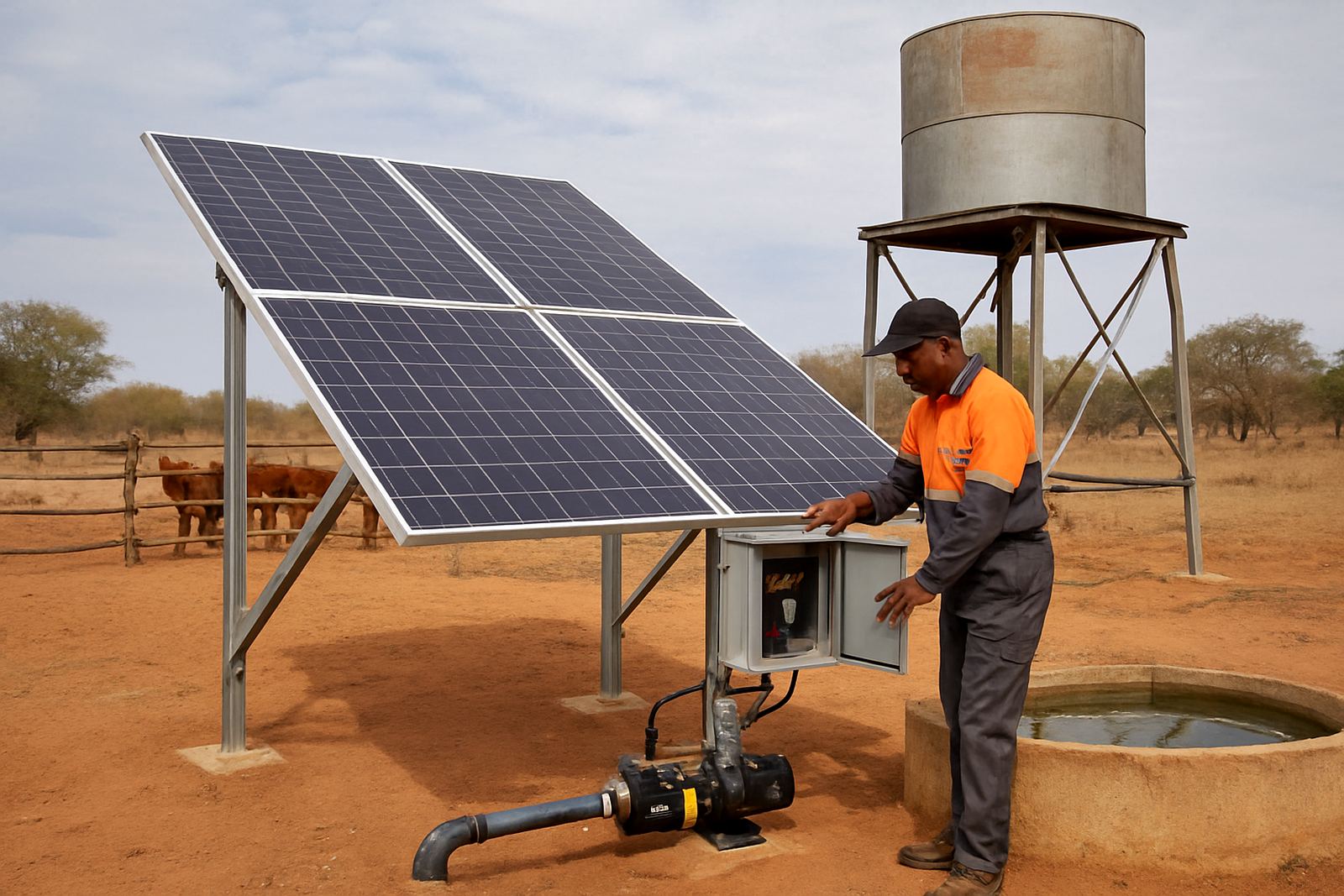
In the Northern Cape, many sites have one thing going for them straight away: good sunlight. That makes solar water pumping a practical option for farms, smallholdings, livestock points, boreholes and outlying yards where running a long electrical line is costly. When the demand is steady through the day, the pump can do its work while the panels are producing power, without waiting on grid supply.
For remote sites between Kimberley, Roodepan, Galeshewe, Kuruman and Upington, the real value is not only lower running cost. It is also control. You can plan water delivery around daylight, reduce fuel handling, and avoid the stop-start problem that happens when power fails or the site sits on a weak supply. In dry seasons, that consistency matters.
Start with water demand, not just panel size
The common mistake is buying panels first and hoping the pump will follow. A proper solar pumping setup starts with the water need. How many litres per day are required, at what time, and to what height must the water be lifted? A borehole pumping 6 000 litres into a tank for stock will need a very different arrangement from a garden or wash bay system.
We normally look at pump flow, total head, pipe length, friction losses and the hours of sun available at the site. If the borehole is deep, the pipe run is long, or the tank is high, the system must be sized accordingly. A setup that is too small will frustrate the user, while one that is oversized can waste money and underperform in cloudier spells.
- Daily water use in litres
- Depth to water and pumping height
- Distance from borehole to tank or point of use
- Pipe diameter and expected pressure drop
- Whether water is needed only in daylight or also after sunset
Where solar pumping saves money over time
A diesel pump may seem cheaper on day one, but fuel, servicing and downtime add up fast. Solar pumping reduces moving parts at the energy source, and that often means fewer interruptions. For a remote cattle camp or a site with regular water transfer, the saving can be enough to justify the change within a few seasons, especially when fuel prices climb.
There is also the labour side. Someone has to fetch fuel, check oil, start the unit and watch for faults. With solar, the pump can run automatically when the sun is available and the storage tank can carry the site through the evening. That is useful for places where access is not easy and no one wants to travel out every second day just to keep water going. In practice, the best systems are the ones people can leave to do their job without drama.
The parts that make the system work properly
A good solar pumping system is more than panels and a pump. It needs the right controller, safe cabling, proper mounting, isolation and protection against surges. Northern Cape storms can bring sudden spikes, and dusty conditions also call for neat installation and sensible access for cleaning. If the panels are shaded by a pole, tree or tank stand, output drops straight away.
We also pay attention to water storage. In many cases, a tank is more practical than trying to pump only when the water is needed. Storage gives you a buffer for overcast days and peak use, and it protects the site from short interruptions. A simple level switch, dry-run protection and a correctly set controller can save the pump from damage and keep maintenance down.
- Solar panels matched to the pump load
- Pump controller with dry-run protection
- Quality cabling, isolators and earthing
- Tank storage with level control
- Clean mounting structure with safe access
Remote sites, farms and town-edge applications
Solar pumping is often the right call on farms outside Kimberley, but it can also help at town-edge properties, workshops and small industrial yards. In areas like New Park, Roodepan and Galeshewe, a site may already have a borehole or holding tank but still struggle with load-shedding or weak supply. A solar feed can keep water available for irrigation, cleaning or livestock without asking the grid to carry the whole load.
One local example is a smallholding outside Upington that needs water for stock and a service yard. The owner wanted a system that would fill a tank during the day and keep a reserve for late-afternoon use. By matching the pump to the borehole depth and the tank height, and by leaving enough storage for cloudy spells, the site gained steady water without relying on a generator. The setup now runs quietly, and the owner checks filters and fittings on a schedule rather than worrying about fuel.
Maintenance that keeps output steady
Solar pumping still needs care. Dust on panels, loose terminals, blocked strainers and worn seals can all reduce output. In dry months around the Northern Cape, panels may need cleaning more often than people expect. On borehole systems, it is worth checking the pump current, water level and tank fill pattern so a small fault is spotted before it becomes a bigger repair.
We also advise owners to keep a record of the daily pumping pattern. If the tank fills more slowly than usual, that can point to panel dirt, a controller issue or a change in borehole yield. The sooner it is checked, the better. A little attention goes a long way, and it is cheaper than replacing a pump that ran dry or worked against a blocked line.
Getting the sizing right from the start
Solar pumping works best when the site conditions are clear from day one. That includes water depth, pipe layout, storage volume and the times water is actually needed. With the right design, a solar system can be a dependable answer for remote supply, especially in a region with strong sunlight and long distances between properties.
Modern Equipment supports water pump installations, pump repairs and commissioning support from our base in New Park, Kimberley. If the site is in Kuruman, Upington, Kimberley or the surrounding Northern Cape, we can help match the pump, panels and controls to the real demand, not guesswork. That is usually the difference between a system that works and one that keeps needing attention.