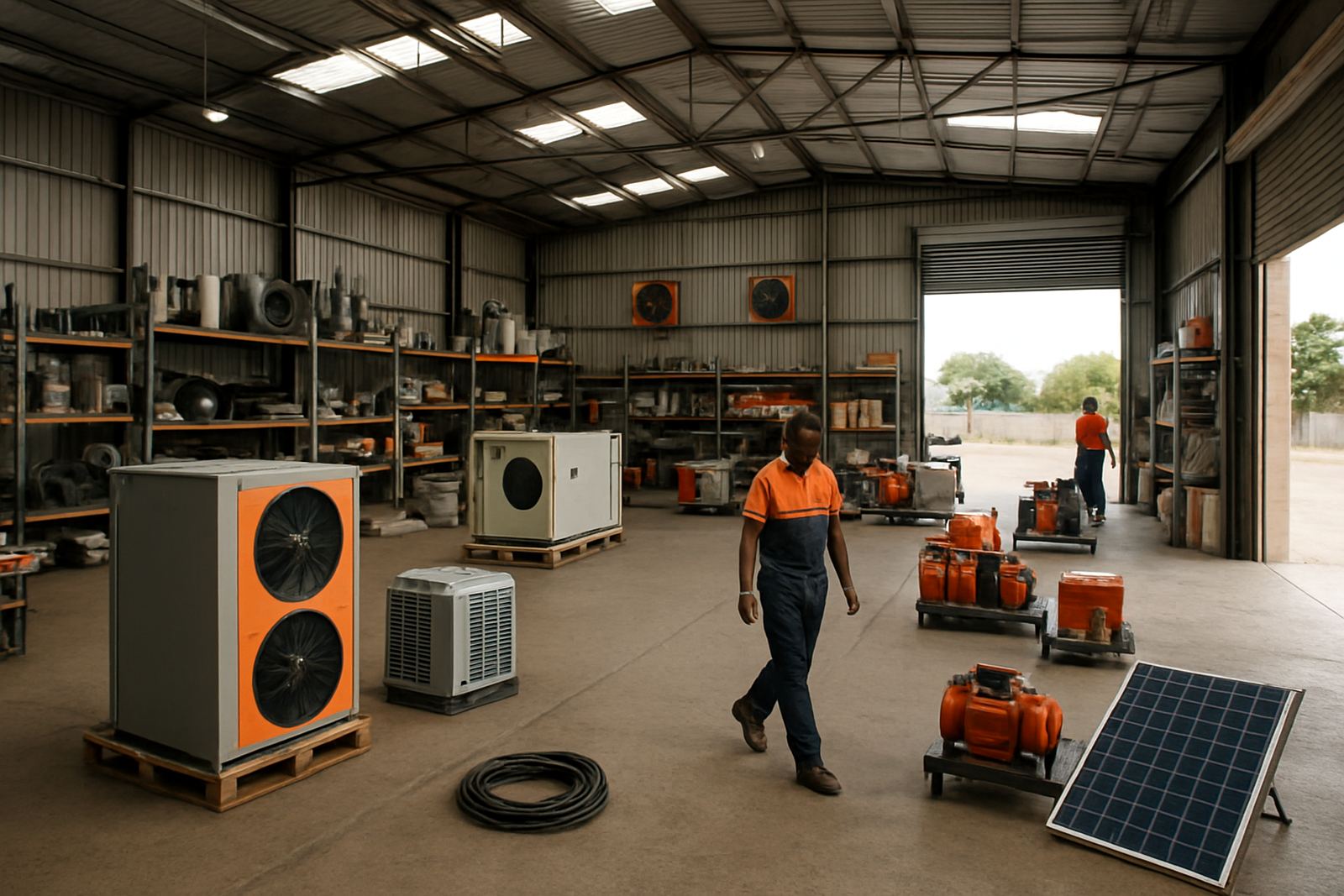
Why workshop heat builds up so fast in the Northern Cape
A workshop can heat up quickly when welding, grinding, compressed air, motors and direct sun all add to the indoor temperature. In places like New Park and Roodepan, tin roofs, open bay doors and long afternoon sun can trap heat by midday, especially when air is barely moving. That heat hangs near the ceiling, then settles back down again when there is no planned airflow.
Dust and fumes make the problem worse. If air is not extracted properly, workers start opening every door and window they can, which sometimes helps a little but often just pulls in more dust. The answer is not more random openings. It is controlled movement of air through the space so hot air leaves from the top or far end and cooler replacement air comes in from a lower point.
Start with the layout before you add more fans
The best ventilation plan starts with where the heat comes from and where people spend time. A vehicle bay, compressor corner, battery charging zone and repair bench should not all share the same dead air pocket. If possible, separate hot processes from general work areas and keep clear paths for air to travel. Even small layout changes can reduce the feeling of stuffiness.
In many Northern Cape workshops, one high level extractor and a few correctly placed circulation fans do more than half a dozen small domestic fans. You want air to move across the occupied area and out of the building, not just swirl around the same spot. If you can stand in the middle of the workshop and feel no change in air movement for ten seconds, you probably have stagnant zones.
- Keep a straight path for air to enter and leave the building
- Place heat making equipment away from enclosed corners
- Leave roof spaces and wall vents free from stored material
- Use high level extraction where hot air collects first
Extraction fans, roof vents and side louvers that actually help
For hot workshops, extraction is usually more useful than simple air circulation. Roof mounted or high wall extraction fans pull rising hot air out before it settles over the work area. Side louvers or wall vents then allow replacement air to enter at a lower level. That pressure balance matters, because an extractor with no clean air path becomes less effective.
Natural roof vents can help in some buildings, but they should be matched to the workshop size and roof shape. A long shed in Kimberley may need more than passive vents if it carries welding fumes or has a lot of internal heat from machinery. In humid coastal areas the rules differ, but in the Northern Cape the challenge is often dry heat, glare and dust, so the system must keep airflow moving without pulling in too much dirt.
- Use high level extraction for hot air and fumes
- Fit intake points lower down to feed fresh air back in
- Match fan size to the actual floor area, not just the building length
- Check that vents are not blocked by shelving, stock or roofing debris
How to cool a workshop during outages and peak heat
Load-shedding changes the way ventilation must be planned. A workshop that depends on one powered fan can become uncomfortable very quickly when the power drops. That is why some businesses combine fixed ventilation with backup power or solar support for key fans, especially where staff work long shifts or where heat affects stored parts and consumables.
For businesses in Kuruman or Upington, peak daytime heat can be hard on compressors, electronics and tyres too. A practical setup may include a mix of powered extraction, louvre openings and a backup supply for the most important air movement points. It does not need to cool the whole building like an office system, but it should keep the air from turning still and oppressive.
- Plan for fan operation during load-shedding, not only during normal supply
- Keep a few manual opening points for emergency airflow
- Protect electrical equipment from dust when fans switch off
- Service belts, motors and switches before the hottest months
Workshop safety, dust control and cleaner working air
Good ventilation also supports safety. Welding smoke, paint fumes, battery gases and fine dust should not sit in the air longer than needed. If workers are constantly coughing or wiping their eyes, the air handling is probably not doing enough. Better extraction helps protect staff, and it also helps keep tools cleaner. Dust on motors and control panels leads to more faults over time.
In repair spaces, small improvements can make a noticeable difference. Fit grilles where air enters, keep doors from slamming shut on windy days, and avoid stacking stock right up against vents. A workshop that runs cleaner usually needs less deep cleaning too, which saves time and reduces wear on equipment. It is often the small habits that make the biggest change, not a big expensive fix.
A Kimberley example: New Park workshop after a summer heat build-up
A typical example is a vehicle and equipment workshop in New Park that started struggling every December. Staff were opening doors all day, but the back bay still felt like an oven by 2 pm. After checking the layout, the problem turned out to be simple: the hot work corner had no proper exhaust, the roof space trapped heat and storage blocked one side vent. Once the extractor position changed and the intake path was cleared, the room felt more manageable within a day.
That is the point many workshop owners miss. Ventilation is not just about adding another fan. It is about directing hot air out and giving fresh air a route in. When that is done properly, the workshop becomes easier to work in, safer for staff and better for the equipment that has to run there all day.
If your space in Kimberley, Galeshewe, Roodepan, Kuruman or Upington is getting too hot, it is worth checking the airflow before summer gets worse. A proper review can identify whether you need extraction, better vents, a revised fan layout or support for backup power.