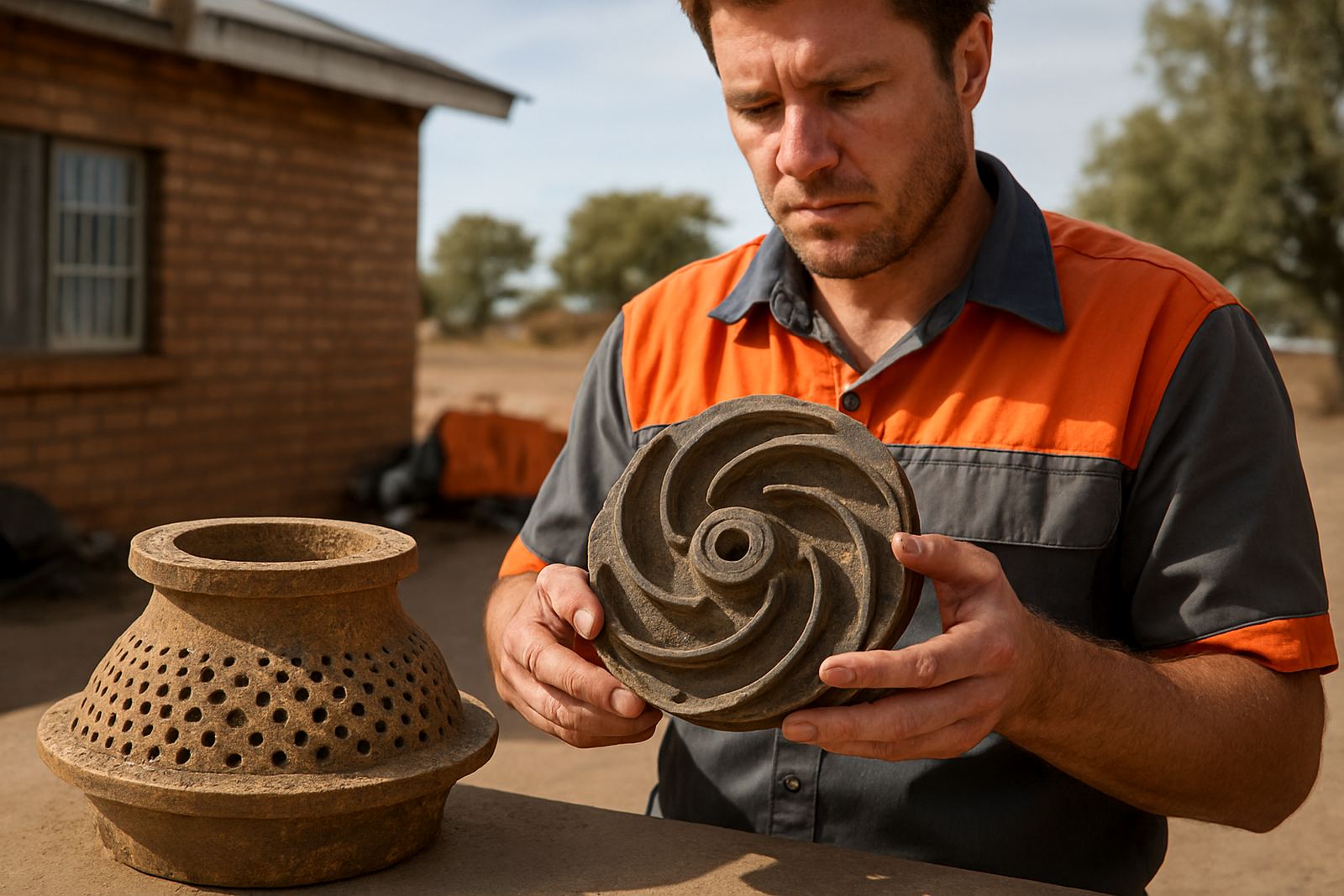
Why abrasive water wears pumps out early
When water carries fine sand, every turn of the impeller and every pass through the seals starts acting like sandpaper. Over time the clearances open up, the pump loses pressure, and the motor must work harder just to deliver the same flow. That extra strain can lead to higher power use, overheating and early failure.
This is common on boreholes, farm lines, transfer systems and even some municipal supplies after pipe breaks or repairs. In places like Kimberley, Roodepan, Galeshewe, Kuruman and Upington, people often see the problem after dry spells, heavy pumping or when a source starts drawing from the bottom of a sandy sump.
The warning signs are usually plain enough: reduced water pressure, a gritty sound, frequent seal failure, and pumps that trip more often than they should. If the water suddenly looks cloudy after startup, that is often a sign the system is pulling up settled grit.
The parts that suffer first
Sand does not wear everything evenly. Some parts take the first hit, and once they are damaged the rest of the unit follows quickly. The most common trouble spots are the impeller, wear ring, mechanical seal, bearings and check valves.
- Impeller: Blades and edges erode, so the pump moves less water.
- Mechanical seal: Fine grit gets in and causes leaks around the shaft.
- Bearings: Extra load and vibration shorten bearing life.
- Non-return valve: Sand can stop it sealing properly, causing backflow and water hammer.
- Motor: A strained pump pulls more current and may overheat.
Once the seal starts leaking, many owners keep running the unit for a while, hoping it will hold out. That usually turns a small repair into a bigger one, because the water and grit then reach the bearings and electrical parts too.
Protection that actually helps on site
There is no single fix for sandy water. Good protection usually combines filtering, correct pump selection and sensible operating habits. The aim is to stop large particles, slow down fine abrasion and avoid pulling from the dirtiest part of the source.
- Strainers and suction baskets: Fit the right mesh size for the application and keep it clean.
- Pre-filters or sand separators: Useful where water carries a steady grit load.
- Correct suction height: Do not place the intake too close to the bottom of a sump, tank or borehole draw point.
- Duty selection: Choose a pump that suits the water quality and the flow needed, not just the cheapest unit.
- Flush points: Add a way to flush the line before grit settles for long periods.
If the water source is very dirty after rain or during pumping cycles, a staged setup may help more than one big pump. That can include a collection tank, a settling point, then the delivery pump after the worst grit has dropped out.
A Kimberley example from a dusty source
A small business outside Kimberley had a pump feeding irrigation and a wash bay from a shallow source. The water looked fine at first, but the pump kept losing pressure and the seals failed twice in one season. When the line was opened, there was fine sand packed into the intake and around the impeller housing.
The fix was not complicated, but it had to be practical. The intake was lifted, a better strainer was fitted, and a settling drum was added ahead of the pump. The team also changed the cleaning routine so the strainer was checked every week, not only when there was a breakdown. After that, the pump life improved and the unit ran cooler, with fewer call-outs.
That sort of outcome is common. The pump life shortens quick if the source is left unchanged, but a few proper changes can make a real difference.
How to know when to service instead of replace
Not every sandy pump needs a full replacement. In many cases, a service with new seals, bearings and worn components is enough, provided the body and motor are still in good condition. The decision usually comes down to how far the wear has spread.
Replacement makes more sense when the casing is badly scored, the motor windings are damaged, or repairs are becoming too frequent to justify the downtime. For sites that cannot afford repeated stops, it is often better to plan a proper upgrade than to keep patching the same unit.
A good maintenance record helps here. If you note pressure, current draw, water clarity and repair dates, it becomes easier to see whether the pump is being damaged by the source or by the way it is being operated.
Simple habits that save money over the season
Some of the best protection costs very little. Regular checks, cleaner intake water and a close eye on vibration can save a lot of money over a dry season. On farms, workshops and commercial sites, that matters because one failed pump can stop cleaning, cooling, irrigation or transfer work all at once.
- Check the strainer after dust storms or high-use periods.
- Listen for a change in sound at startup or under load.
- Watch for pressure drop, surging or air in the line.
- Keep spares for seals, fittings and common wear parts.
- Service the unit before peak demand, not after the breakdown.
In the Northern Cape, where water is precious and repair travel can take time, prevention is the better habit. It also helps with compliance where tanks, boreholes and discharge lines must be kept in proper working order.
Getting the right help for sandy water systems
When a pump keeps failing, the real issue is often the source water, not the pump alone. A proper site check should look at intake position, flow demand, filtration and the condition of the full line from source to outlet. That gives a better answer than swapping parts one by one.
Modern Equipment supports pump installations and pump repairs from New Park in Kimberley and works across the Northern Cape, including Upington, Kuruman, Galeshewe and Roodepan. For systems affected by sand, the aim is to keep water moving while limiting wear, so the unit lasts longer and the breakdowns stay fewer.
If your pump is losing pressure, running noisy or eating seals, it is worth checking the water source before the next repair. The problem may be in the water, not the machine.