Start with the building, not the machine
Before you turn the thermostat down, look at what is letting heat in. In Kimberley summer, direct sun through west-facing windows can lift a room temperature very fast, especially in metal-roofed houses, workshops and small offices. Closing curtains early, fitting reflective film where permitted, and sealing gaps around doors can make a real difference without using extra power.
If you run a shop, surgery, small factory or office in New Park or town, check the roof space as well. A ceiling that lets heat pour straight through will force any air-conditioning unit to work harder. Even basic insulation, a clean ceiling void and a closed roof hatch can lower the load. It is not glamorous, but it works.
For older buildings, pay attention to air leaks around windows, service doors and roller shutters. Warm air sneaking in every time someone walks through a door means the unit is cooling the street, not the room. In practice, the smallest gaps can add up by the end of the day.
Use your air-conditioning on a steadier setting
When the heat climbs, many people keep lowering the set temperature. That usually does more harm than good. A unit works best when it can hold a steady setting and maintain airflow. In many homes and offices, 22 to 24 degrees C is a practical range for comfort in summer, especially when the room is shaded and not overfilled with people.
Set the fan to suit the room and avoid switching the system on and off all day. Short bursts of use can leave the space muggy and the compressor under unnecessary strain. If you are opening and closing a room often, let the unit run a little longer at a stable setting rather than chasing quick fixes.
- Keep doors shut in cooled rooms whenever possible
- Use blinds or curtains before peak sun reaches the windows
- Do not block return air grilles with boxes, files or stock
- Check that the thermostat is not sitting in direct sun
On hotter days, a ceiling fan can help move the cooled air around so the aircon does not have to do all the work. That can be useful in family rooms, reception areas and light industrial spaces where people move in and out often.
Clean filters and coils before the first heat wave
Dust is part of life in the Northern Cape, and it clogs filters quicker than many people expect. A dirty filter reduces airflow and can push power use up while the room still feels warm. In a home near busy roads, or in a workshop with sanding, packing or storage work, filters may need attention more often than once a season.
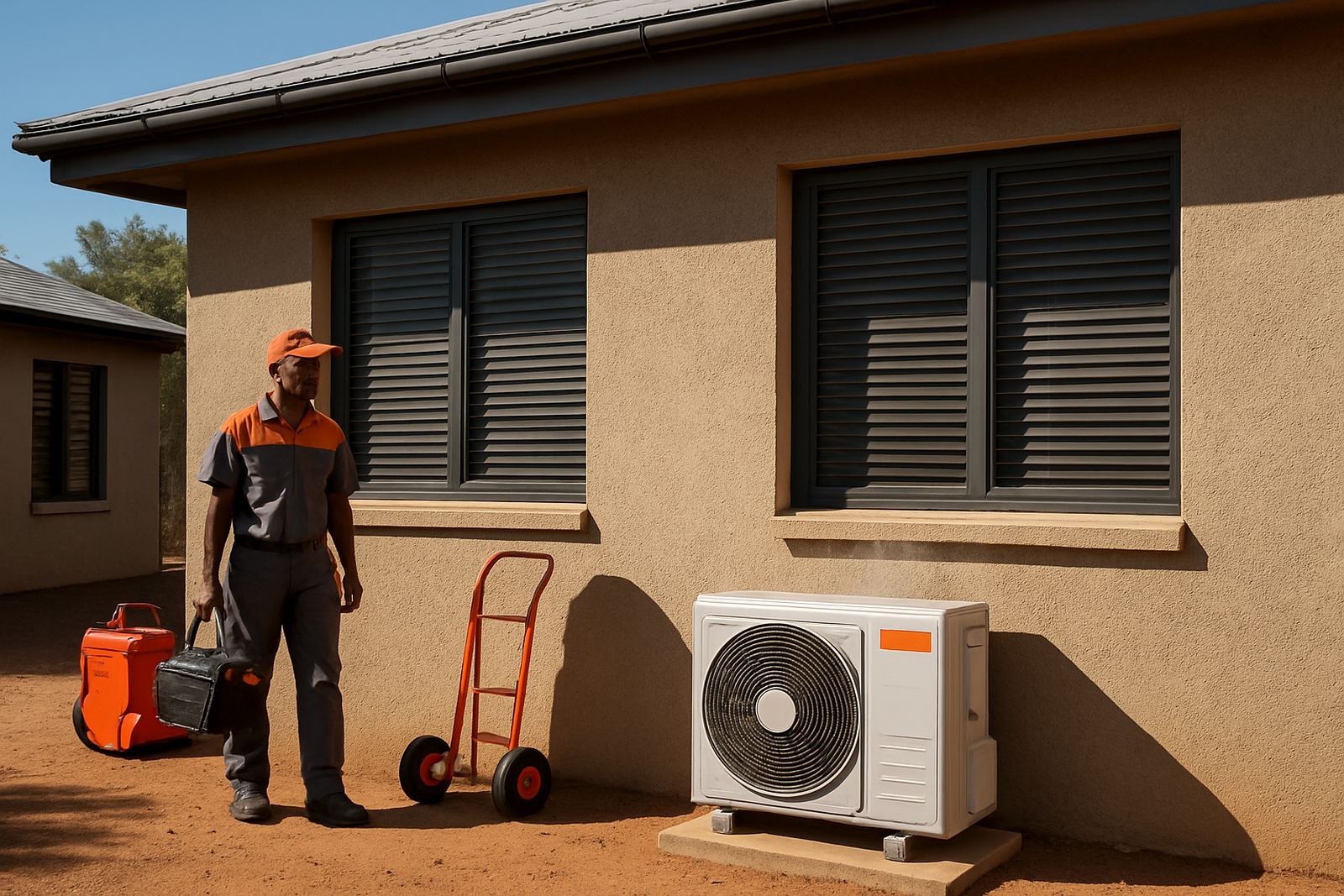
Filters should be cleaned or replaced before the hottest stretch of the year, not after the unit has already been struggling. Outdoor coils also collect dust, fluff and seed. If the outside unit is packed against a wall or sitting in a tight corner, hot air cannot escape properly. Give it enough breathing space and keep shrubs, rubbish and stored goods clear of it.
When a unit is cooling poorly, making more noise than usual or dripping inside, do not assume it is just the weather. It may be low on gas, have a blocked drain, or be running with a fan motor that is getting tired. A quick service now can prevent a breakdown when the afternoon temperature is at its worst. This is where a proper inspection saves money later, not after the fact.
Cut the heat before it reaches the room
In Kimberley, the best cooling move is often to stop heat from building up in the first place. Appliances give off more heat than people think. Ovens, tumble dryers, old fridges with worn seals and even some lighting can warm a room quickly if they run for long periods. In a small office, a server cupboard or copy corner can become a hot spot by lunch time.
Simple changes help:
- Cook early in the morning or later in the evening
- Switch off unnecessary lights in unused rooms
- Keep fridge and freezer seals in good condition
- Move heat-producing equipment away from cooling outlets
- Use shaded outdoor areas for prep work where suitable
If you manage a property or business premises, think about where equipment is placed. A printer bank, battery charger or glass-front fridge under direct sun will fight against the cooling system all day. A better layout can reduce heat gain before it becomes a problem.
Plan around load-shedding and power cuts
Summer heat and load-shedding do not mix well. When power returns after an outage, many people switch everything on at once. That surge can be hard on compressors, pumps and control gear, especially where supply voltage is already erratic. Staggering start-up helps. Bring the cooling system back first, then add other equipment a few minutes later.
For homes and businesses that depend on temperature control, backup planning is worth doing before the first hot week. A small solar backup system, battery support for critical circuits, or a correctly sized inverter can keep essential fans, lights and some refrigeration running through short outages. It will not solve every problem, but it can protect stock, comfort and productivity.
Fridges, freezers and cold rooms should also be checked after any extended outage. If the temperature has climbed too high, contents may need attention straight away. In butcheries, cafés and small shops around Kuruman, Upington and Kimberley, that can make the difference between saving stock and losing it.
Know when a service call is better than another quick fix
There is a point where careful use is no longer enough. If the aircon runs all day and still cannot pull the room down, or if the unit trips, leaks water, smells musty or struggles to start, it needs a proper look. The same goes for ventilation systems that are noisy, uneven or moving less air than before.
For business premises, regular servicing keeps the unit ready for peak heat and can reduce callouts during the busiest months. For homes, a seasonal check is often enough if the system is in good condition and the filters are kept clean. If your premises also rely on pumps, cold rooms or auto aircon, the same practical approach applies: catch small faults early, before they grow into a full breakdown.
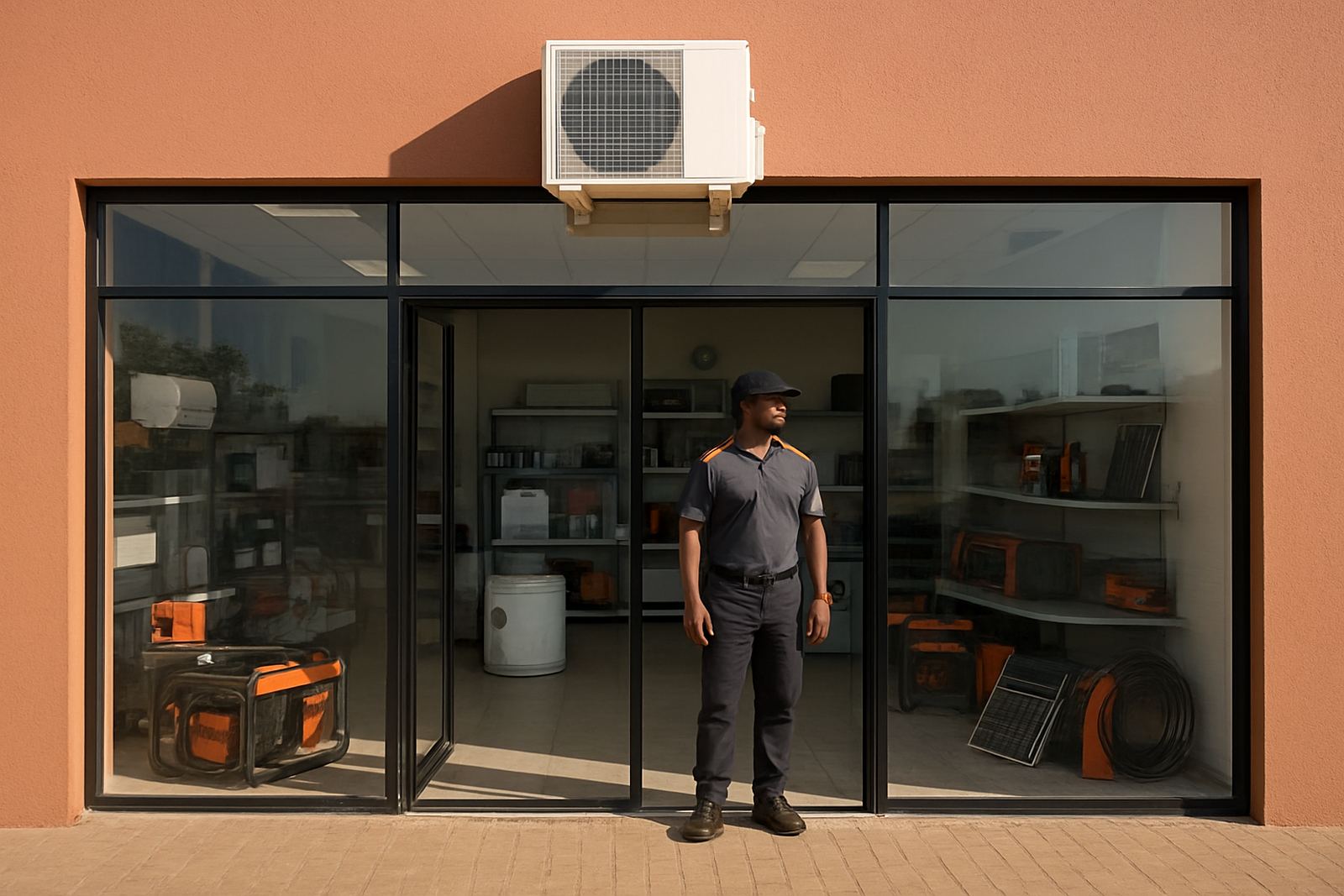
Modern Equipment supports Kimberley and surrounding areas with aircon installation, servicing, refrigeration repairs, cold room builds, ventilation work, pump installations, solar backup and auto aircon service. In a place like New Park, where a hot afternoon can hit hard and fast, having the right gear on hand and the right people to install or service it makes summer a lot easier to manage.