How condensate water should leave the system
Every cooling system pulls moisture out of the air. That water lands in the drain tray, then moves through a small drain line to a safe discharge point outside or into a proper waste connection. When everything is set up right, you should never see standing water in the unit, on the wall, or under the ceiling.
The problem starts when the tray, pipe, or outlet cannot move that water quickly enough. A line only needs a small build-up of dust, slime, rust flakes or insulation scraps to slow the flow. Once the pipe starts holding water, more dirt settles in it and the blockage gets worse.
- Dust from workshops, yards and roads enters the unit with the air.
- Moisture mixes with that dust and forms sludge.
- Biofilm grows inside the pipe where it stays damp.
- Poor falls in the pipe let water sit instead of draining away.
Why dust and biofilm are such a problem in Kimberley
In New Park, Roodepan and Galeshewe, we see a lot of fine dust. It gets into filters, then into the drain pan and line. Once the system switches off, the pipe can stay wet for hours. That damp surface is ideal for biofilm, which is a slippery layer formed by bacteria and dirt. It is not always visible from the outside, but it can narrow the pipe until water backs up.
In the Northern Cape, heat and load-shedding can make the problem worse. During hot periods, systems work longer and make more condensate. If the unit stops and starts often, the tray may stay full for longer than normal. Add a dirty filter or a low spot in the drain and you have a leak waiting to happen.
- Dust settles faster where doors are left open or equipment creates airborne particles.
- Biofilm sticks to plastic and copper surfaces inside the line.
- Warm weather speeds up growth in the wet drain pan.
- Blocked outlets at the end of the line can push water back into the unit.
Signs the drain line is already blocking
Most drain faults give warning before the water starts running onto a floor or ceiling board. The trick is spotting the signs early enough. A unit that smells musty, drips only after switching off, or leaves a wet mark near the indoor head may already have a partial blockage. You may also hear gurgling, or notice the fan blowing harder because the tray is holding water.
If the drain is blocked for long enough, water can overflow into the casing, the wall cavity or the ceiling void. That is when repairs get more expensive. It is not just about cleaning the pipe, it may mean replacing damaged insulation, plaster, electrical parts or ceiling material. Best to catch it early, before water finds its own way out.
- Water dripping from the indoor unit.
- Stains on ceilings, walls or bulkheads.
- A damp smell after the unit runs.
- Gurgling sounds from the drain pipe.
- Water on the floor only after the unit has been off for a while.
Local examples from workshops, shops and homes
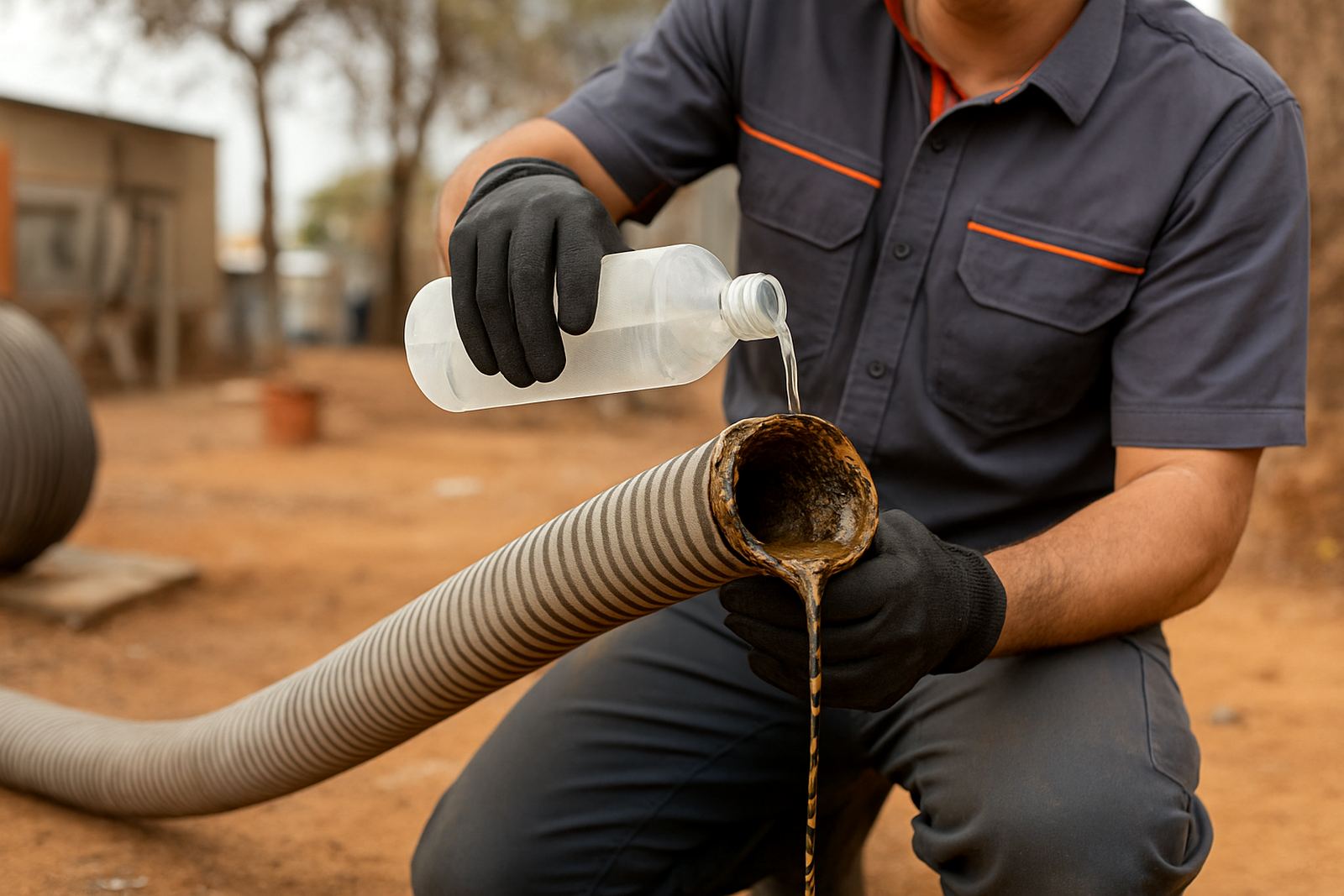
We often see blocked drains in small offices, shops and workshops around Kimberley where the aircon runs hard during the day and then sits idle overnight. One common case is a unit above a stock room or reception area. The line looks fine from the outside, but the inside of the pipe is lined with black slime and dust. A quick flush clears the water for now, yet if the filter is not cleaned and the line is not checked, the leak comes back within weeks.
Another common example is a ceiling-mounted unit above a corridor in Upington or Kuruman. The installation may have a weak fall on the drain pipe, or the outlet may be too high. Even a small sag in the line can trap water. That trapped water collects dirt, then blocks the pipe bit by bit. In summer, when the system works for long hours, the overflow becomes obvious very fast.
What good servicing should include
A proper service should do more than wipe down the cover and check gas pressures. The drain line needs attention too, because it protects the building as much as the cooling unit protects the room. If the drain tray is dirty or the outlet is blocked, the rest of the system can be working perfectly and you will still get a water problem.
For commercial sites, we recommend checking the drain path every service visit, especially where there is dust, cooking vapour, or chemical fumes. Those conditions build up grime faster. In coastal humidity it is common to find slime in the pipe, but in the Northern Cape the issue is often dry dust turning to paste inside the line.
- Flush the drain line and confirm free flow.
- Inspect the tray for dirt, rust and algae.
- Check pipe fall and support points.
- Clear the outlet where it discharges outside.
- Test for leaks after the unit has run for a while.
Simple prevention that saves water damage later
The best prevention is regular cleaning and a proper installation from the start. The drain line must fall away correctly, the pipe size must suit the unit, and the discharge point must be easy to inspect. If the line disappears into a ceiling without access, it becomes harder to clear when it blocks. That is where small maintenance jobs turn into emergency call-outs.
For businesses in New Park, Galeshewe, Roodepan and surrounding areas, a seasonal check before the hottest months is a good habit. It helps spot dust build-up, weak drainage and signs of wear before the unit starts dumping water where it should not. A clean drain line costs far less than fixing damaged ceilings or replacing ruined stock. If you need help with air-conditioning servicing, refrigeration repairs or commissioning support, it pays to get the basics sorted before the leak starts.