Why shopfronts lose cool air so quickly
A retail space is different from a closed office or storeroom. Customers come and go, staff move stock in and out, and entrance doors stay open longer than anyone would like. Add large glass panels facing the afternoon sun, and the indoor temperature rises fast even when the aircon is running properly.
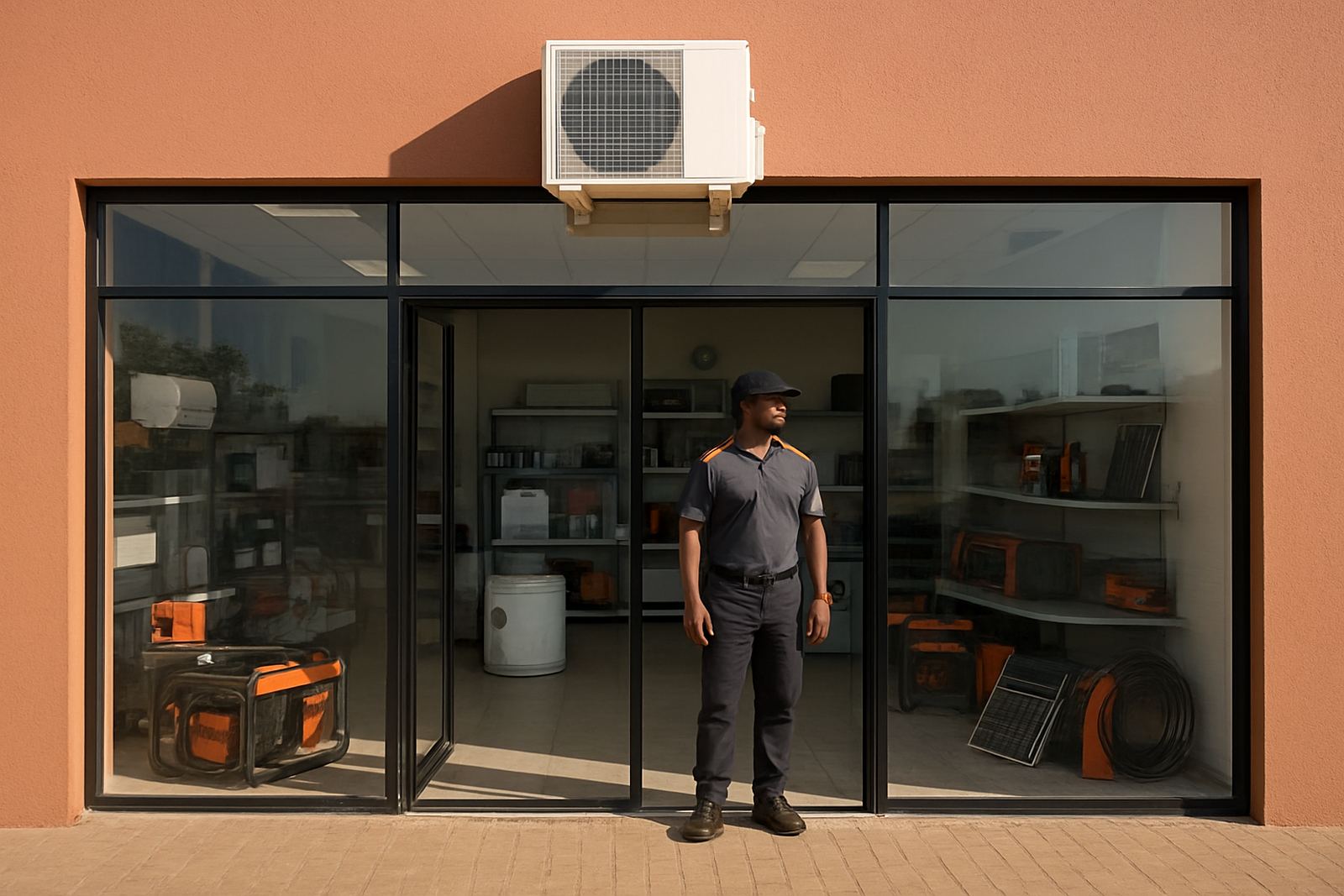
In New Park and central Kimberley, many shops have wide frontages that look good from the street but take a hard knock from direct solar heat. Glass lets in light and warmth, while the front entrance acts like a constant air exchange point. If the unit is too small, poorly placed or overdue for service, it will run flat out and still struggle to keep the space steady.
The main heat gain points retailers often miss
Cooling problems usually start with heat entering faster than the system can remove it. That means the aircon is not always the real problem, even if it is the first thing staff blame when the till area feels sticky by midday. The issue is often a mix of building layout, trading habits and equipment sizing.
- Direct sun on glass panels during morning or afternoon trading hours.
- Open doors left wide for deliveries, especially at peak trade.
- Frequent customer movement creating constant warm air infiltration.
- Display lighting and plug load from fridges, tills and screens.
- Poor ceiling insulation or hot roof spaces above the sales floor.
In the Northern Cape, even a small imbalance can matter. A retail shop that feels fine at 8 am may be uncomfortable by 2 pm, especially if the sun is hitting the front window and the back of the shop is full of heat from equipment and people.
How layout and equipment choice change the result
Shopfront cooling works best when the system matches the space, the opening pattern and the way the business trades. A single unit placed in the wrong spot can leave the entrance hot while the back wall freezes. Too much capacity is also a problem, because the unit cycles too quickly and does not remove enough moisture from the air. That leaves the shop feeling cold but still damp.
For a retail unit in places like Roodepan, Galeshewe or Upington, the right setup often means more than just buying a bigger aircon. Air distribution, return-air position and ceiling height all matter. If there is a constant stream of people entering and leaving, a technician may also recommend a split strategy with more than one indoor unit, or a support fan layout that helps move cooled air across the front line. This saves power and keeps the customer area more even.
When the sales floor is packed with fridges, freezers, cabinets or other heat-making equipment, the cooling load can rise sharply. A proper assessment should factor in those internal gains, not just the floor size. It is better to size once and get it right than to keep adding units after the first summer exposes the weak spots.
Simple shopfront changes that cut the heat load
Not every solution needs major building work. Some of the most effective changes are basic and inexpensive, and they can reduce strain on the cooling system straight away. In a town like Kimberley, where load-shedding and high daytime temperatures can both interrupt trading, small improvements help keep the shop more predictable.
- Fit sun control film or blinds on exposed glass where allowed by the landlord.
- Use a door policy that keeps entrances closed when foot traffic allows.
- Check for gaps around doors that let hot air leak in from outside.
- Service filters, coils and drain lines before the start of the hot season.
- Keep display fridges and heat sources away from the main return-air path.
These steps do not replace proper cooling capacity, but they can reduce wasted effort. A clean, well-sealed shop often feels cooler at the same thermostat setting than a leaky one with the same equipment.
A Kimberley example from a glass-fronted retail space
A clothing shop in New Park faced a familiar problem. The front windows took direct sun from late morning, the door stayed open for customers, and the staff kept complaining that the till area felt stuffy while the back fitting area was too cold. The owner had already lowered the thermostat, but power bills were climbing and comfort was still uneven.
After a site check, the issue turned out to be a mix of poor air throw, dirty filters and heat gain from the front glass. The cooling unit was not faulty, but it was working against the building. Once the filters were cleaned, the indoor layout was adjusted and the front heat load was reduced with better door control, the temperature settled down. The shop did not need drama, it needed balance.
This kind of case is common across Kimberley and the wider Northern Cape. Retailers often expect the answer to be a bigger machine, yet the best result sometimes comes from understanding where the heat enters and how the air moves through the store.
When servicing is no longer enough
If the unit runs continuously, the shop still feels hot, or the air from the indoor head is cool only near the front, it may be time to look beyond routine servicing. A worn compressor, low gas charge, blocked coils or damaged insulation can all reduce performance. So can bad wiring, unstable supply or poor maintenance after a long season of dust and heavy use.
Retail owners should also take power realities into account. During load-shedding, some shops use solar backup or generator support to keep cooling going for essential trading hours. That approach only works properly when the aircon load, pump load and other equipment are planned together. Guessing usually costs more later.
For shopfronts that are growing or changing use, commissioning support is worth having from the start. It helps confirm that the system is cooling the right zone, moving enough air and coping with the actual trading pattern, not only the drawing on paper.
Getting retail cooling right in the Northern Cape
Good shopfront cooling is about comfort, stock protection and steady trade. If a space is too warm, staff tire faster and customers do not linger. If it is too cold in one spot and warm in another, the experience feels uneven and the system works harder than it should. In a place where summer heat can build quickly and outages can interrupt the day, that extra strain matters.
Modern Equipment supplies and supports air-conditioning, refrigeration, ventilation, pumps, auto aircon and solar backup from New Park in Kimberley. The team works across Roodepan, Galeshewe, Kuruman, Upington and the wider Northern Cape on installation, servicing, repairs and commissioning support. For retail cooling challenges, the right first step is usually a proper look at the entrance, glass, roof space and internal heat sources before anyone changes the equipment.