Why dry-region dust builds up so fast
In the Northern Cape, panels spend much of the year dealing with fine dust, wind-blown grit, pollen and bird mess. Add morning dew, then a hot afternoon, and that film can bake onto the glass. Once dirt starts to settle, the panel surface does not shed it evenly, so the system may keep working but not at the level the owner expected.
The effect is not always dramatic from one day to the next. It builds slowly, which is why many people only notice the drop when the inverter readings start looking low compared with earlier weeks. In New Park, Roodepan and Galeshewe, where open yards and unpaved edges are common, panels often need more regular attention than in wetter coastal towns.
- Dust reduces light reaching the cells.
- Bird droppings create hard shaded patches.
- Hard water can leave mineral spots after washing.
- Loose leaves and lint collect at the frame edges.
The signs your panels need attention
A solar array does not usually fail overnight. The clues show up in small ways first. If the batteries take longer to charge, if daytime loads start drawing more from the grid, or if one string seems weaker than the others, it is worth checking the surface condition before looking for a bigger fault.
Homeowners and workshops often assume the inverter is to blame, but dirty modules are a common reason for underperformance. A quick visual inspection can save a lot of guesswork. In a place like Kimberley, where dust storms can arrive between normal service visits, a system may need cleaning more often than the original handover estimate.
- Visible streaks, dull patches or brown film on the glass.
- Bird droppings near the top row or along the lower edge.
- Panels that look clean from the ground but still underperform.
- Hot spots or isolated weak readings during testing.
Safe cleaning methods that protect the glass
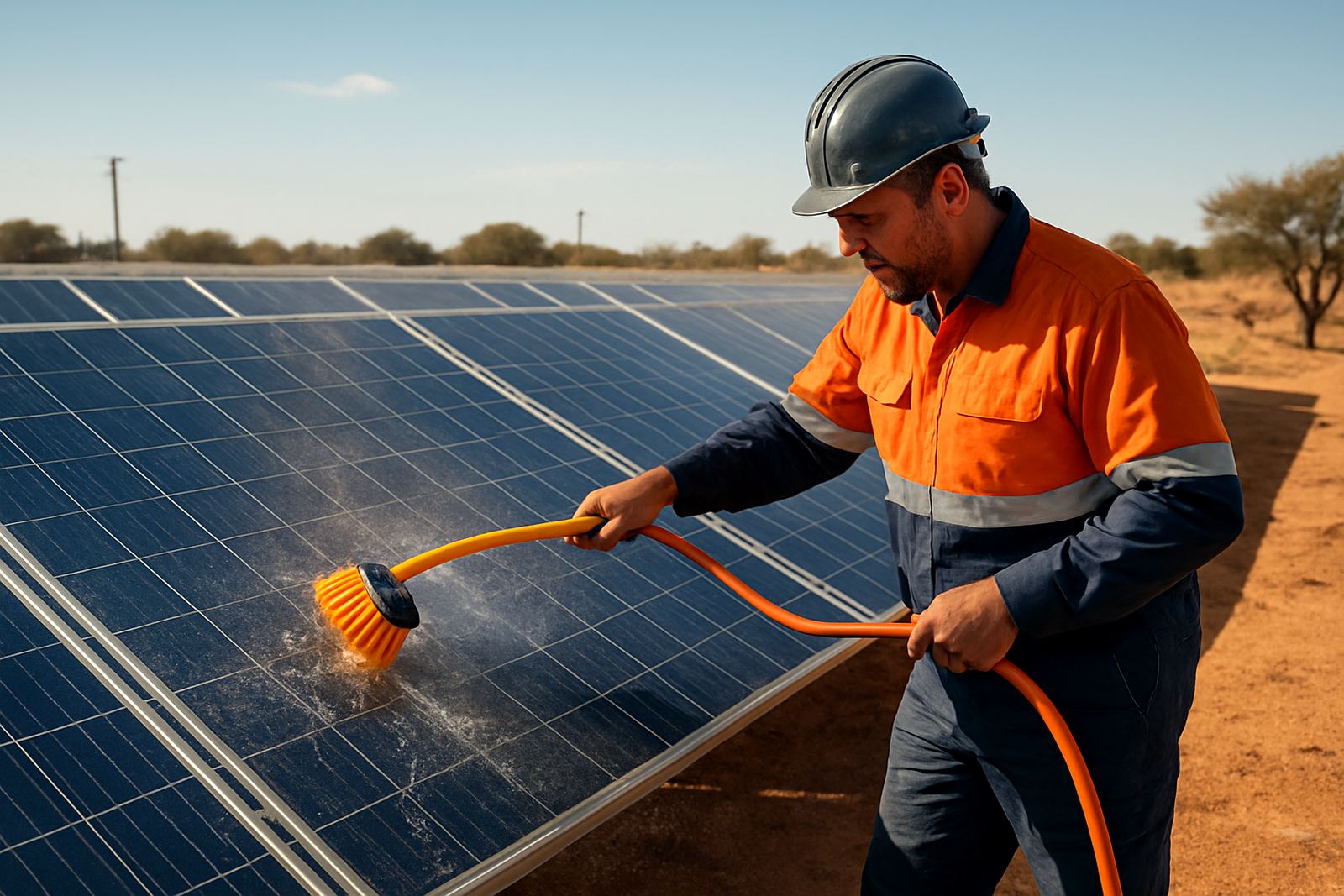
The goal is to remove dirt without scratching the surface or pushing water where it should not go. Use soft equipment, work early in the morning, and keep an eye on the panel temperature. Very hot glass and cold water can create stress, so cleaning is best done before the sun gets sharp.
For roof arrays, safe access matters as much as the cleaning itself. A rushed job can loosen fittings, damage seals or leave the system with water pooling around cable entries. That is why many property owners prefer a scheduled service instead of trying to hose down the array after every dusty weekend.
- Use clean water and a soft brush or sponge.
- Avoid harsh chemicals, scouring pads and abrasive powders.
- Do not spray directly into junction boxes or open cable points.
- Check mounting points and seals while the array is accessible.
How often to clean in Kimberley and nearby towns
There is no single rule for every site. A farm out near Kuruman, a workshop yard in New Park, and a residential roof in Upington will collect dirt at different rates. Wind direction, traffic, nearby construction and bird activity all affect the schedule. In dry inland conditions, monthly checks are sensible, with actual cleaning based on what the panels show.
For many users, a light wipe is enough between proper washes. Heavy dirt or stubborn droppings should not be left until the next quarter, because those marks can create uneven heating and reduce output in a way that is hard to spot without a meter reading. On systems carrying essential loads, that lost production can be felt during load-shedding or on cloudy days when every watt counts.
- Monthly: visual inspection from the ground and at the inverter.
- Every 6 to 8 weeks: cleaning for dusty suburban and commercial roofs.
- After storms: check for mud, branches, and bird nesting near the array.
- Seasonally: review output against the same month last year.
What the Northern Cape climate does to solar output
Dry air helps panels in one way, but heat and dust can work against them. Very high temperatures can reduce efficiency, and when the glass is dirty as well, the loss becomes more noticeable. That is why a system that looked strong in winter may seem less impressive by late summer even if nothing is electrically wrong.
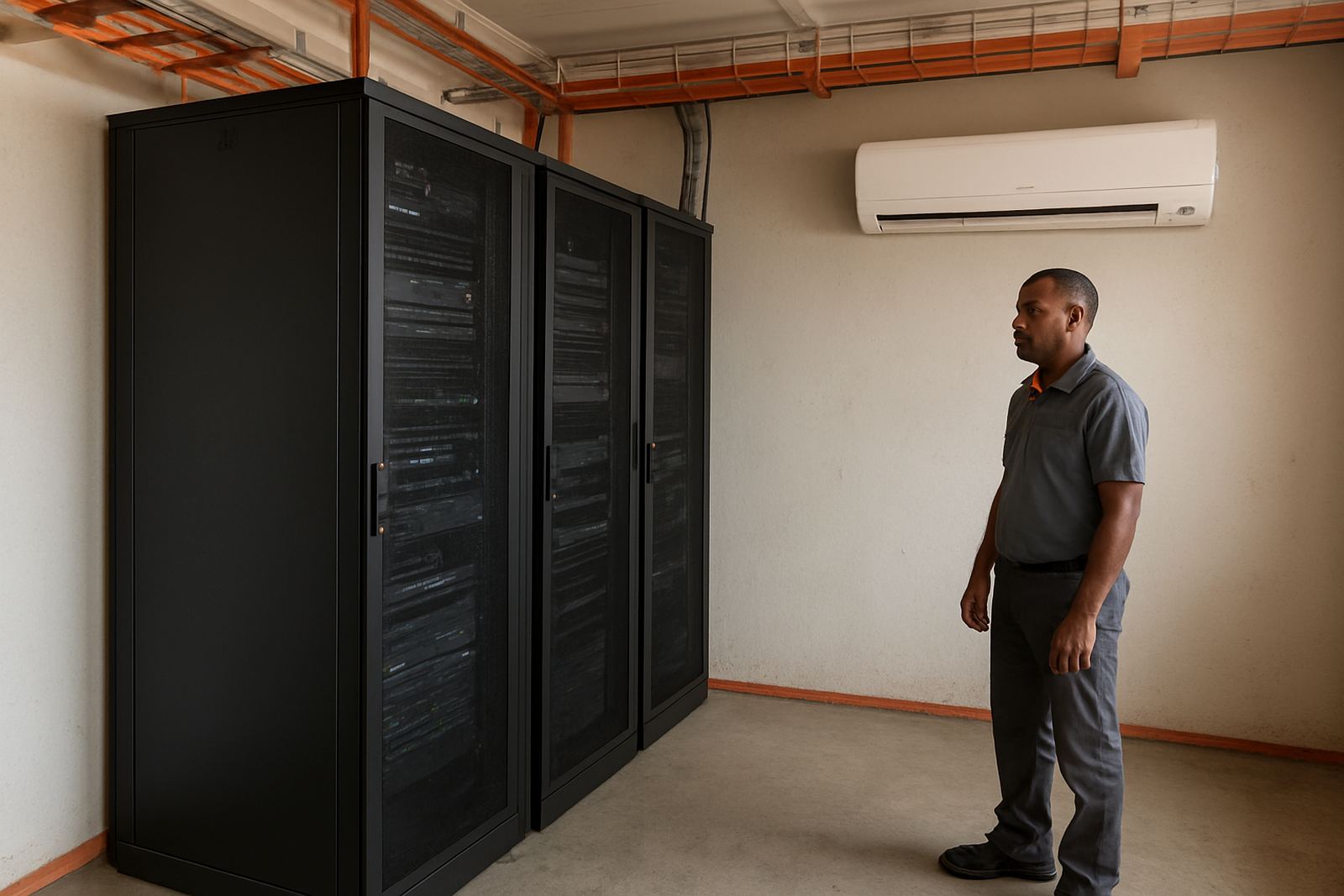
Older homes and small businesses often run mixed loads, with fridges, pumps, lights and office equipment all sharing the same supply. If panel output drops, batteries may carry more of the load and discharge earlier in the day. Over time that puts pressure on the whole backup setup. A clean array will not solve every energy issue, but it gives the batteries the best chance to charge fully.
A Kimberley example from a dusty workshop yard
One common local example is a workshop in New Park with panels set above a wide yard used for vehicles, tools and deliveries. The site can look fine from the street, yet after a few windy weeks the panels collect a fine grey coat that is hard to see from ground level. Staff may only notice when the batteries do not recover as quickly by late afternoon.
After a proper clean and a check on the mounting points, the readings often improve straight away. That does not mean the system was broken, only that dust had been stealing performance in small amounts every day. For businesses trying to keep equipment running through long hot spells, that difference can matter more than people expect.
- Keep records of cleaning dates and output readings.
- Compare morning and afternoon generation on clear days.
- Include panel checks in broader service visits for inverters and batteries.
When to call for help instead of doing it yourself
If the array is on a steep roof, if wiring is exposed, or if there is evidence of cracked glass, it is better to stop and bring in a technician. Panels are only one part of the system. Mountings, isolators, protection devices and cable routes all need a careful look too. A clean surface helps, but a loose connector or damaged seal can still lead to trouble later.
Modern Equipment supports solar backup installation and commissioning across Kimberley, Roodepan, Galeshewe, Kuruman and Upington, and that includes practical checks that keep systems earning their keep. If dust, grime or poor access is making an array hard to manage, a planned service is usually cheaper than waiting for a bigger fault to show up.
For advice or a scheduled visit, contact the team in New Park, Kimberley on info@modernequipment.co.za.