Why airflow matters in a packing shed
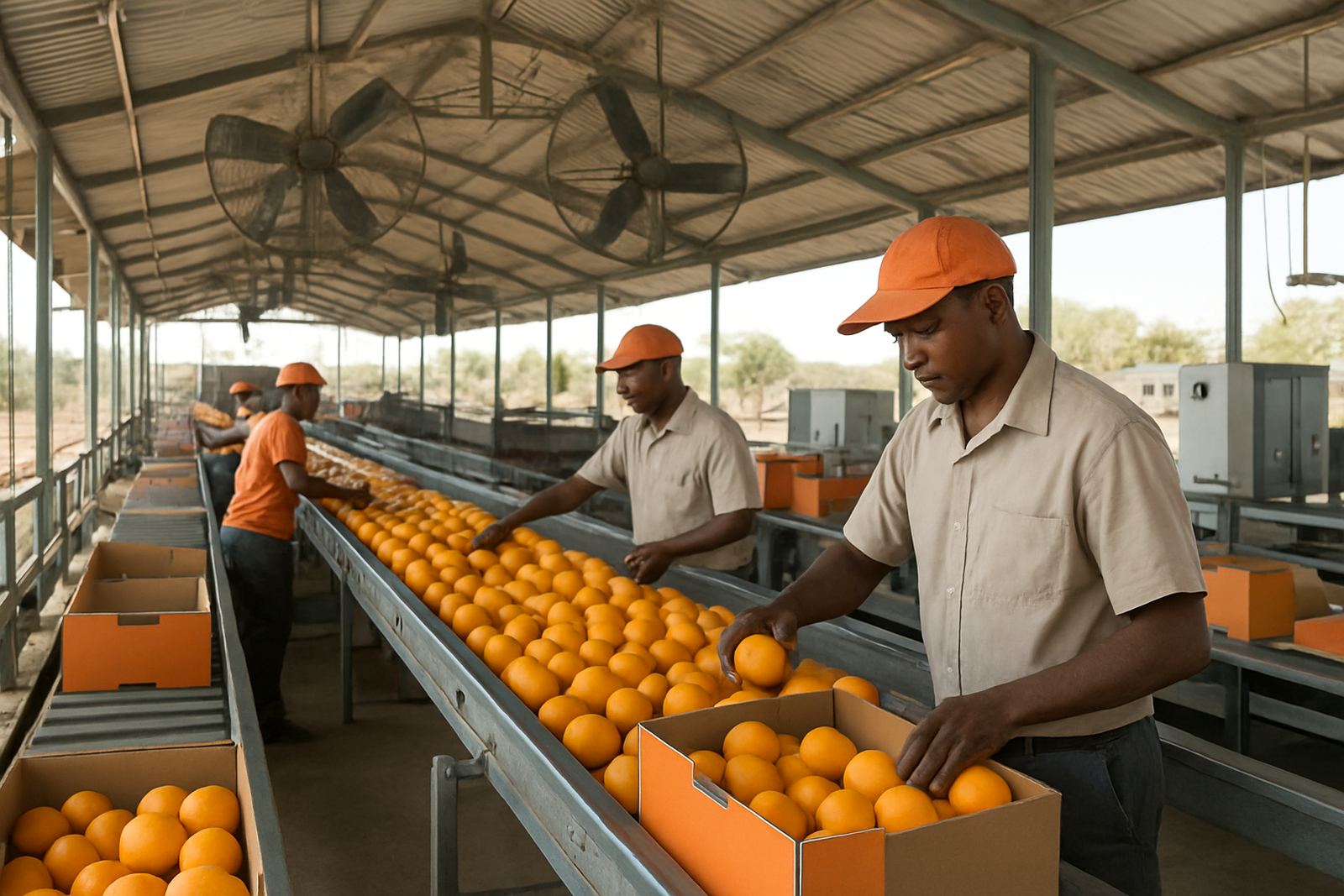
Once produce comes in from the field, the clock starts ticking. Heat build-up, moisture pockets and stale air can speed up spoilage, encourage condensation on cartons and make grading tables uncomfortable for staff. In a packhouse, airflow helps remove heat from people, machinery and product, while also carrying away odours, dust and excess humidity.
The main aim is not to make the room feel windy. It is to create steady movement across the working area and out through planned exhaust points. That keeps fresh air coming in and prevents dead spots where warm air sits under the roof. If a packhouse has high ceilings but poor air movement, the top can be hot and the lower working zone can still feel stuffy.
In practical terms, better airflow can mean fewer soft patches on fruit, less sweating on chilled cartons and a more comfortable line for staff. For a business handling grapes, citrus or mixed vegetables around Kimberley, that can make a real difference through the long summer days.
Start with the building shape, not the fan size
People often ask what size fan they need first. A better question is where air should enter, move and leave. Roof height, door position, roller shutter use and the direction of prevailing wind all shape how air behaves. If the intake and exhaust points are badly placed, even a large fan can leave corners stagnant.
Walk the packhouse during a normal shift and note where workers feel heat, where condensation shows up and where dust gathers. Those signs usually point to poor circulation. In older sheds around New Park and Roodepan, we often see one open side drawing in air while another end stays still. The fix may be as simple as adding louvred openings, redirecting extract points or moving a circulation fan to a better height.
- Keep intake openings clear of pallets and parked vehicles.
- Use high-level exhaust to remove hot air that rises under the roof.
- Separate clean packing zones from dirty wash-down areas where possible.
- Check that doors used for loading are not fighting against the airflow pattern.
Air should move from cleaner to less clean areas where practical, not the other way round. That helps protect produce and supports better hygiene on the floor.
Use extraction and circulation together
A common mistake is to fit only extraction fans and expect the whole building to improve. Extraction alone can pull air out, but without a planned route for make-up air it may create short-cycling or dusty inflow through gaps you never intended to use. Circulation fans help push air across the work zone so the system does more than just empty warm air from one point.
In a packhouse, extraction suits heat and odour removal near wash areas, sorting rooms or machine corners. Circulation suits grading lines, staff stations and pre-cooling waiting areas. The two jobs are different. When matched properly, they reduce hot spots and improve the feeling of air movement without making it uncomfortable for people standing at a table for hours.
- Place circulation fans above head height, angled to move air over people, not directly into faces.
- Use extraction near moisture sources such as wash bays and damp floor areas.
- Allow enough make-up air so the building does not suck in dust from every crack.
- Check that fan guards, motors and mounts are suitable for dusty conditions.
If the packhouse handles produce in open crates or bruising-prone cartons, the airflow must be gentle enough not to dry out surfaces too quickly or blow light packaging around.
Control heat, humidity and dust at the same time
Airflow basics are about more than comfort. They also help control three troublemakers at once: heat, humidity and dust. A hot room shortens shelf life. High humidity can cause condensation on packaging and metal surfaces. Dust can settle on product, equipment and lighting, then move back into the air when workers sweep too aggressively.
For produce handling, the best results usually come from a simple routine. Keep the floor dry where possible, fix leaks quickly and ventilate wash areas after cleaning. If the room has cooler air available, move it through the packhouse at a steady rate rather than in bursts. Short bursts often feel good for a minute, then the heat just settles back in.
Where the building is close to an outdoor road or yard, dust control matters even more. Filters can help on certain systems, but they need maintenance and regular checks. A blocked filter can reduce airflow enough to undo the whole setup, so it pays to inspect them on a schedule rather than waiting for trouble.
Plan for load-shedding and backup operation
In the Northern Cape, packhouse airflow cannot depend on perfect power. If the fans stop during a hot afternoon, temperatures can climb fast and staff comfort drops just as quickly. That is why backup planning matters. Some sites use solar power with battery support for critical ventilation points, while others prioritise a smaller set of fans that can run during outages.
The key is to decide what must stay on. Not every fan needs backup, but certain areas often do: sorting lines, cold rooms, pre-cooling spaces and wash-down zones where moisture can build quickly. A sensible backup plan should also account for starting current, not just running current. If a motor is too large for the backup system, it may not restart properly after an outage.
On a recent-type setup in the Kimberley area, a packhouse improved working conditions by giving priority power to extract fans over a grading line and two circulation units. That did not solve everything, but it kept the building usable during the worst of load-shedding and reduced the morning catch-up after power returned. Small choices like that matter when the clock is already tight.
Match airflow to produce handling and staff comfort
Every packhouse has a slightly different rhythm. Some run early morning harvest intake and afternoon dispatch. Others handle cold storage, sorting and repacking in the same space. The airflow plan should fit the actual workflow, not just the floor plan. That means thinking about where people stand longest, where product waits longest and where the most heat is generated.
A good rule is to observe the building on a busy day and ask three questions: where does heat collect, where does air stall and where do people complain first? Those answers usually show the real problem. In one shed, the issue may be high roof heat. In another, it may be a closed-off corner by the loading bay. Sometimes the answer is a better fan layout, and sometimes it is a full ventilation review with ducting, louvres and controls.
- Review airflow after any change to layout, shelving or packing lines.
- Keep service access clear so fans and filters can be cleaned properly.
- Train supervisors to spot signs of poor circulation, not just equipment faults.
- Link ventilation checks with refrigeration and cold room maintenance.
When airflow is done properly, the results are practical: better handling conditions, less spoilage and a steadier working day for the team.