Why a small gap becomes a big power bill
Door seals do one job, but they do it all day and night. They keep the conditioned air inside the room and stop warm, dusty air from moving in every time the door opens or closes. In Kimberley and across the Northern Cape that matters even more because hot afternoons, dry air and frequent traffic at the door all put extra pressure on the system.
When a seal starts to harden or split, the cold room loses temperature faster than people expect. The compressor then runs longer to recover the set point, which means higher electricity use and more wear on motors, contactors and fans. If your site also relies on solar backup or faces load-shedding, a poor seal can waste precious stored power in no time.
Signs the door seal is no longer doing its job
Most seal problems show up before a full breakdown. Staff may notice frost around the frame, water pooling near the threshold or a door that needs to be pushed harder to close. In some cases the room sounds busier than normal because the unit cycles more often, especially during peak opening hours.
- Visible cracking, flattening or gaps in the rubber
- Condensation around the door frame or sill
- Ice build-up on the edge of the door
- Warm spots near the entrance after closing
- Higher than normal electricity use or shorter hold times
If a seal looks damaged, do not wait for the room to drift out of range. A day of poor closure can lead to spoiled stock, product returns and avoidable cleaning work.
What causes seals to fail in Northern Cape conditions
Cold room seals wear out for a few common reasons. Repeated opening during deliveries is one. Another is poor alignment, where the hinges or latch allow the door to sit unevenly. In dusty areas such as parts of Kimberley, Roodepan and Galeshewe, grit can build up along the frame and stop the seal from sitting properly.
Heat and sunlight also matter. A door near a loading bay or outside wall can run hotter than the rest of the room, which dries out the seal faster. If the room is used for meat, dairy, fish or fresh produce, frequent washing down can also age the seal if the material is not suited to the chemical cleaners being used.
- Door alignment problems after heavy use
- Grit, dust and food residue on the frame
- Hard cleaning chemicals on the rubber surface
- Constant opening during receiving and dispatch
- Temperature swings from load-shedding or poor control settings
How a proper seal helps temperature control and hygiene
A good seal is about more than saving power. It helps the room hold a steady temperature so goods stay within specification from one shift to the next. That is important for food safety, stock rotation and keeping records straight when managers check temperatures for audits or municipal inspections.
Where a door closes properly, the evaporator does not have to fight against warm air and moisture entering the room. Less moisture means less frost on coils and less risk of water dripping onto packaging or floors. It also makes the room easier to clean because there is less condensation around the frame and threshold, which often become dirt traps.
What to check before replacing the seal
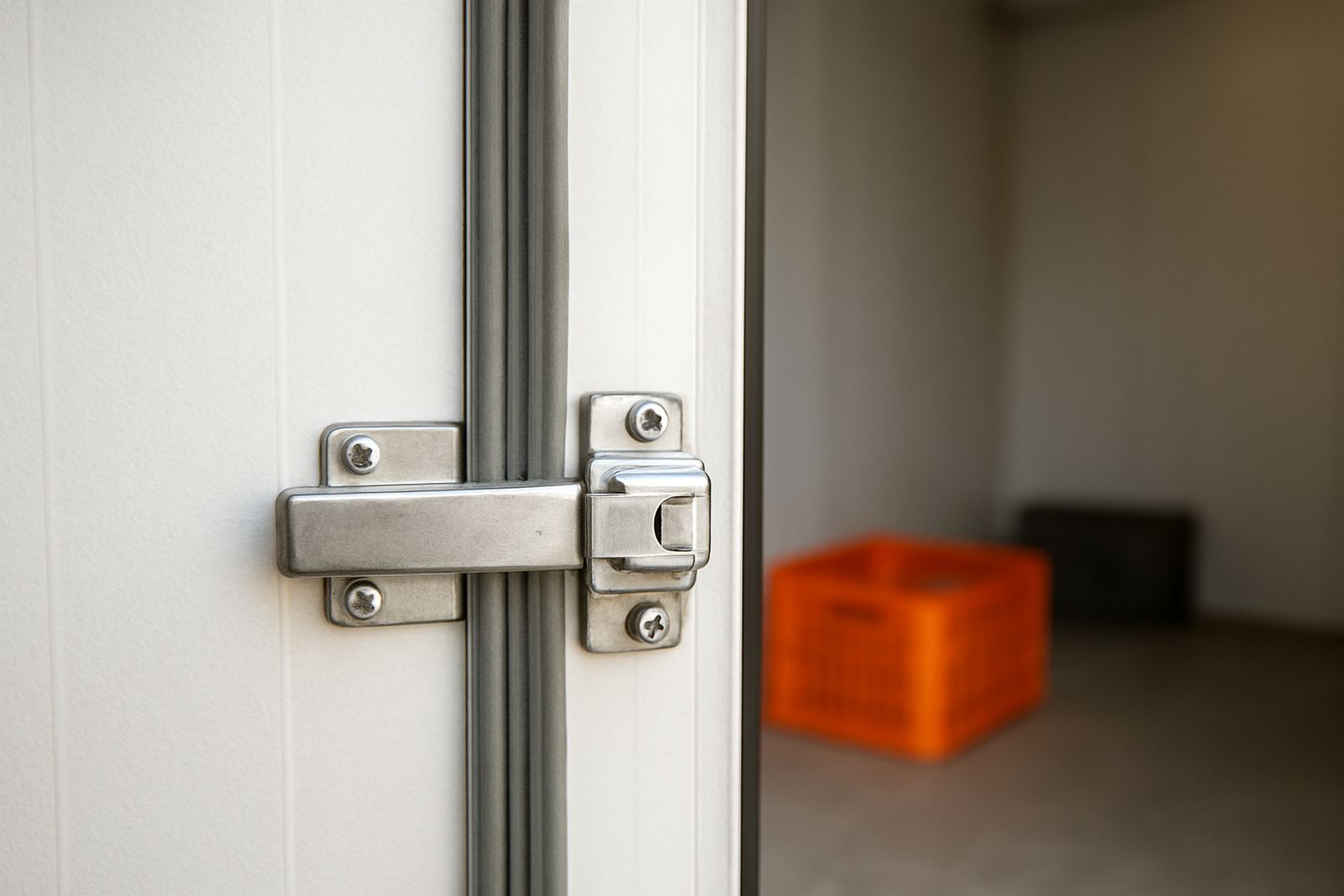
Not every cold room problem starts with the rubber strip. Before replacing a seal, check whether the door is hanging square, whether the latch pulls tight enough and whether the threshold is damaged. A new seal fitted to a badly aligned door will still leak, and the same fault will come back quickly.
It helps to run a simple hand test. Close the door on a sheet of paper at several points around the frame. If the paper pulls out too easily, the pressure is uneven. You can also look for light coming through the edges at night. Small checks like these can save time before a service visit.
- Check hinge wear and frame alignment
- Inspect the latch and handle for proper pull pressure
- Look for damage on the threshold or floor strip
- Confirm the seal profile matches the door type
- Test for air leaks at several points, not just one corner
A Kimberley example: one worn seal, one busy freezer
A fresh food business in New Park was struggling with a freezer that could not hold temperature through the afternoon rush. The staff assumed the refrigeration unit was under-sized, but the real issue was a damaged door seal that had flattened near the bottom hinge. Every delivery opened the room, and warm air crept back in as soon as the door closed.
After the seal was replaced and the door adjusted, the compressor stopped cycling so often and the room recovered faster after each opening. The business did not need a bigger unit, just a better closure. In a place like Kimberley, where power interruptions and high daytime temperatures can already strain cold storage, that sort of fix makes a real difference.
When to bring in a service team
If your cold room is losing temperature, icing up or drawing more power than it should, a seal inspection should be part of the service call. At Modern Equipment in New Park, Kimberley, we look at the full door assembly, not only the rubber. That includes the hinge line, closing pressure, frame condition and any damage caused by repeated hard slamming or poor loading habits.
Our team supports businesses across Kimberley, Roodepan, Galeshewe, Kuruman and Upington with cold room builds, refrigeration repairs and commissioning support. If the room is part of a busy store, butcher, depot or agricultural site, fixing the door seal early is usually far cheaper than dealing with stock loss later.