What a vacuum pump does before charging
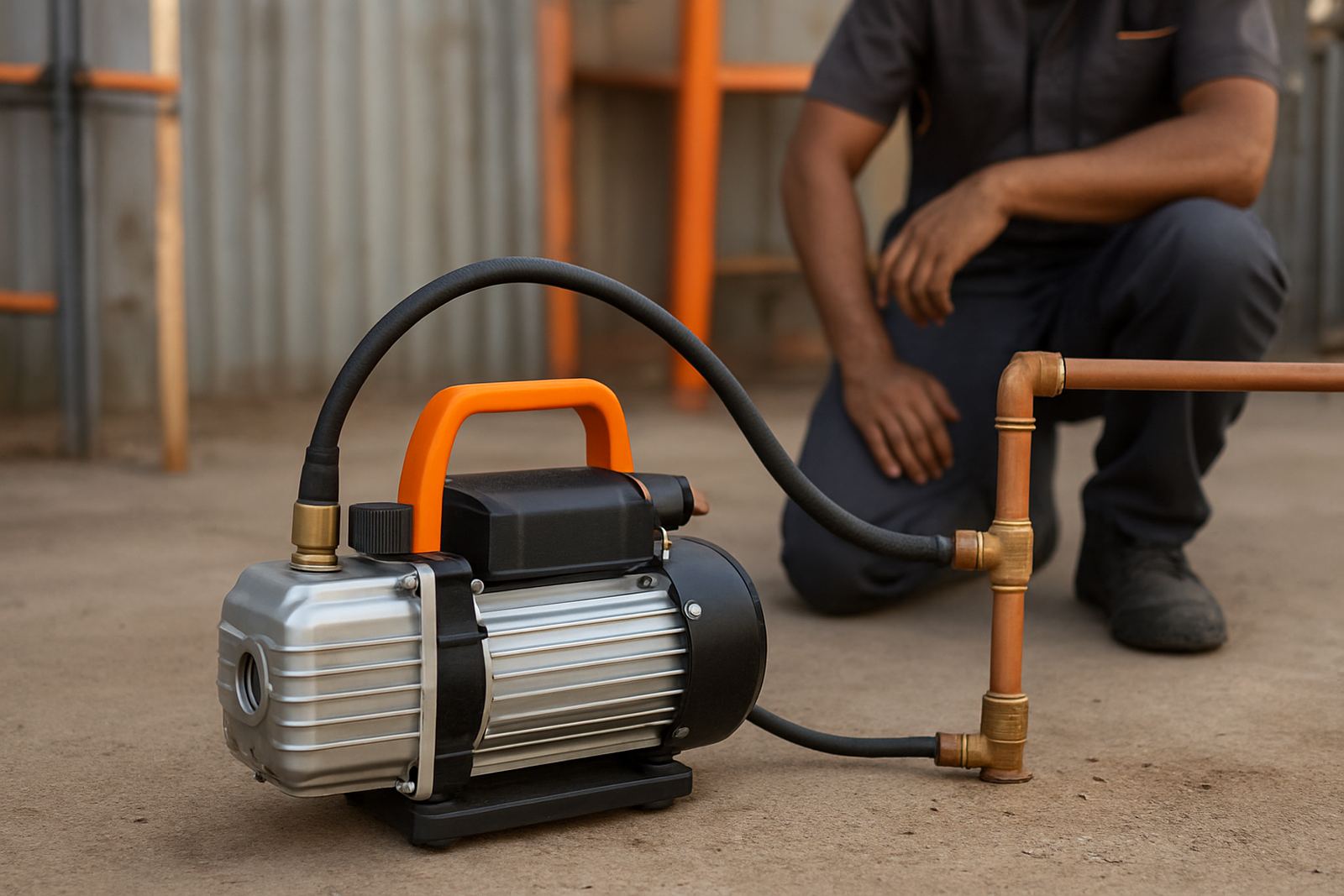
A vacuum pump removes air, moisture and non condensable gas from a sealed refrigeration circuit before refrigerant is added. That step matters because even a small amount of moisture can form ice at the expansion device, cause acid in the oil and shorten compressor life. If a system has been opened for repairs, pipe work changes or a new install, it should be evacuated properly before commissioning.
In practical terms, the pump is part of the final clean up process after brazing, pressure testing and leak checking. For split units, package systems, cold rooms and many commercial refrigeration jobs, a proper vacuum helps the system pull down correctly and hold temperature better once it is started.
For Northern Cape work where crews move between sites in heat, dust and long road distances, a reliable pump saves time and repeat callouts. It is one of those tools that shows its value quickly when a system has been open too long or the job has to be handed over same day.
Pump sizes, stage options and typical use
Vacuum pumps are normally chosen by size, measured in litres per minute or cubic feet per minute, and by whether they are single stage or two stage. Single stage units suit smaller domestic and light commercial jobs. Two stage pumps pull a deeper vacuum and are preferred for refrigeration systems, cold rooms and larger aircon installs where moisture removal matters more.
Common options include compact portable pumps for service vans, mid size units for general installation work, and higher capacity pumps for bigger plant and multiple circuits. Some pumps are supplied with a built in gas ballast valve, oil sight glass and anti backflow protection. A good vacuum pump should also be easy to carry, simple to service and stable when running for longer periods.
- Compact units for split aircon servicing and smaller repairs
- Mid size pumps for standard HVAC and refrigeration commissioning
- Higher capacity pumps for cold rooms, larger systems and repeat site work
- Single stage models for lighter duty use
- Two stage models for deeper evacuation and moisture removal
When choosing size, think about pipe length, system volume, how often the pump will be used and whether the job is in one place or on the road all week. A pump that is too small can make commissioning slow, especially on bigger systems.
Where vacuum pumps suit local jobs
These pumps suit air conditioning installers, refrigeration technicians, auto aircon service teams, cold room builders and maintenance crews working in Kimberley, Roodepan, Galeshewe, Kuruman and Upington. They are used on homes, shops, schools, offices, clinics, workshops and agricultural sites where cooling systems must be brought back into service without leaving moisture behind.
They are also useful where load shedding has caused repeated stoppages and equipment has been opened for repairs or changeovers. In commercial refrigeration, a fast but proper evacuation can make the difference between a clean handover and a compressor fault a few weeks later. On coastal work further south, moisture control becomes even more important because humid air can stay inside pipework and components if the system is not evacuated properly.
For automotive aircon, smaller portable pumps are often enough, but the same rules apply. If the system has been open, it needs to be pulled down properly before charging. Rushing that stage is a common cause of poor cooling and return faults.
Installation needs, power supply and working method
Most vacuum pumps run on standard single phase mains power and are easy to use in workshop or site conditions. Before starting, check the pump oil level, confirm the hose set is clean, and make sure the gauges and manifold are rated for the job. A good pump should be matched with proper hoses and valves so the evacuation is not slowed by leaks in the setup.
For field work, especially in New Park and around industrial sites, teams often need a unit that can travel in a bakkie and run from a normal socket at the premises or workshop. Where power is unreliable, it helps to schedule the evacuation when supply is stable so the pump can run long enough to reach target vacuum. The pump itself does not use gas, but it works with the system's refrigerant circuit and must be connected correctly so oil and vapour do not pull back into the hoses.
- Use clean vacuum oil and replace it when it looks milky or dark
- Keep hose runs short and use larger bore hoses where possible
- Check that Schrader cores and service valves are open properly
- Watch the gauge set, not only the pump sound
If the target vacuum is not reached, the problem may be a leak, moisture load or poor hose setup rather than the pump itself. That is why the full commissioning process matters, not just switching the unit on and waiting.
Care, servicing and signs the pump needs attention
Vacuum pumps need simple but regular care. Oil is the first thing to check, because dirty or thin oil reduces pulling ability and can damage internal parts. Filters and exhaust components should be kept clean, and the unit should be stored dry after use. Dust, grit and moisture can shorten service life quickly if a pump is left open on the back of a service vehicle.
Warning signs include slow pull down, oil that goes cloudy, unusual noise, excessive heat and vacuum that will not hold. If the pump has been used on wet systems or has sucked in refrigerant, it may need a service before it is trusted on the next job. In a busy shop, it is worth keeping spare oil and a log of how often each pump is used.
Our workshop team can help with basic fault finding, parts and advice on correct usage. That helps crews avoid repeated issues like changing refrigerant before the system is actually dry, which is a common mistake and not a small one.
What to check when ordering a vacuum pump
When you order a vacuum pump, check the system type, job size and how often it will be used. A domestic installer, a cold room builder and a technician doing plant maintenance all need different capacity and different hose arrangements. If you are unsure, bring the job details and we can match the pump to the application.
It helps to know whether you need a lightweight portable unit, a deeper two stage pump, or a pump intended for longer commissioning work. Also check voltage, oil type, port size, warranty needs and whether you want a unit with a carry handle or protective frame. If the pump is going into a service kit, ask about weight too because that matters on rooftops and long walks across site.
- System type: split unit, cold room, package unit or auto aircon
- Required capacity and stage: single stage or two stage
- Voltage and plug arrangement
- Connection size and hose compatibility
- Duty cycle and how long the pump must run
- Spare oil and service support needs
For advice, stock checks or a quotation, contact Modern Equipment in New Park, Kimberley. We support installers and maintenance teams across the Northern Cape with practical product supply and after sales help that fits real site conditions.
Key facts
| Product use | Evacuating air, moisture and non condensable gas from aircon and refrigeration systems before charging |
|---|---|
| Common capacities | Approx. 42 to 283 litres per minute, depending on model and application |
| Pump stages | Single stage and two stage options |
| Power supply | Usually 220 to 240 V single phase, model dependent |
| Typical connections | 1/4 inch and 3/8 inch service port options, model dependent |
| Best suited to | HVAC installs, refrigeration repairs, cold rooms, commissioning support and auto aircon service |