What a Solar Pump Kit Includes
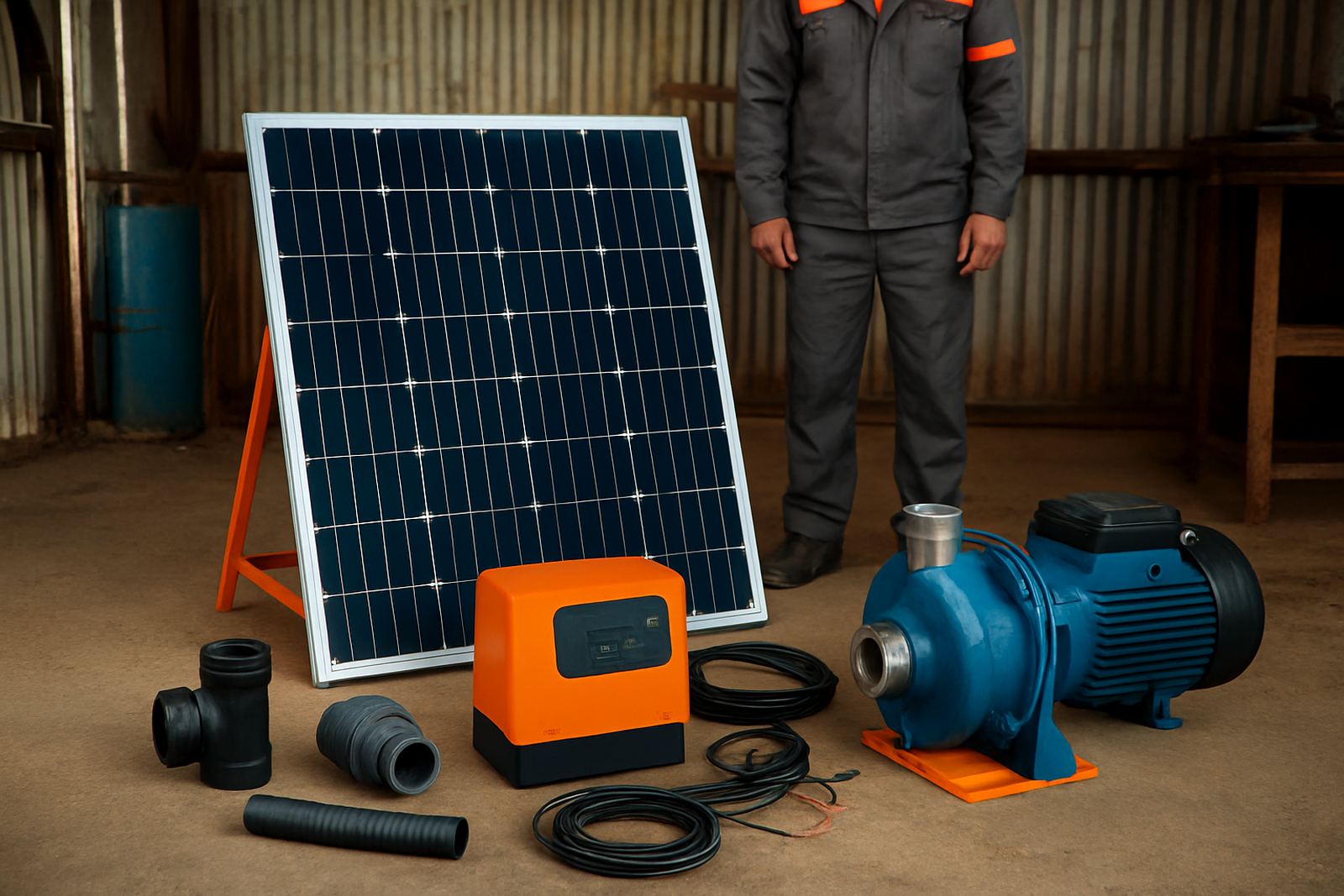
A solar pump kit is a matched set of parts built to run a water pump from solar power, usually without needing the municipal supply or a generator. It normally includes the pump, solar panels, a controller or inverter, cabling, mounting hardware and the fittings needed to connect to your tank, trough or pipeline. Some kits are set up for direct daytime pumping, while others add battery storage so you can pump before sunrise, after sunset, or through short cloudy periods.
For livestock watering and remote supply points, this matters because water demand does not always match daylight. A good kit is sized to your daily water requirement, the pumping head, pipe distance and the amount of sun your site gets through the year. In and around Kimberley we also look at dust, heat and wind, because those conditions change how panels are mounted and how often filters, seals and terminals need checking.
Sizes and Options for Different Water Jobs
Solar pump kits are not one-size-fits-all. Small setups suit a single tank, a few cattle drinking points, or an outbuilding that needs steady water pressure. Larger systems are used for boreholes, long pipelines, irrigation support and multiple troughs spread across a property. We can supply options for surface pumps, submersible pumps and booster-style systems, depending on where the water is coming from and how far it needs to go.
- Small kits for tanks and short runs, often for 1 to 3 000 litres a day.
- Medium kits for livestock watering points, usually around 3 000 to 10 000 litres a day.
- Larger kits for boreholes, holding tanks and multiple drinkers, with higher lift and longer cable runs.
- Battery-backed options for after-hours water use and basic pressure control.
As a guide, a shallow lift with low friction loss may need only a compact pump and two or four panels, while a deep borehole or long delivery line may call for more panel capacity and stronger controller protection. The right answer depends on litres per day, not just pump size, so it helps to bring the borehole log or tank details before you order.
Where Solar Pump Kits Suit Best
These kits are a good fit for farms, smallholdings, game camps, remote houses, stock watering points and temporary supply points during new builds or upgrades. They are also useful where power cuts interrupt water pressure, or where a grid connection is too expensive to extend. Around Upington and the drier parts of the Northern Cape, many customers use solar pumping to keep tanks topped up through the day and reduce dependence on diesel or municipal pressure.
They suit sites with clear sun exposure and a sensible mounting area for the panels. If your area gets strong wind, dust or salt air, the frame and cable routing need to be done properly so the system can keep working with less trouble. A clean installation also makes later servicing easier, which matters when a site is far from town and you do not want avoidable callouts.
- Livestock watering from boreholes or storage tanks.
- Remote tanks, sleeper camps and outbuildings.
- Pressure support for selected water points.
- Backup pumping during load-shedding.
Installation, Power Supply and Site Checks
Installation starts with a proper site check. We look at water source depth, delivery height, daily draw, pipe size, cable distance and available panel space. If the system needs batteries, we allow for enclosure size, ventilation and safe mounting. If it is a direct solar setup, we check that the pump controller and protection devices are matched to the load so the system starts cleanly in bright sun and does not trip when conditions change.
For grid tied or hybrid jobs, the changeover point must be planned so the pump and other equipment do not overload the supply. In rural areas this is often the difference between a system that works every day and one that keeps giving trouble. We also advise on isolators, earthing, surge protection and panel orientation, because those details are what keep a water system from becoming a maintenance headache.
Most sites do not need fuel, but they do need enough sun and enough panel capacity to cover cloudy days and winter output. A well-sized kit will still produce less in dull weather, so if water demand is non-negotiable, we may recommend extra storage at the tank rather than overspending on oversized panels.
Care and Servicing That Keep Water Moving
Solar pump kits are low on fuel costs, but they still need care. Panels should be cleaned when dust, bird droppings or pollen build up. Cables, glands and terminals should be checked for heat marks, loose connections and rodent damage. Pump strainers and foot valves need attention where sand, grit or plant material is present, especially after wind or heavy rain. It is also worth checking tank float switches and pressure controls before they fail, because one small part can stop the whole system.
For boreholes and stock water sites, we suggest a regular service interval based on usage and water quality. If the water carries silt or minerals, seals and filters wear faster. If the site is exposed to harsh sun and dust, panel frames and mounts should be inspected more often. A bit of preventative work usually saves a second callout, and that is important for farms and remote points where access can be slow.
What to Check Before You Order
Before you order, gather the basic site details so the kit can be sized properly. If you are replacing an old pump, send the current pump label and any borehole or tank information you have. If it is a new site, the water source and the duty point need to be set first. The more exact the details, the easier it is to match the pump and panels without overspending.
- Water source type: borehole, tank, dam, well or sump.
- Depth to water and total lift in metres.
- Daily water demand in litres.
- Pipe size, pipe length and any high spots in the line.
- Whether you need direct solar, battery support or hybrid backup.
- Site location, so panel sizing can suit local sun and weather.
If you are not sure, we can work from a photo, a sketch or a simple list of measurements. It is better to confirm these details before delivery than to find out on site that the pump is short on head or the panels are undersized.
Key facts
| Pump types | Surface, submersible and booster options |
|---|---|
| Power range | Small DC kits to larger AC and hybrid systems |
| Typical daily output | About 1 000 to 20 000 litres, depending on site conditions |
| Head range | Low lift to deep borehole applications |
| Control equipment | Controller, inverter, isolator and protection devices |
| Mounting | Ground frame or roof mount, site dependent |