What an evaporator coil does in a cold room
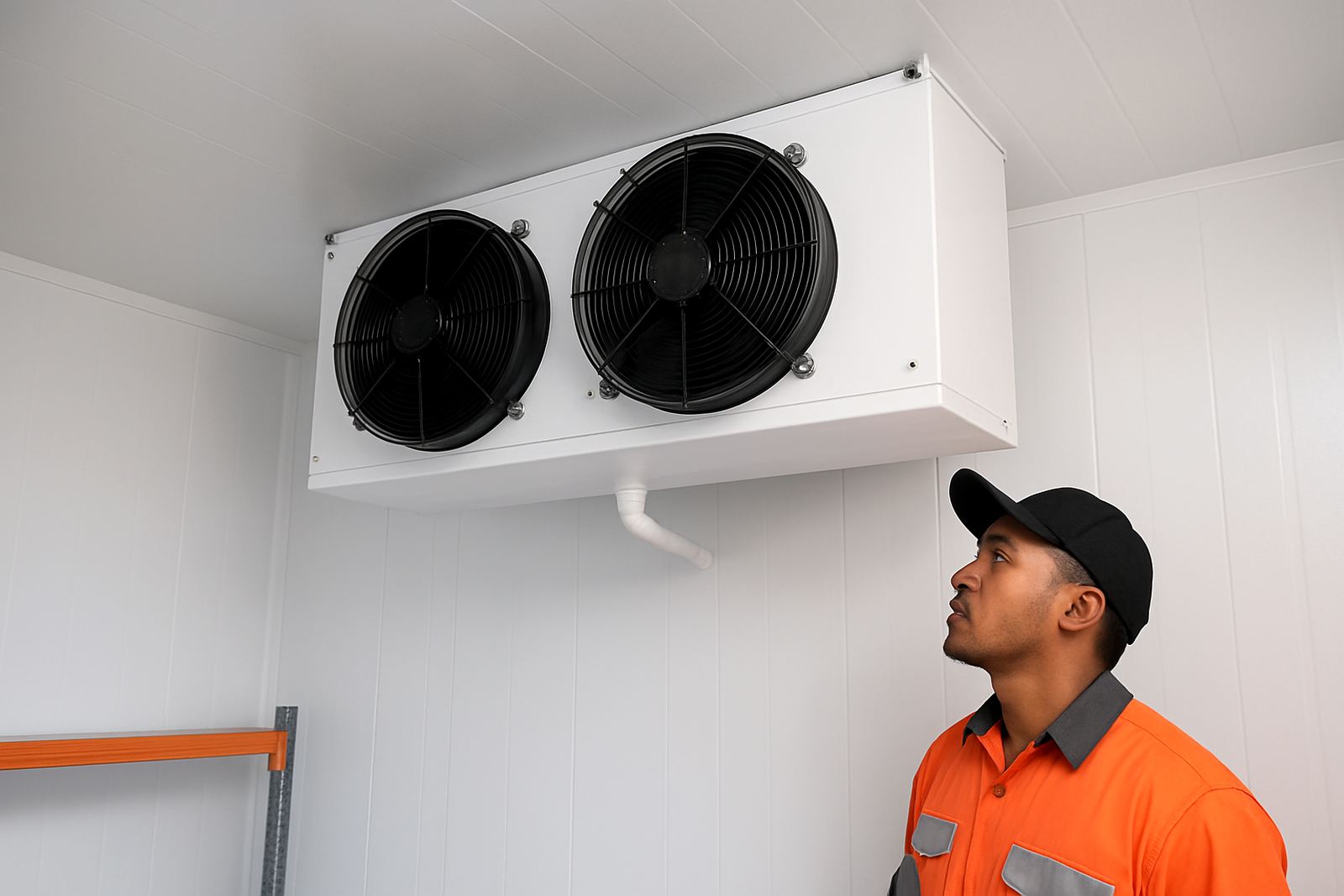
An evaporator coil sits inside the cold room or conditioned space and absorbs heat from the air that passes across its fins. The refrigerant inside the coil boils at low pressure, taking heat with it back to the compressor and condenser. In plain terms, the coil is what makes the room cold, while the fan keeps that cold air moving evenly through the space.
For cold rooms, butcheries, flower storage, packhouses and small food stores, the right coil size and fan setup matters just as much as the compressor. Too small and the room pulls down slowly, runs longer and struggles in hot weather. Too large and you can get poor air throw, uneven temperatures and unnecessary ice build-up on the fins.
Sizes, fan options and coil materials
Evaporator coils come in a range of capacities and physical sizes so they can suit small chillers, medium cold rooms and larger industrial spaces. The correct choice depends on room volume, product load, target temperature and how often doors open. We supply units with different fan counts, coil face areas and fin spacing for chilled or frozen applications.
- Small cool room units for produce, dairy and beverage storage
- Medium and large cold room fan coil units for food prep and distribution
- Units with higher airflow for faster pull-down after loading
- Corrosion-resistant coil finishes for humid or coastal conditions
- Options with electric defrost for freezer rooms and low-temperature spaces
In the Northern Cape, dust and heat can be hard on equipment, so coil access and cleanability matter. In towns like Kimberley, Upington and Kuruman, we often see installations that need better fin spacing or stronger airflow to suit the conditions. A good match saves power and keeps temperatures steadier.
Where these units suit best
Evaporator coils are used wherever controlled temperatures are needed. That includes cold rooms for meat, fruit, vegetables, dairy, drinks and pharmaceuticals, as well as prep rooms, kiosks and small processing areas. They are also used in air handling and fan coil applications where cooled air needs to be distributed more evenly across a room.
For New Park, Roodepan and Galeshewe clients in Kimberley, we usually look at the room usage first. A room that is opened every few minutes needs a different airflow pattern to a store room that stays shut for most of the day. If the site has load-shedding, we also look at restart behaviour and whether the unit can recover temperature quickly once power returns.
- Cold rooms and freezer rooms
- Butcheries and meat cutting areas
- Fresh produce stores and packhouses
- Restaurant back-of-house storage
- Light industrial refrigeration areas
Installation needs, power supply and refrigerant setup
Correct installation is vital. The coil must be mounted with enough space for air to circulate, drip properly and allow maintenance access. Drain lines should be pitched correctly so melt water does not sit in the tray and cause odour or ice. The fan motor supply must match the site power available, and the electrical protection should be sized for the actual starting current. On many projects, a poor electrical connection or undersized cable causes more trouble than the coil itself.
Refrigerant piping should be sized for the distance between the evaporator and the condensing unit, with proper support and insulation to reduce sweating and pressure loss. The expansion device also needs to be matched to the gas type and capacity. If the system is undercharged, overcharged or has a restriction, the coil will not perform as it should. We check these details during commissioning support and during repairs on existing rooms.
When you order, send the room dimensions, target temperature, product type and available supply voltage. That helps us recommend a coil that is practical for the site, not just one that looks suitable on paper. A unit that suits 220 V single phase may be fine for a smaller room, while larger sites often need three phase supply and a more controlled defrost arrangement.
Care, cleaning and servicing to keep airflow steady
Evaporator coils need regular cleaning because dust, grease and lint collect on the fins and reduce airflow. In dusty areas around Kimberley and the wider Northern Cape, that can happen quickly. A dirty coil works harder, draws more power and can freeze up more often. For freezer rooms, frost control is just as important. If the defrost cycle is not working properly, ice starts to block air passage and the room temperature drifts upward.
Basic care includes brushing or washing the fins carefully, checking fan motors and bearings, clearing drain trays, and making sure the defrost heater or hot gas system is operating where fitted. It is also worth checking for bent fins, loose brackets and damaged insulation around the suction line. Small faults can become big ones if left too long, especially in commercial rooms that run day and night.
- Clean fins and trays on a planned schedule
- Check fan operation and rotation direction
- Inspect drainage for blockages and leaks
- Watch for frost patterns that show airflow problems
- Service before summer heat and before peak trading periods
What to check before you place an order
Before ordering an evaporator coil, have the room size, insulation thickness, desired room temperature and product type ready. It also helps to know the refrigerant being used, the compressor capacity and whether the space is a chiller or a freezer. If the room has frequent door openings or high humidity, mention that as well because it affects coil selection and fin spacing.
You should also confirm ceiling height, mounting position and available maintenance access. If the room is in a municipal building or a food premises that needs regular compliance checks, make sure the layout still allows safe drainage, easy cleaning and proper electrical isolation. For coastal or humid sites, ask for corrosion-aware options so the coil lasts better over time.
When the details are right first time, installation is smoother and the system settles faster. That means less downtime, fewer call-backs and better temperature control for the goods stored inside. Our team in New Park can assist with selection, supply, installation and follow-up servicing for sites across Kimberley, Upington, Kuruman and the surrounding Northern Cape region.
Key facts
| Product type | Evaporator coils and fan coil units for refrigeration and air distribution |
|---|---|
| Common use | Cold rooms, freezer rooms, food storage and light industrial cooling |
| Capacity range | Small to large units, selected to suit room load and temperature target |
| Fan configuration | Single, twin or multi-fan options depending on airflow needs |
| Power supply | 220 V single phase or 380 V three phase, subject to model |
| Defrost options | Off-cycle, electric or hot gas defrost depending on application |