What tube cleaning tools do on site
Tube cleaning tools are used to remove dust, greasy film, light scale and loose debris from the narrow passages inside coils and drainage runs. In air-conditioning and refrigeration work, that cleaning matters because dirty tubes reduce heat transfer, raise running costs and can cause icing, high head pressure, poor cooling and nuisance trips during load-shedding recoveries. On maintenance jobs in Kimberley, Roodepan, Galeshewe, Kuruman and Upington, a clean coil often makes the difference between a unit that struggles and one that settles back into normal operation.
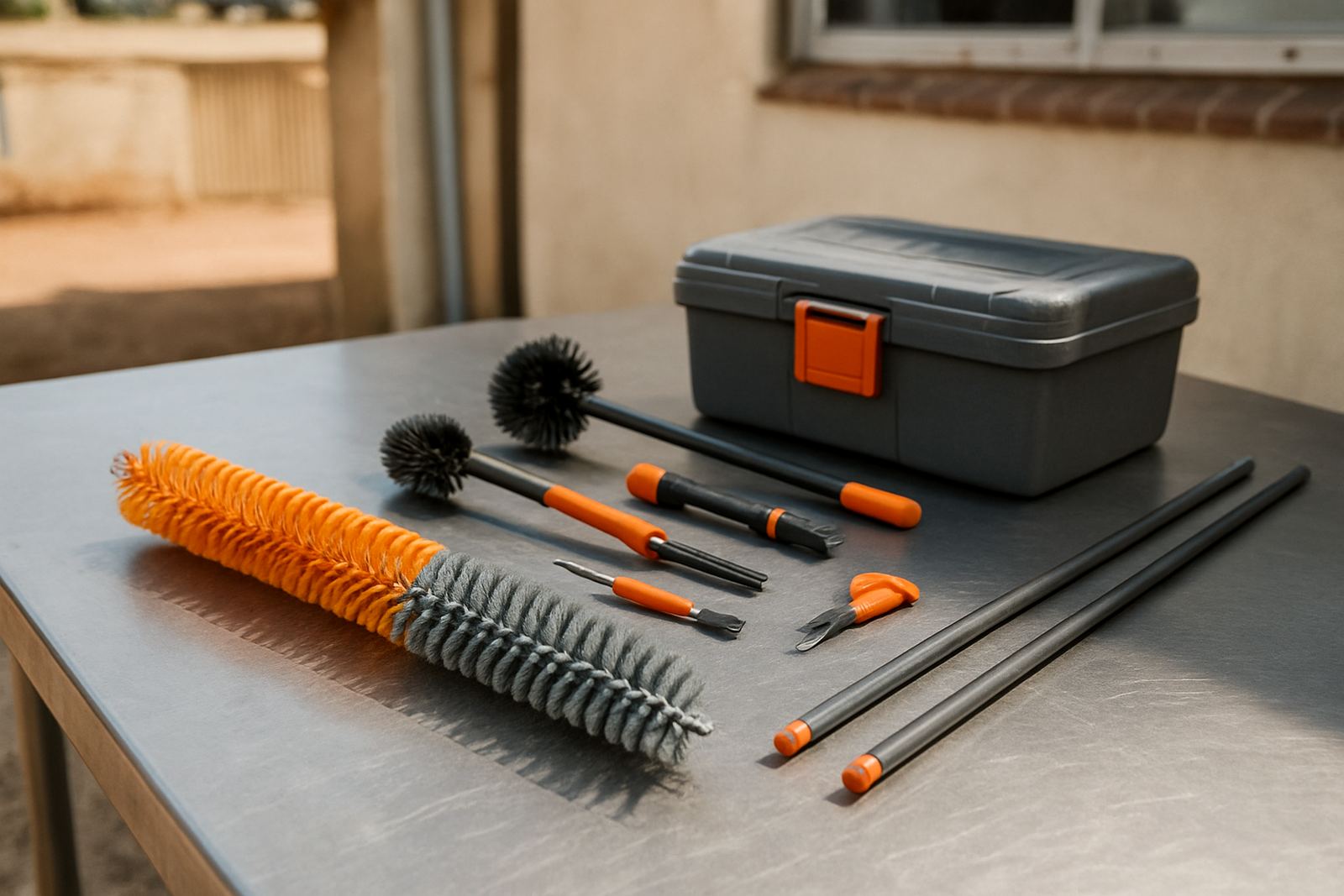
These tools are not one single item. The usual set includes flexible tube brushes, nylon and brass bristle heads, coil combing tools, drain line snakes, hand-fed rotary cleaners and extension rods for deeper access. Some kits are made for light cleaning between service visits, while others are built for stubborn buildup in busy commercial systems, workshop equipment and agricultural stores. For heat exchange surfaces in dry inland areas and dusty yards, it is better to clean regularly than wait until the coil is almost blocked.
- Removes dust, fluff and loose scale from tubes and fins
- Clears drain lines before water overflows into ceilings or trays
- Helps restore airflow and heat transfer after dirty-season build up
- Useful on split units, package systems, cold room plant and condensers
Sizes and tool types commonly requested
Tube cleaning tools are selected by tube diameter, coil type and how much access you have around the equipment. Smaller hand brushes suit fine copper or aluminium tubing and light cleaning on indoor units. Longer flexible brushes and guide rods suit condenser tubes, water-cooled systems and drainage runs that snake through plant rooms or roof spaces. On many service calls, techs carry more than one size because a single brush will not suit every coil, especially when the job shifts from a small split unit to a larger refrigeration bank.
Common options range from compact hand sets for 6 mm to 10 mm tubes, right through to longer brushes for 12 mm to 19 mm tubes and flexible drain cleaners up to several metres in length. For finned coils, combs and straightening tools are also useful after washing or brushing, since bent fins can block airflow almost as badly as dirt. A good kit should suit maintenance in dusty towns, workshop environments and sites where service access is tight. Some customers ask for a basic set, others want a heavier kit for repeated commercial use.
- Hand brushes for light maintenance and indoor units
- Flexible tube cleaners for longer condenser or evaporator tubes
- Drain line snakes for blockages in tray outlets and waste lines
- Fin combs for correcting bent aluminium fins after cleaning
Where tube cleaning tools suit best
These tools suit routine HVAC and refrigeration maintenance on homes, shops, workshops, schools, clinics, cold rooms and light industrial plant. In the Northern Cape, dust from roads and yards builds up quickly, while summer heat puts more pressure on coils that are already working hard. That is why tube cleaning tools are common on service vans and maintenance benches. They help technicians keep equipment in service without waiting for a major failure.
They are also useful in areas where water quality contributes to scale and sediment inside pipework, or where drain lines collect slime and fine dirt after long periods of use. In cold rooms, blocked drains can lead to ice on floors and nuisance water damage. On condenser banks, dirty tubes can make compressors run hotter and harder than they should. For auto aircon and mobile plant, smaller access tools are often needed because space around the equipment is tight and the cleaning point is not always easy to reach.
- Air-conditioning service work on split and ducted systems
- Refrigeration maintenance on cold rooms and display cabinets
- Condensers in dusty yards, workshops and plant rooms
- Drain line clearing in humid or poorly ventilated areas
Cleaning method, power needs and safe use
Most tube cleaning tools are hand-operated, so they do not need mains power, gas cylinders or special consumables. That makes them practical during outages, on roof-top plant, or when a site has limited power during repairs. Some rotary cleaning kits may use a small drill drive or battery tool, but the cleaning heads still do the work. For service teams in Kimberley and surrounding areas, that is useful when you need a quick fix before a unit is returned to service the same day.
When using tube brushes or drain snakes, the operator should match the brush to the tube size and avoid forcing the tool through a tight bend. Soft aluminium fins can be damaged quickly if the wrong pressure is used. In refrigeration systems, the unit should be isolated and made safe before any cleaning starts. If the drain line carries chemical residue or dirty condensate, use gloves and eye protection. A careful clean now often prevents a call-out later, especially in hot weather when equipment is already under pressure.
Care, servicing and what to check before ordering
Tube cleaning tools last longer when they are rinsed after use, dried properly and stored so the bristles do not bend flat. Brushes used on oily coils should be wiped down before they are packed away, and drain snakes should be cleaned before they harden with slime or scale. If a tool has a cracked handle, stripped thread or loose head, replace it before the next service round. On busy maintenance teams, keeping the kit neat saves time and avoids lost work on site.
Before ordering, check the tube diameter, the depth of the coil or drain run, and whether the job is mostly light dust removal or harder scale cleaning. Also note if the equipment has straight access or if there are tight bends, covers or safety guards that limit movement. If the kit will be used on copper, aluminium or mixed-metal surfaces, choose the cleaning head accordingly so the tube wall is not scratched. When customers ask for help, Modern Equipment can match the tool to the job and the environment, whether it is a small domestic repair or a larger cold room service in the Northern Cape.
- Confirm tube size in mm before ordering brushes or heads
- Measure the cleaning length needed for coils or drain lines
- Check if the surface is copper, aluminium or mixed material
- Ask for a light-duty or heavy-duty option based on site use
Key facts
| Product type | Tube cleaning tools for maintenance and servicing |
|---|---|
| Typical use | Condenser tubes, evaporator coils, drain lines and fin cleaning |
| Common sizes | 6 mm to 19 mm cleaning heads, with flexible lengths up to several metres |
| Material options | Nylon, brass, stainless steel and mixed brush heads |
| Power requirement | Mostly manual, some rotary kits use drill or battery drive |
| Suitable sectors | HVAC, refrigeration, cold rooms, auto aircon and general maintenance |