Solar modules built for local sun and load-shedding
Solar panels, also called solar modules, capture sunlight and turn it into direct current power for inverters, batteries, controllers and DC loads. In a place like Kimberley, where bright days are common and many sites face long outage periods, they can help keep lights on, pumps running and refrigeration supported during load-shedding. They are a sensible fit for New Park workshops, small businesses in Galeshewe, farm yards outside Roodepan and homes that need backup without running a generator all day.
The panels we supply are suitable for backup systems, off-grid installations and pump support applications. A good array gives steady input during the day, then stores power in batteries or feeds a pump controller directly. For pump work, solar can reduce diesel use and help with water delivery where grid supply is weak or costly. For backup use, the panels need to match the inverter, batteries and the daily load, otherwise the system will underperform and the batteries cycle too hard.
Most customers ask for plain, practical advice first. We look at what you want to run, how many hours a day, and whether the system must survive dust, heat and long summer exposure. That keeps the panel choice close to the real job, instead of overbuying on day one or undersizing and running short every afternoon.
Common panel sizes and system options
Solar panels are usually selected by watt rating, physical size and electrical fit. Smaller modules can suit compact backup sets, while larger modules reduce roof space used per kilowatt. The right mix depends on available mounting area, battery bank size and the inverter or pump controller being used. In the Northern Cape, many installations use larger module counts because there is space on flat roofs, carports, pump stands and farm sheds.
Typical options include standard grid-support modules for inverter systems, higher-output modules for limited roof area, and ruggedised modules for remote pump sites. You may also need matching mounting rails, clamps, DC isolators, cabling and protection devices. For some pump jobs the array is set up to feed a controller during the day only, with no battery bank at all. That keeps costs down and makes sense when water demand is mainly daylight based.
- Standard backup modules for homes, offices and small shops
- Higher-watt modules for tight roof space and larger daily loads
- Arrays for borehole and transfer pumps with daytime operation
- Matched panel sets for off-grid cabins, farm rooms and remote stores
Where solar panels suit best in Kimberley and beyond
Solar panels suit sites with clear sun and regular daytime demand. They are used on homes that need fridge and light backup, workshops that cannot stop during outages, and commercial buildings that must keep computer systems and security equipment alive. In areas like Upington, Kuruman and Kimberley, the strong sun helps, but the system still needs clean mounting, correct tilt and enough airflow under the modules to manage heat.
They also suit water pumping. A solar array can support a booster pump for yards, a transfer pump for storage tanks, or a borehole pump where water is needed during the day. For farms and outlying properties, a solar support system often makes more sense than running long cable distances from the grid. The same applies to remote schools, lodges and small industrial sites where network supply is unstable or expensive to extend.
For coastal style humidity is not the main issue here, but dust, heat and high wind can still affect performance if the structure is weak. Panels need proper anchors, good cable management and spacing so the backs stay cool. A tidy install lasts longer and is easier to inspect after storms or sand movement.
Installation, inverter matching and power needs
A solar panel is only one part of the full system. It must be matched to the inverter, battery bank, charge controller and the expected load. If the array is too small, the batteries never recover fully after use. If the array is too large without the correct controller, the system can trip or waste power. We therefore check the daily watt-hours, starting surges and running amps before recommending a layout.
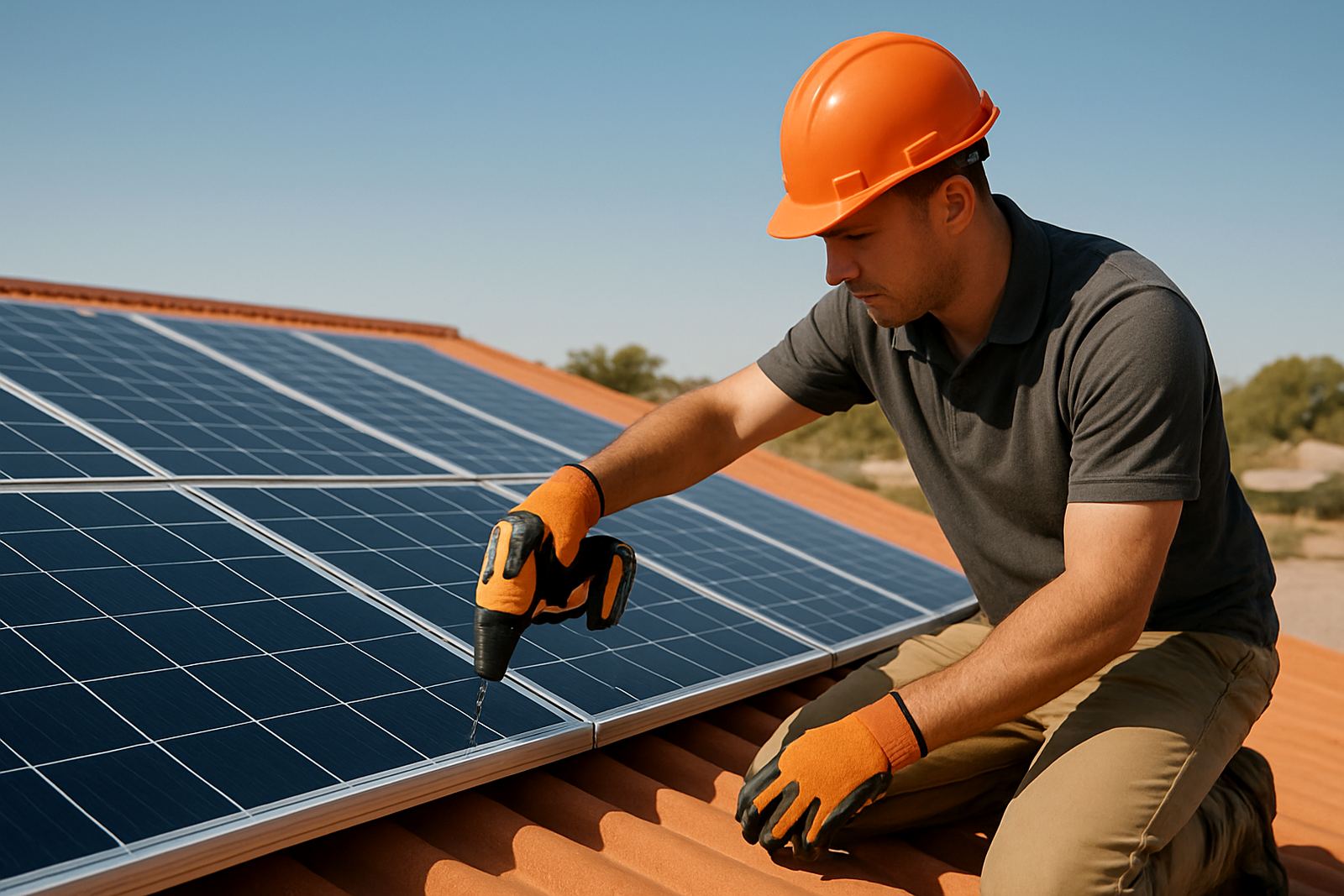
Installation work usually includes roof or ground mounting, DC cabling, earthing, isolators and surge protection. For backup systems, the installer also checks changeover arrangements and whether the load can be split between essential and non-essential circuits. For pump systems, the motor rating, pipe run, lift height and duty cycle are important. A pump that starts often needs extra headroom. A long cable run may need thicker conductors, otherwise voltage drop will cause trouble.
- Confirm inverter compatibility and DC input limits
- Check battery capacity if the system must run after sunset
- Allow for cable length, voltage drop and protection devices
- Match the panel count to the controller and site conditions
- Use correct mounting for roof, wall or ground frame applications
Care, cleaning and servicing intervals
Solar panels need little attention, but they do benefit from regular checks. Dust, bird droppings, leaves and workshop grime can cut output more than many people expect. In and around Kimberley, a light clean may be needed more often during dry windy periods. Use clean water and soft methods, not hard scrubbing or sharp tools that can damage the glass or seal edges.
We recommend visual checks every few months and a full system inspection at least once a year, or sooner if the site sees storms, roof work or electrical faults. During inspection, look at mounting fasteners, cable clips, isolators, corrosion around connectors and any signs of hot spots or cracked cells. If output drops suddenly, the problem is not always the panel. It may be a loose connector, a failed fuse, shade from new plant growth, or a dirty controller.
Panels are durable, but the system around them needs care. Good maintenance prevents small faults turning into bigger downtime. That is especially important where the solar array supports refrigeration, borehole pumping or business backup.
What to check before you order
Before placing an order, it helps to have a few details ready. This avoids the common mistake of buying panels that do not suit the inverter or the available roof space. If you are not sure, send the load list and site photos and we can help work through it. For pump jobs, include the pump size, usage times and the distance from array to controller. That saves time and cuts rework.
- How many watts you need during the day and at night
- Whether the system is backup, off-grid or pump support
- Available mounting space, roof type and shading issues
- Battery bank size and inverter or controller input limits
- Cable run length, earthing point and protection needs
- Whether the site is Kimberley, Roodepan, Galeshewe, Kuruman or Upington
It also helps to think about future growth. If you may add more loads later, the mounting and cabling should allow for extra panels. That is cheaper than redoing the whole setup later, and it keeps the install neat from day one. A proper plan saves money and avoids frustration when the first summer heat and power cuts arrive.
Key facts
| Panel type | Solar modules for backup, off-grid and pump support |
|---|---|
| Common output range | Approx. 330 W to 600 W per module |
| System voltage | 12 V, 24 V and 48 V matched arrays |
| Cell format | Monocrystalline and similar high-output module types |
| Mounting options | Roof, wall, ground frame and pump stand installations |
| Use areas | Homes, farms, workshops, boreholes and small commercial sites |