What auto aircon hoses do in the system
Auto aircon hoses carry refrigerant between the compressor, condenser, expansion device and evaporator. In plain terms, they are the lines that let the gas and oil move through the air-conditioning system under pressure. If a hose cracks, swells, rubs through or leaks at the crimped end, the system loses gas and cooling drops off fast, often just when the Northern Cape heat is at its worst.
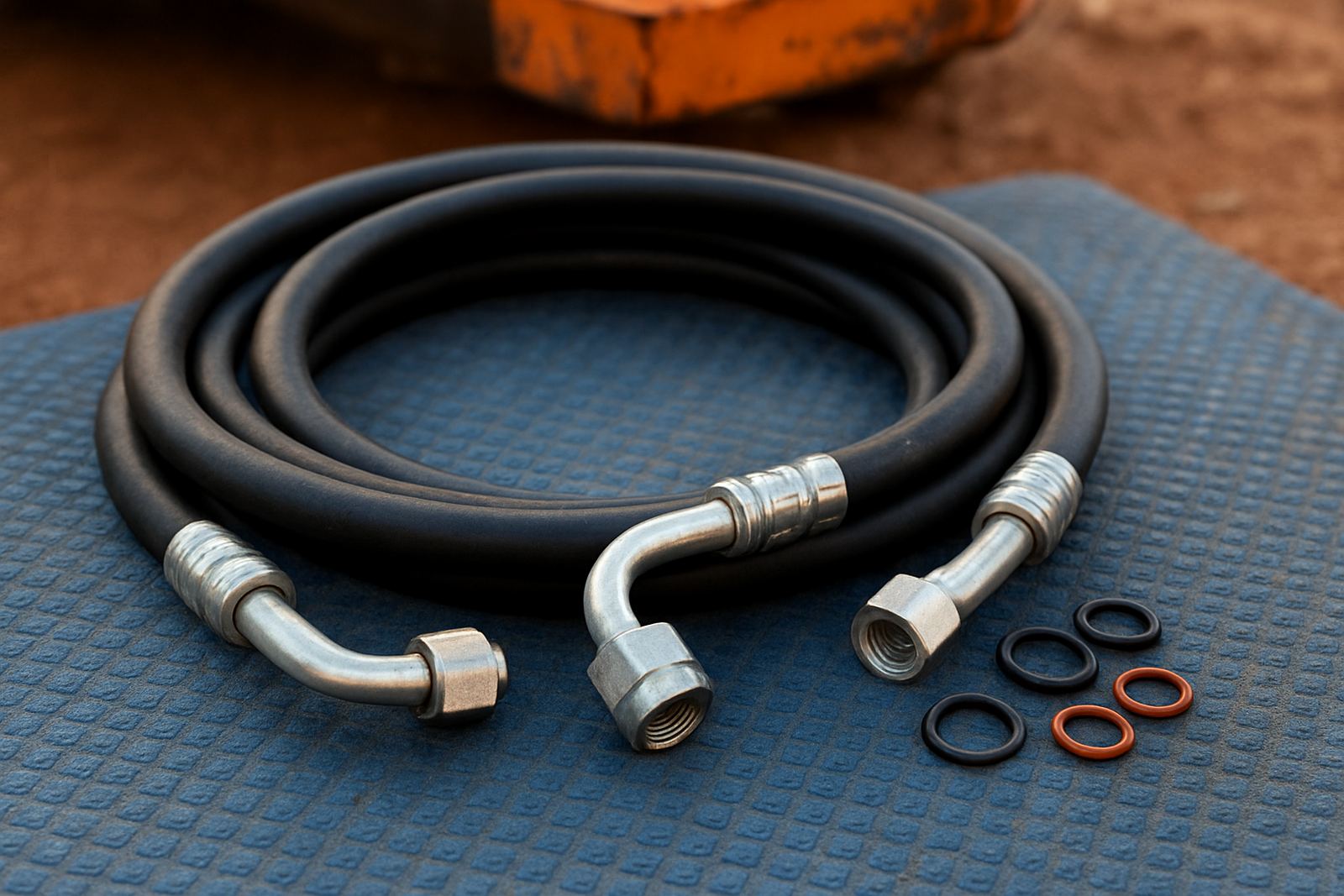
We supply hoses and fittings for custom replacements and repair work, including high pressure and low pressure lines. That covers suction hoses, discharge hoses, barrier hose, swaged fittings, O rings and service fittings for typical vehicle aircon jobs. The aim is to match the original route and connection style as closely as possible, so the repair lasts and the hose does not chafe against the bodywork or engine parts.
For workshops in Kimberley, Roodepan, Galeshewe, Kuruman or Upington, a proper hose replacement is often cheaper than chasing repeated gas loss. If the old line is hard, split or contaminated with oil at the crimp, it is usually better to remake the section rather than try to patch it up.
Hose sizes, fittings and common options
Auto aircon hoses are not one-size-fits-all. We work with common hose bore sizes used on passenger vehicles, bakkies and work vehicles, and we can help identify the correct hose type by the old sample, the fitting ends or the vehicle layout. The right hose also depends on pressure rating, bend radius and whether the line runs near heat sources such as the exhaust manifold or turbo area.
Typical options include barrier hose for refrigerant retention, straight and angled fittings, male and female threaded ends, O ring seal ends and replacement sections for damaged factory lines. In many cases the hose must be made to the exact length with the right bend allowance so there is no strain on the compressor or condenser points.
- Common hose bores used in vehicle aircon work
- Crimped or swaged end fittings to suit the vehicle
- High pressure and suction line replacement sections
- O rings, ferrules and service fittings for leak repairs
- Custom length hose made to sample or pattern
If you are not sure about the fitting type, bring the old hose in. Even a damaged line usually still tells us enough about the original size, thread and end style to get the replacement right the first time.
Where these hoses suit best
These hoses suit vehicles and small mobile plant where the original aircon line has failed or where a previous repair left the hose too short, too long or badly routed. They are used on family cars, 4x4s, panel vans, taxis, bakkies and light commercial vehicles. We also see a lot of work from farms and service fleets that travel long distances and need reliable cooling between towns.
In the Northern Cape, dust, vibration and high under-bonnet temperatures can shorten hose life. If a vehicle works rough gravel roads, the hose can wear where it touches brackets or body panels. Coastal humidity is less of a factor here than heat and dust, but moisture can still affect metal fittings and corroded clamps if the vehicle is washed often or stored outside. On older systems, a hose change may be the right time to check the condenser, compressor mounts and receiver drier too.
- Passenger vehicles with factory or retrofit aircon
- Bakkies used for farm, mining support or service work
- Taxis and fleet vehicles with frequent stop-start use
- 4x4s that need custom routing around accessories
- Workshop repairs after leak testing or compressor replacement
Fitting, charging and workshop checks
Once a new hose is made up, the system should be fitted with clean seals, correct torque on the connections and proper routing away from moving parts. The air-conditioning circuit then needs to be evacuated before charging. This step removes air and moisture, which matter because even a small amount can affect cooling and put strain on the compressor. A hose replacement on its own is not complete until the system has been leak tested and charged to the correct gas amount.
Vehicles differ, so the refrigerant type and oil type must match the system specification. Some vehicles need a small oil top-up after a hose replacement, while others need very little. If the system has been open for a while, the receiver drier or accumulator may also need attention. We always advise checking for stains around joints, worn clamps and heat damage before the repair is finalised.
- Evacuate the system before charging
- Use the correct refrigerant and compressor oil type
- Check for rubbing points and heat exposure
- Leak test the hose ends and crimp areas
- Inspect drier, seals and related fittings at the same time
Care and servicing to help the hose last
A hose can last well if the system is serviced on time and the line routing stays sound. Hoses fail quicker when the aircon has been running low on gas, because the compressor may cycle harshly and the oil does not circulate properly. If you notice oily residue on a fitting, hissing sounds, weak cooling or a pipe that sweats heavily in the wrong place, get it checked before the problem grows. A small leak can turn into a full hose split under pressure.
Regular servicing also helps keep the compressor load under control during load-shedding conditions, when vehicles may sit idling more often or run auxiliary power systems. That extra heat can expose weak hoses. For fleet operators and workshop customers, a simple visual check every service interval saves downtime later. Clean the area around the hose, look for cracks near bends, and make sure clips and brackets still hold the line properly.
If a vehicle has had engine work, accident repairs or a radiator replacement, the hose route should be checked again. It is common for a line to get pinched or nudged out of place during other repairs, and that sort of issue can show up a few weeks later as a leak.
What to bring or measure when ordering
To order the correct auto aircon hose, bring as much of the old line as you can. Even if the hose has split, the fittings and route are usually enough to match it. If you are sending details by email, a clear photo of both ends, the full hose length and the vehicle model helps a lot. We can also work from a sample if the line has already been removed.
Useful details include the vehicle make and model, year, engine size, whether it is factory fitted or converted, and whether the hose is for the high pressure side or suction side. If the system has had gas loss, tell us what refrigerant it uses and whether the compressor, condenser or drier has recently been changed. That saves time and avoids ordering the wrong fittings.
- Vehicle make, model and year
- Engine size and aircon system type
- Old hose length and fitting style
- Any visible part numbers or markings
- Whether the repair is for a leak, split or full replacement
Send your details to info@modernequipment.co.za or visit us in New Park, Kimberley. We help customers from Galeshewe, Roodepan, Kuruman and Upington who need the right hose made up without delay.
Northern Cape supply and workshop support
Modern Equipment has supported refrigeration, air-conditioning and vehicle cooling work in Kimberley since 2002. Our team handles parts supply, workshop support and field service for customers who need practical help, not guesswork. For auto aircon hoses, that means matching the hose to the system, checking the fittings and supplying what is needed for a proper repair.
Whether you are repairing one vehicle or setting up a small fleet job, we can help with hose selection, related fittings and service advice. If the old hose has failed because of heat, vibration or age, we will help you get a replacement that fits correctly and stands up to local conditions. That is the point of doing it right, you want cool air back in the cab and one less return visit.
Key facts
| Product type | Auto aircon hoses and fittings for replacement and leak repair |
|---|---|
| Hose options | Barrier hose, suction line, discharge line, custom cut lengths |
| Fitting styles | Straight, angled, threaded, O ring seal ends, crimped ends |
| Typical use | Cars, bakkies, taxis, vans and light fleet vehicles |
| Service support | Leak repair, hose fabrication, evacuation and recharge advice |
| Supply area | Kimberley, New Park, Roodepan, Galeshewe, Kuruman, Upington and wider Northern Cape |