Extractor fans for hard working rooms
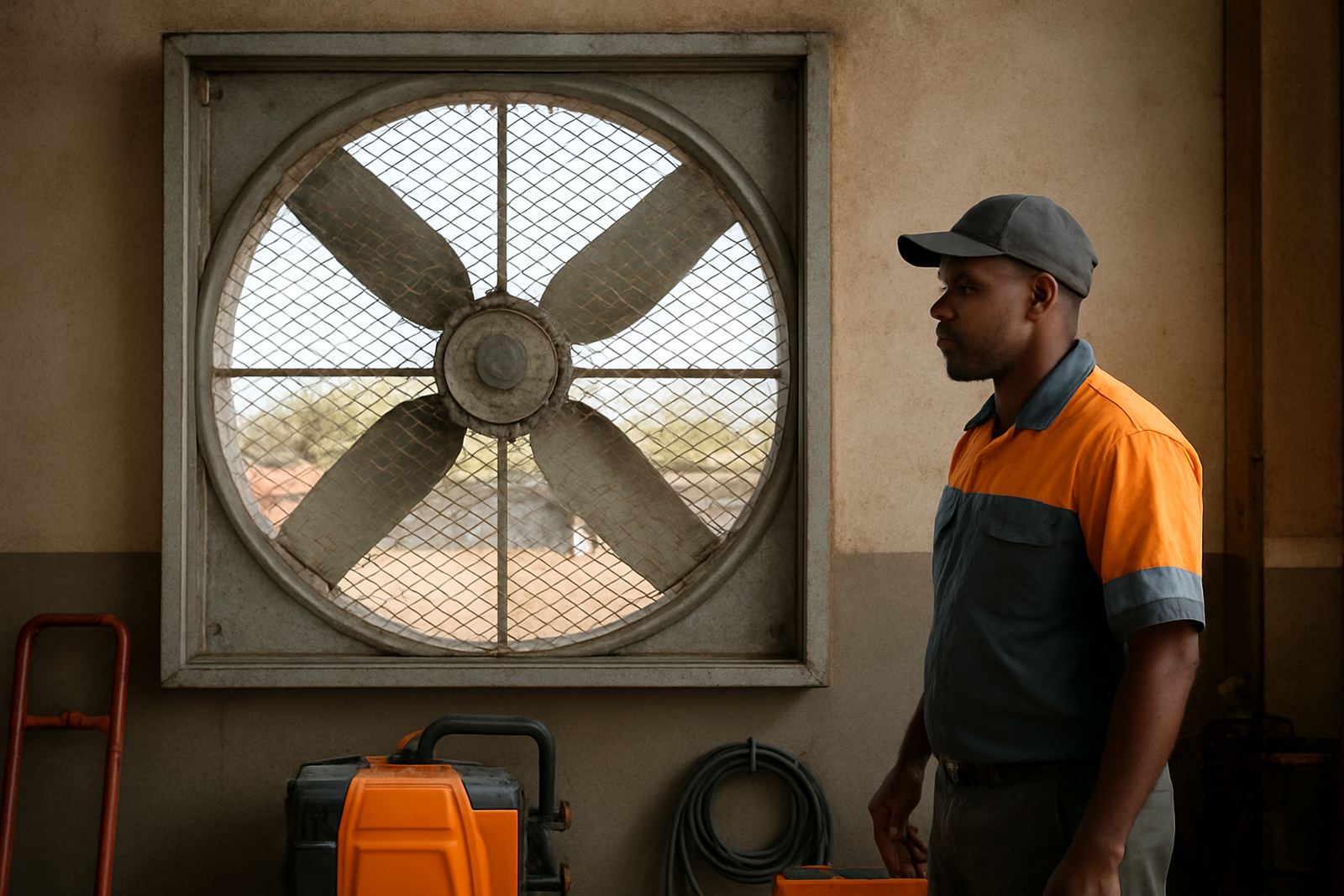
An extractor fan is a mechanical fan that pulls air out of a room and sends it outside, usually through a wall, roof or duct. In Kimberley heat builds up quickly, and in enclosed spaces air can feel heavy long before lunch time. That is where a properly sized fan makes a real difference, especially where people are cooking, welding, packing stock or running equipment that gives off heat and odour.
We supply wall mounted and roof mounted extractor fans for homes, workshops, storerooms, small kitchens and plant areas. The right unit depends on the room size, the amount of heat or fumes, and how far air must travel before it exits. A fan that is too small will run hard and still leave the room stuffy. A unit that is too large can be noisy and waste power.
Sizes, blade types and duty ratings
Extractor fans come in a range of diameters and motor sizes, so it is worth matching the fan to the actual job. Smaller units are often used in bathrooms, sculleries and server cupboards, while larger wall or roof fans suit kitchens, workshops and general ventilation in retail stores. For dusty Northern Cape environments, metal housings and motors with suitable protection are often a better choice than light indoor units.
- Typical sizes: 150 mm, 200 mm, 250 mm, 300 mm and larger on request
- Mounting: wall fixed, roof fixed, or duct connected
- Blade options: plastic for light duty use, metal for warmer or busier spaces
- Motor options: single speed, multiple speed, or continuous duty models
- Air delivery: selected to suit room volume and extraction needs
If the area has grease, steam or fine dust, ask for a fan rated for that type of environment. In a kitchen or workshop, low grade parts can corrode or clog up quickly, especially where the air is warm and the building is used every day.
Where extractor fans work best
We commonly fit extractor fans in kitchens, but they are just as useful in back rooms, equipment stores and small production spaces. In Galeshewe, Roodepan and New Park we often see rooms that need better air exchange because windows are limited or security grills keep openings small. A fan helps control heat, odours and moisture where natural ventilation is not enough.
For workshops, the main issue is not only heat, but fumes from cutting, painting or servicing equipment. A roof fan can help pull stale air up and out, while a wall unit suits shorter duct runs and quicker installation. In stores, the aim is often to keep air moving so staff are comfortable and stock is less affected by damp or trapped heat.
- Commercial kitchens and prep rooms
- Spare parts stores and packing areas
- Auto aircon workshops and service bays
- Generator rooms and inverter rooms where heat builds up
- Light industrial spaces and utility rooms
Installation, power and ducting needs
Correct installation matters as much as the fan itself. The unit must be mounted securely, wired to the correct supply, and positioned so extracted air leaves the building without short circuits back into the same area. Wall fans usually need a clean opening and a weatherproof finish around the frame. Roof fans need proper flashing, sealed fixings and safe access for servicing.
Most extractor fans use standard single phase power, but larger units may need a dedicated circuit and suitable isolator. During load shedding, some sites run extractor fans on backup power, so it is important to check the start-up load and running current before pairing the fan with batteries or a generator. If the fan is linked to gas appliances, kitchens or heat producing equipment, clearance and airflow must be checked carefully so the installation does not interfere with safe operation.
Where ducting is needed, keep bends to a minimum and avoid undersized pipe or flexible hose that can restrict air flow. Long runs, dirty filters and too many turns all reduce performance. A fan that is badly ducted can sound loud and still move very little air, which is a waste of money and time.
Care, cleaning and regular servicing
Extractor fans work best when they are cleaned before dust, grease or lint starts to build up on the blades and grille. In kitchens, filters and covers should be inspected more often, while workshops may need regular checks for dust around the motor housing and vents. A fan that starts vibrating, humming or moving less air should be checked early before the bearings or motor are affected.
Good servicing can extend the life of the unit and keep it within normal operating noise levels. We can assist with inspection, replacement motors, wiring checks and general ventilation servicing for clients in Kimberley, Kuruman, Upington and nearby towns. If the building has had recent alterations, it is also worth checking whether the original fan is still enough for the room size and use.
- Clean grilles, blades and filters on a regular schedule
- Check fixings, dampers and seals for movement or wear
- Listen for bearing noise, rattling or electrical buzzing
- Confirm that air is exiting outdoors, not recirculating inside
- Inspect the isolator and wiring during planned maintenance
What to check before you order
Before placing an order, measure the room and note what the fan must remove. A small kitchen needs something different from a workshop with welding fumes or a storeroom that only needs general air movement. It helps to know the wall thickness, roof type and whether you already have a duct route. If the building is older, the mounting point may need reinforcing, especially on thin sheeting or weak plastered walls.
Also confirm the available power supply, any backup system, and whether the fan will be on manual control, timer control or linked to a switch. If the area is subject to dust, grease or outdoor weather exposure, say so up front. That lets us recommend the right materials and motor protection instead of a basic indoor unit that will not last.
- Room length, width and ceiling height
- Reason for extraction: heat, smoke, odour, moisture or dust
- Wall, roof or duct mounting preference
- Power supply and backup power details
- Any noise limits or municipal building requirements
Local supply for Kimberley and the Northern Cape
Modern Equipment has been serving the region since 2002 from New Park, Kimberley, with support into Roodepan, Galeshewe, Kuruman and Upington. Our team works with air-conditioning, refrigeration, ventilation, pumps, solar and HVAC tools, so we understand how extractor fans fit into a wider building system. A ventilation problem is often tied to heat, power limits or poor room layout, and it is usually easier to fix when those issues are considered together.
If you need a wall fan for a kitchen, a roof unit for a workshop or a replacement fan for an existing opening, we can help match the size and type to the job. For order checks, spares and service support, contact our Kimberley office and send the room measurements, power details and a short description of the space. That gives us enough information to advise properly, and to avoid unnecessary back and forth.
Key facts
| Product type | Wall and roof extractor fans |
|---|---|
| Common sizes | 150 mm to 300 mm, larger units on request |
| Mounting | Wall, roof or duct connected |
| Power supply | Single phase on most units, larger models may need a dedicated circuit |
| Use areas | Kitchens, workshops, stores, utility rooms and general ventilation |
| Service support | Installation checks, cleaning, repairs and replacement motors |