How a solar inverter fits into a backup power system
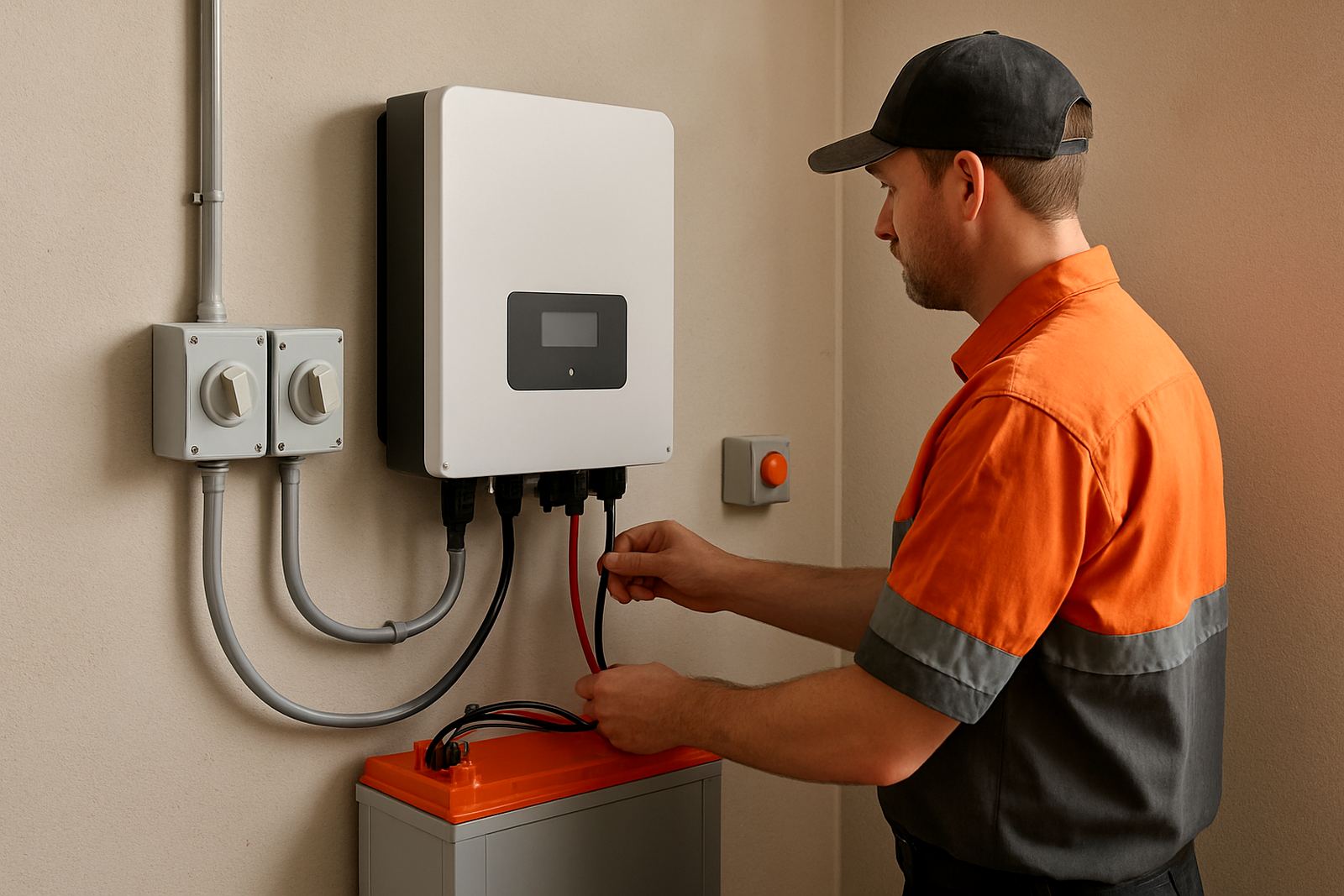
An inverter is the control point between your solar panels, batteries and the circuits you want to keep running. It takes stored DC power and changes it into standard AC power for South African appliances, tools and controls. In a basic backup setup, the inverter charges batteries from grid power or solar, then switches over when the supply drops. In a hybrid setup it can also manage solar input while drawing less from the municipality or a generator.
That matters in Kimberley where load-shedding can interrupt fridges, internet routers, security systems and workshop equipment. It also helps where voltage is unstable or where you need a cleaner supply for electronics and variable speed drives. A correctly sized inverter will keep essential circuits running without forcing you to overspend on batteries you do not need.
Common inverter sizes and what they are used for
We supply inverter options from small wall-mounted units to larger systems for shops, clinics, cold rooms and farm buildings. The right size depends on the total running load and the starting surge of motors, pumps or compressors. A 1.5 kVA to 3 kVA unit may suit lights, routers, TV and a few plugs. A 5 kVA to 8 kVA unit is more practical for a house with fridge, freezer, gate motor and some sockets. Larger 10 kVA plus systems are used where there are multiple circuits, office loads or light workshop use.
- 1.5 kVA to 3 kVA: basic backup for essentials
- 5 kVA to 8 kVA: homes, offices and small retail
- 10 kVA to 15 kVA: larger sites, workshop support and heavier circuit groups
- Single-phase and three-phase options available depending on the installation
Battery voltage also matters. Smaller systems often use 24 V, while many mid-size and larger units use 48 V for better efficiency and lower cable current. If you are adding solar later, the inverter should already allow for that expansion.
Where solar inverters work best in the Northern Cape
Solar inverters are used in houses, rental units, medical rooms, farms, borehole pump rooms, workshops and light commercial sites. In areas such as New Park, Roodepan, Galeshewe, Kuruman and Upington, the strongest demand is for essential load backup where a full generator would be too noisy, too costly or too much maintenance. Inverters are also useful in stores that cannot afford a long break in refrigeration or point-of-sale equipment.
Kimberley’s dust and summer heat mean the inverter location needs proper ventilation and a clean mounting point. Units should not be squeezed into a hot ceiling void or a damp outside cupboard. For coastal or high-humidity locations in the wider province, corrosion protection on terminals and cable glands is worth specifying. If your site uses pumps, aircon or refrigeration, we will check start-up demand carefully, because those loads often trip smaller systems.
What to include with the inverter installation
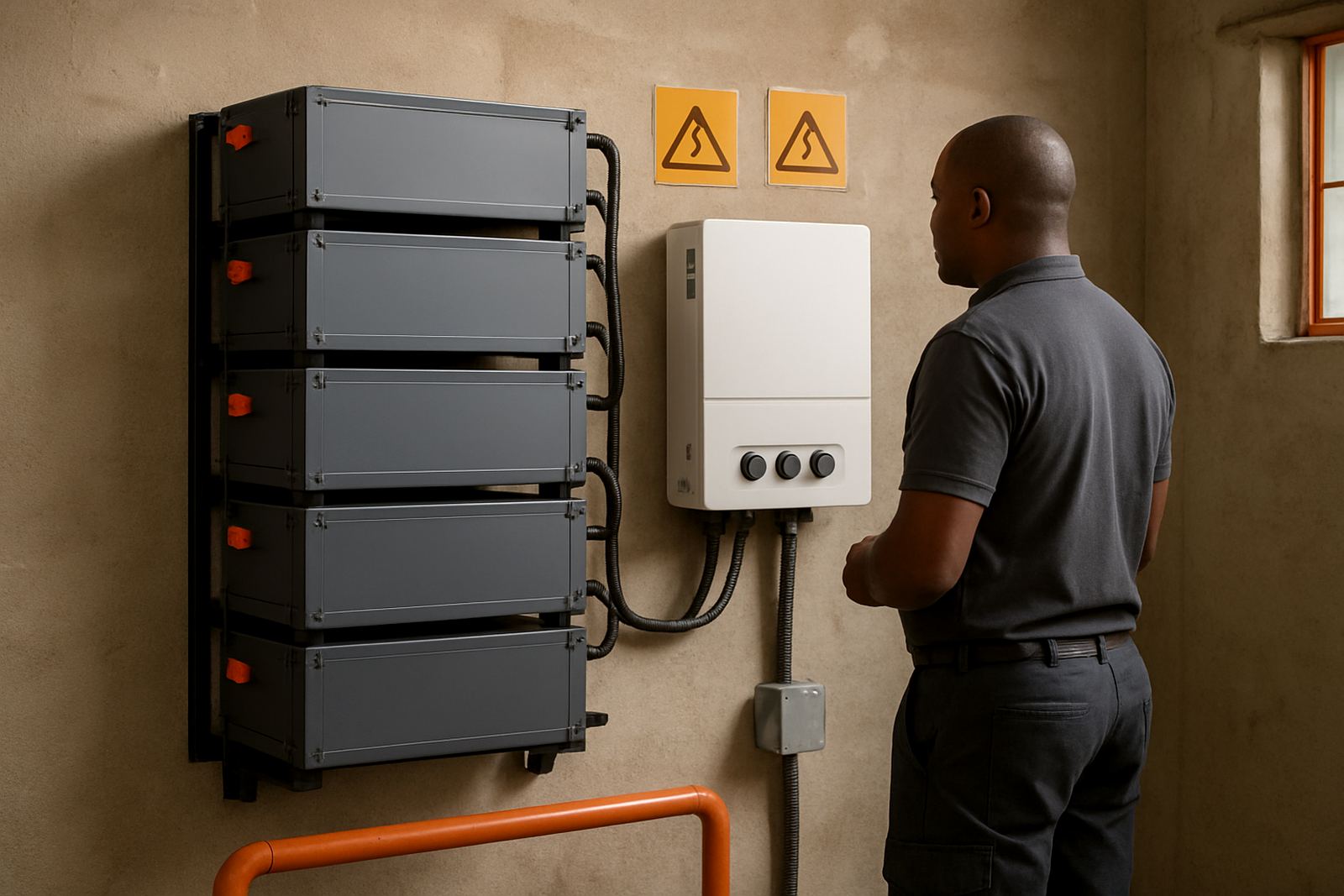
A good inverter installation is more than a box on the wall. It needs battery protection, correct cable sizing, isolators, changeover gear and the right circuit split between essential and non-essential loads. Where solar panels are included, the array must match the inverter’s input window and the battery bank must be suitable for the daily cycle you expect. If the site has a generator, the changeover sequence also has to be planned so the batteries do not overcharge or the system hunt between sources.
- Solar panels matched to inverter input voltage and current
- Battery bank sized for required backup hours
- DC isolator, fuses and surge protection
- AC changeover and distribution for essential circuits
- Correct earthing and cable routes for safety
We also look at mounting height, airflow and service access. If an inverter is installed too close to a hot wall or stacked against other equipment, it may derate earlier than expected and that shortens battery life too.
Care, cleaning and routine servicing
Solar inverters need simple but regular care. Keep vents clear of dust, spider webs and building residue. Check that all terminations stay tight, because heat cycles can loosen lugs over time. Batteries should be inspected on schedule, especially in systems that work hard through daily load-shedding. If the inverter uses fan cooling, listen for unusual noise or a fan that runs constantly, as that can point to heat build-up or a blocked airflow path.
We recommend periodic inspection of battery health, error logs, charging settings and any nuisance tripping on changeover. If you are running refrigeration or a cold room, even a short interruption can spoil stock, so early fault finding is better than waiting for a total failure. In dusty areas, a clean filter or cabinet can make a noticeable difference to service life.
What to check when ordering an inverter
Before you order, list the loads you want on backup and note which ones have motors or compressors. Check whether your supply is single-phase or three-phase, and whether you want grid-tie support, backup only or full hybrid control. Battery chemistry matters too. Lithium batteries are common for faster cycling and better usable capacity, while other battery types may suit lower-cost backup needs. The inverter must be compatible with the battery management system if lithium is used.
- Total running load in watts or kW
- Starting surge from fridges, pumps or compressors
- Battery type, voltage and usable capacity
- Single-phase or three-phase supply
- Expected backup time in hours
- Space available for wall mounting and ventilation
If you are unsure, bring the equipment list and we can work from there. It is better to size the inverter for the real load now than to try and patch in another unit later. That often costs more, and the result is not as neat.
Local supply support from New Park, Kimberley
Modern Equipment has supplied air-conditioning, refrigeration, ventilation, pumps, auto aircon and solar equipment in Kimberley since 2002. Our team works from New Park and supports customers across the Northern Cape, including Roodepan, Galeshewe, Kuruman and Upington. For inverter enquiries we can assist with product selection, compatibility checks, installation planning and commissioning support.
Whether the job is a home backup system or a site that needs steady power for refrigeration and controls, we focus on practical equipment that suits local conditions. If you already have panels or batteries on site, bring the details and we will check the match before anything is supplied. It saves time, and it keeps the installation cleaner.
Key facts
| Input voltage | 12 V, 24 V or 48 V systems depending on model |
|---|---|
| Power range | 1.5 kVA to 15 kVA and larger on request |
| Output type | 230 V AC single-phase, with three-phase options available |
| Waveform | Pure sine wave for appliance and motor compatibility |
| Protection | Overload, short circuit, over-temperature and low battery protection |
| Typical uses | Essential load backup, solar self-consumption and battery storage management |