What an axial fan does and when it is the right choice
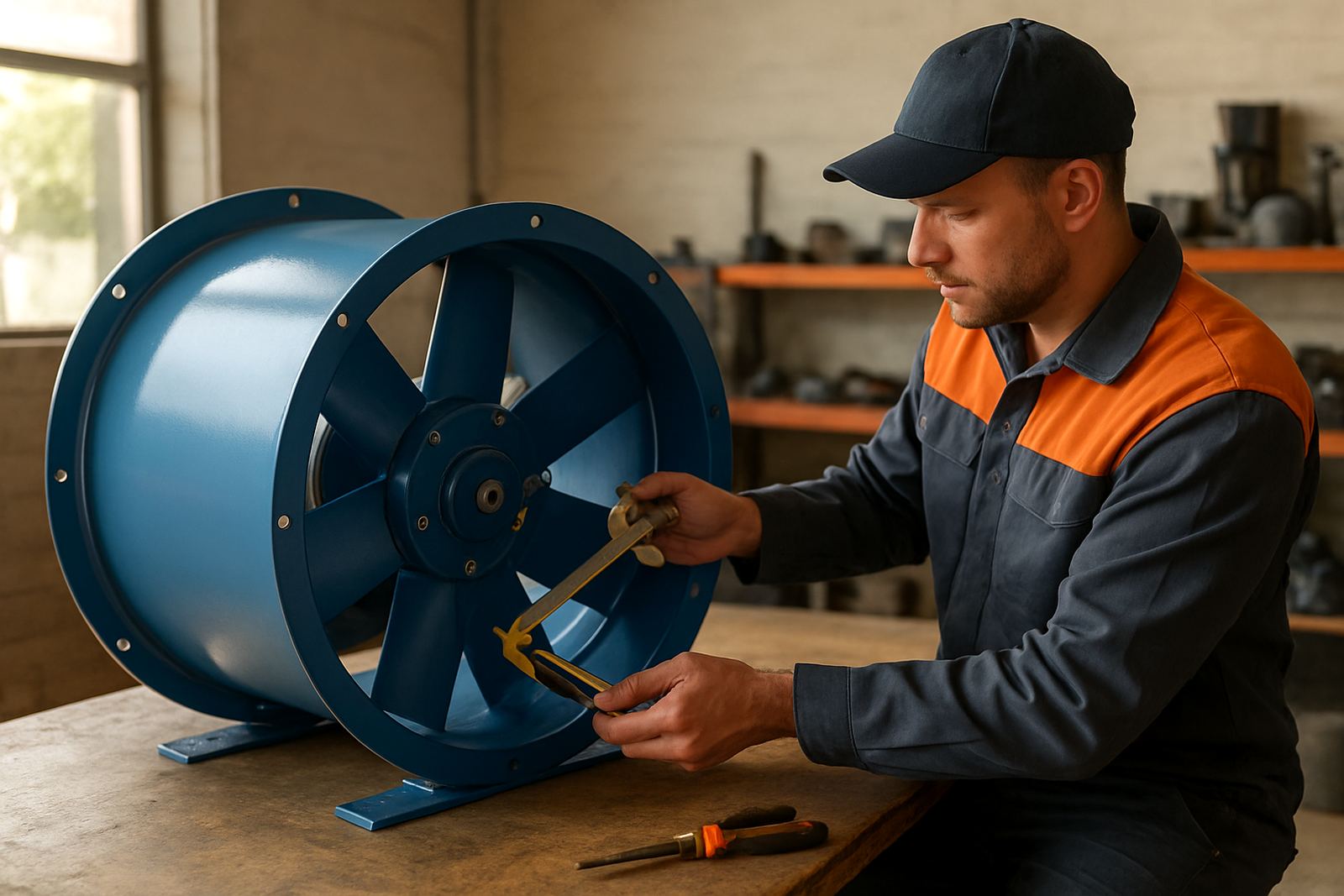
An axial fan pulls air in and pushes it along the same line as the motor and blades, so it suits spaces where you need steady air movement rather than high pressure. In practical terms that means hot rooms, stale plant rooms, ceiling voids, stores, battery areas and light industrial spaces where air needs to be shifted quickly.
These units are commonly used for heat relief in summer, odour control, fresh air make-up and extraction from enclosed service areas. In Kimberley, where dust and heat can build up fast, an axial fan is often the simple option for keeping air moving without overcomplicating the install.
Axial fans are not the same as centrifugal blowers. If the duct run is long, heavily restricted or full of bends, an axial unit may struggle. But for short duct runs, wall mounting and open discharge, it is a practical choice and usually costs less to run than larger air movement systems.
Common sizes, blade types and motor options
Axial fans are available in a range of diameters to suit light domestic ventilation through to larger workshop and commercial extraction. The most common sizes are 300 mm, 400 mm, 500 mm, 600 mm and 900 mm units, with smaller units used for compact rooms and larger units used where a stronger air throw is needed.
- Diameter options: 300 mm to 900 mm, depending on air volume required
- Motor supply: 220 V single phase or 380 V three phase, subject to site needs
- Blade material: steel, aluminium or reinforced plastic
- Mounting: wall, window, panel or short duct installation
- Control options: on/off switch, isolator, speed control or thermostat operation
Some units are supplied as direct drive and others with belt drive arrangements, depending on the duty and service access required. For dusty areas, a simpler setup with easy cleaning access is usually better. Where the fan will run often, a motor with proper bearing support and correct airflow rating is worth choosing first time.
Where axial fans suit local sites and buildings
Axial fans are used in workshops, farm sheds, stores, kitchens, guard rooms, generator areas, pump rooms and light plant rooms. They are also suitable for cooling equipment areas where heat is trapped and natural airflow is poor. In town centres and industrial yards, they help reduce stuffiness in enclosed spaces without taking up much wall or ceiling room.
On the Northern Cape side, we often see them specified for service rooms that get hot during load shedding or when backup equipment is running. In coastal or humid conditions they can also help move damp air out of enclosed areas, which assists with corrosion control and musty smells.
- Good for short, straight air paths
- Useful where heat builds up around equipment
- Ideal for general extraction and air transfer
- Can support fresh air intake where required
If the space holds chemicals, fuel fumes, fine dust or corrosive vapours, the fan type and motor rating must match the duty. Tell us what is in the room, how often the fan will run and whether the air is clean, dusty or damp. That saves time and avoids buying a unit that is under-sized or overworked.
Installation basics, power supply and switching
Most axial fans need a solid mounting surface, correct electrical supply and enough open area around the blades or grille for air to move freely. Wall mounted units should be fixed to a sound frame or wall opening, with vibration and noise kept under control. Where the fan is going into ducting, the duct size must match the fan diameter as closely as possible.
Power needs depend on the motor size. Smaller fans often run on 220 V single phase supply, while larger commercial units may require 380 V three phase. Isolators, overload protection and correct cable sizing are part of a proper install. If the fan is controlled by a thermostat, timer or manual switch, those controls must be easy to reach for maintenance and shutdown.
When we quote for installation, we check access, mounting height, airflow direction and whether extra grilles, shutters or weather covers are needed. For exterior walls, rain entry and dust intrusion should be considered. In many cases a simple cowl or louvre is enough, but the right weather protection depends on the site and the opening.
Care, cleaning and servicing for longer life
Axial fans work best when the blades, guards and motor area stay clean. Dust build-up reduces airflow and can unbalance the fan over time. In workshops or dusty yards, cleaning intervals should be shorter, especially where the fan runs daily. A quick visual check can pick up loose fasteners, damaged blades or vibration before it becomes a bigger fault.
Listen for changes in sound, rattles or bearing noise. These are often the first signs that the fan needs attention. If the unit is fitted in a plant room or high wall position, make sure there is safe access for service work. A fan that is difficult to reach tends to be neglected, then it fails early.
- Clean blades and guards on a set schedule
- Check vibration, bearings and mounting bolts
- Inspect wiring, isolators and control devices
- Replace damaged shutters, grilles or belts where fitted
Regular care is simple and usually cheaper than a full motor replacement. In coastal and humid areas, also check for surface corrosion on fixings and supports, because rust can spread faster than people expect.
What to confirm before you order
To supply the right axial fan, we need the room size, the purpose of the fan and whether the air is being moved in or out. It also helps to know if the space has ducting, a wall opening, a louvre or a roof outlet already in place. If the fan is replacing an old unit, send the old motor plate details and blade diameter where possible.
Useful order details include the voltage, phase, mounting position and whether you need continuous running or occasional use. If the fan is for a plant room, workshop, cold area or battery room, tell us what else is installed there so we can check for heat, fumes or dust concerns. For municipal and commercial sites, access rules and noise limits may also affect the final selection.
- Room size and ceiling height
- Airflow direction needed
- Supply voltage and phase
- Mounting position and opening size
- Duty: light, medium or continuous
We work from Kimberley and support customers in New Park, Roodepan, Galeshewe, Kuruman and Upington. If you are not sure which size fits, send a few photos and rough measurements and we will help you narrow it down without guesswork.
Key facts
| Fan type | Axial airflow unit for ventilation, cooling air movement and extraction |
|---|---|
| Size range | 300 mm, 400 mm, 500 mm, 600 mm and up to 900 mm depending on duty |
| Electrical supply | 220 V single phase or 380 V three phase, subject to model |
| Air delivery | Selected to suit open air movement, short duct runs and plant room extraction |
| Mounting | Wall, window, panel or short duct installation |
| Typical use | Workshops, plant rooms, stores, generator areas, sheds and service spaces |