What grilles and diffusers do on site
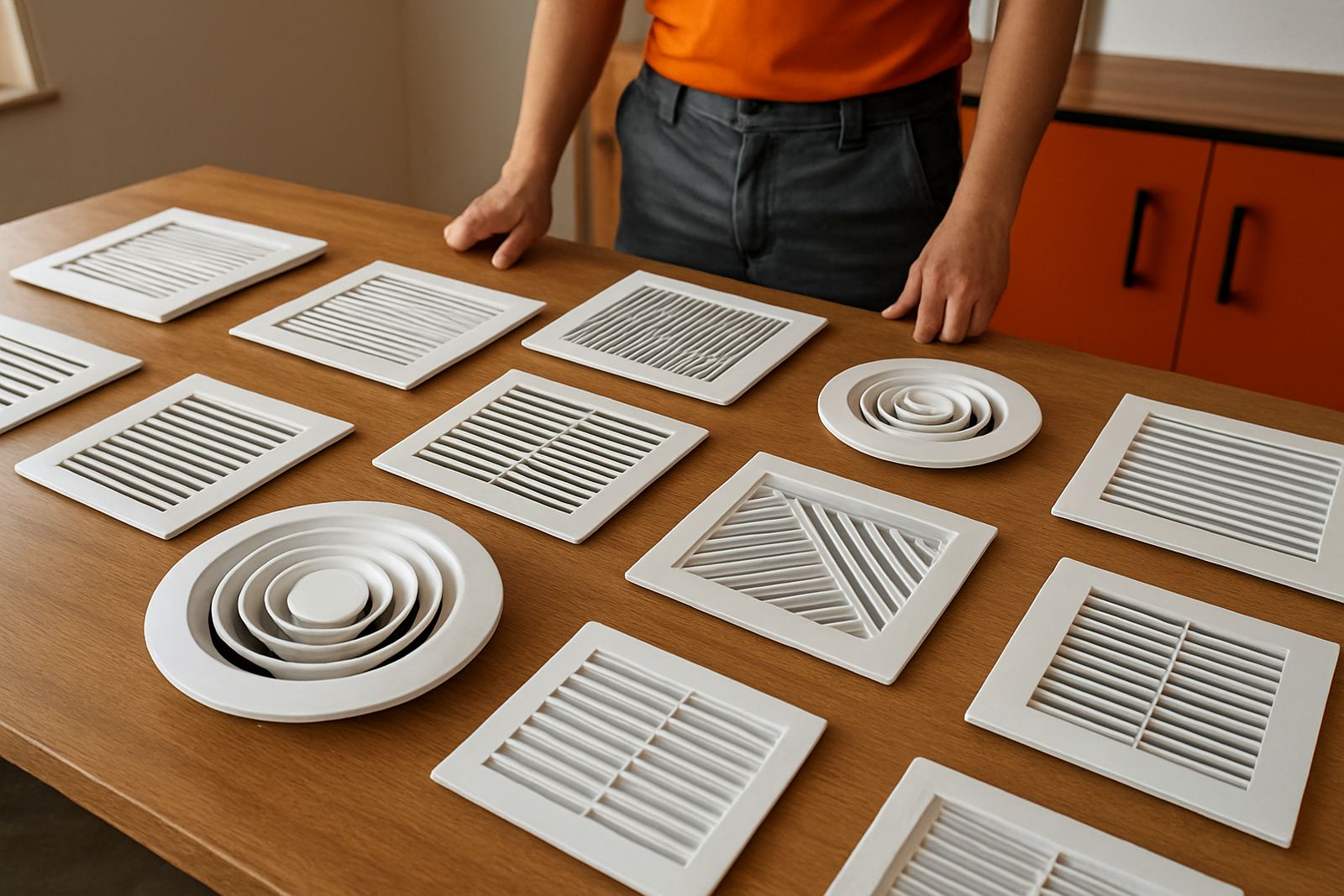
Grilles and diffusers are the visible outlets and inlets fitted to ducted air-conditioning, ventilation and some refrigeration related air movement systems. A grille normally has fixed or adjustable bars for supply or return air, while a diffuser spreads supply air across a room more evenly. In plain terms, they help air enter or leave a space without leaving a rough cutout on the wall or ceiling.
On a neat installation, these parts do more than look tidy. They also help control throw, reduce draughts, and support better room balance. In a Kimberley office or shop with a lot of sun load, that matters. In a workshop, store room or cold room entry area, it also helps keep dust and hot outside air moving where it should be moving.
Common sizes and finish options we supply
We stock and supply commonly used sizes so installers do not have to wait for special orders on every job. Typical sizes include 200 x 200 mm, 300 x 150 mm, 300 x 300 mm, 450 x 150 mm, 600 x 150 mm and larger made-to-measure formats for bigger duct runs. Round and square styles are both used, depending on the duct, ceiling layout and the look the client wants.
- Single deflection and double deflection styles for supply air control
- Return air grilles with fixed blade spacing for lower resistance
- Ceiling diffusers with 2-way, 3-way or 4-way air distribution
- Eggcrate style return grilles for higher free area
- Metal or plastic construction depending on the application
- White powder coated finish is common, but other colours can be matched on request
Blade spacing, face size and neck size all matter, not just the outer frame. If a grille is too small for the airflow, the system can get noisy and the room will never quite settle right. If it is too large, the finish may not suit the opening or the ductwork behind it.
Where grilles and diffusers suit best
These fittings are used in a wide range of Northern Cape applications. They suit split ducted systems in houses, retail shops along busy streets, municipal offices, schools, pharmacies, clinics, churches and light industrial buildings. They are also useful in plant rooms, change rooms, ablution blocks and strong-smelling areas where controlled extraction matters.
For coastal humidity or dusty inland conditions, the material choice should be matched to the site. Standard painted metal works well in many indoor spaces, but areas with more moisture, cleaning chemicals or salty air may need better corrosion resistance. In Kimberley and surrounding towns, that is worth checking before a final order goes in.
- Use supply diffusers in occupied rooms for even air spread
- Use return grilles where air must be drawn back quietly
- Use exhaust grilles in toilets, kitchens and service areas
- Use larger face sizes where airflow is high and noise must stay down
Installation details that save time later
A good installation starts with the right opening size, depth and fixing method. The neck size on the grille or diffuser must match the duct or plenum behind it. If the opening is too tight, installers end up forcing the frame in and damaging the finish. If it is too loose, the unit can rattle or leave a gap that looks untidy.
Most supply outlets need to be set square, level and centred so the airflow reaches the occupied area properly. Return grilles are usually placed where air can move back freely without being blocked by cupboards, beams or curtains. In ceiling work, the installer should also check access for future servicing of filters, dampers and dampers behind the face, if fitted.
- Check ceiling thickness before choosing the fixing method
- Allow enough space behind the face for duct collar and screws
- Seal around the opening where dust or insects can enter
- Mark supply and return positions before cutting ceiling boards
For systems on generators or solar backup, the grille itself needs no power, but the airflow design must suit the available fan capacity. On low power supply periods, air distribution should still work without overloading the indoor fan. In gas fired or evaporative linked systems, the same rule applies: the outlet must be matched to the duty and not just the room size.
Care, cleaning and servicing on busy premises
Grilles and diffusers are simple parts, but they still need care. Dust build-up, paint overspray and grease can block blade openings and reduce free flow. In kitchens, workshops and stores with sanding or packing activity, the face should be cleaned as part of normal maintenance. If the louvres are bent or the screws are loose, the outlet can start to buzz or whistle.
During routine aircon servicing, a technician should inspect the grille face, the surrounding seal and any dampers behind it. If airflow seems weak, the problem may be upstream in the fan, filter or ductwork, not at the outlet itself. We have seen many cases where a room complaint was traced to a dirty return grille or a diffuser set too small for the load. It is a small part, but it can make a big difference.
What to check before you order
Before ordering, it helps to have the opening size, quantity, finish and fitting type ready. If you are replacing old outlets, measure the visible face and the neck size separately, because they are not always the same. For new builds or cold room projects, the drawing should show whether the outlet is for supply, return or extraction, and whether the blade direction must be fixed or adjustable.
- Opening size and face size in millimetres
- Supply, return or extraction use
- Round, square or rectangular shape
- Material and finish required
- Ceiling, wall or door mounting position
- Quantity needed for each area
If the job is in New Park, Roodepan, Galeshewe, Kuruman or Upington, we can help match the part to the actual site conditions. That includes hotter rooms, dusty premises and locations where the client wants a cleaner finished look for public facing areas. If needed, we can also support installers with commissioning and airflow checks so the outlets perform properly after fitment.
Key facts
| Product type | Supply and return air outlets for HVAC and ventilation systems |
|---|---|
| Common sizes | 200 x 200 mm, 300 x 150 mm, 300 x 300 mm, 450 x 150 mm, 600 x 150 mm and larger |
| Options | Fixed blade, single deflection, double deflection, 2-way, 3-way and 4-way diffuser patterns |
| Materials | Powder coated metal, aluminium or plastic depending on use |
| Mounting | Ceiling, wall or door face with screw fix or clip fit, depending on frame |
| Use cases | Air-conditioning, ventilation, extraction, return air and cold room related airflow control |