What a centrifugal fan does in a ducted system
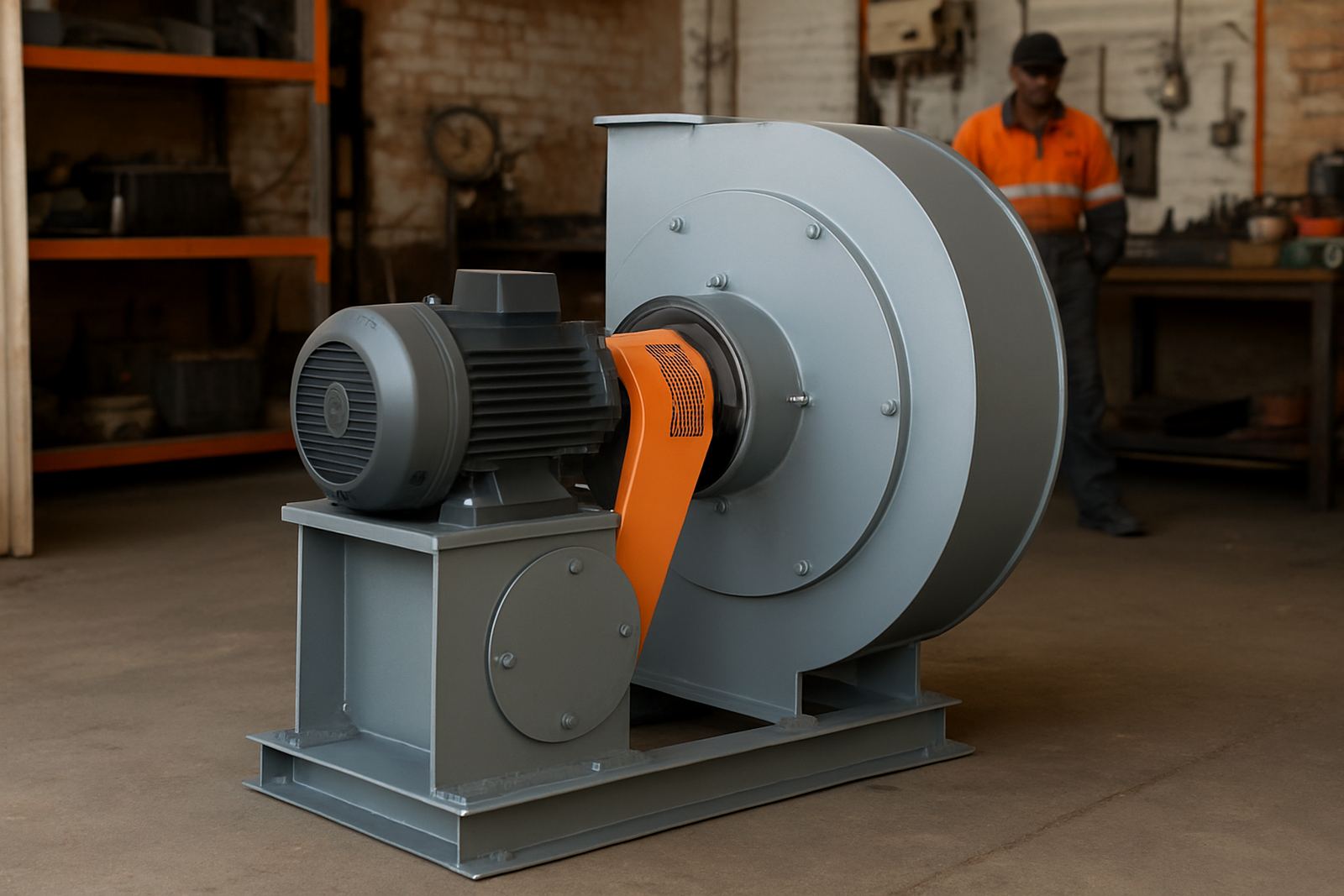
A centrifugal fan pulls air into the centre of the impeller and throws it outward into the fan housing, which helps it maintain airflow against resistance. That makes it a better choice than a simple axial fan when the air has to pass through ducting, grille filters, dampers or equipment enclosures.
In practical terms, these fans are often used for extract, supply or transfer air where the system needs more static pressure. They are commonly fitted in refrigeration rooms, service corridors, ceiling voids, spray areas and ventilation runs where straight-through airflow alone will not do the job.
For Kimberley and surrounding towns, this matters because many sites run long duct lengths, use enclosed plant spaces, or need better dust control. A correctly sized centrifugal fan helps keep temperatures down and air moving, even when the installation is not a short, open run.
Sizes, wheel types and common build options
Centrifugal fans come in a wide range of sizes, from compact units for light ventilation to larger fans for industrial extract and heavy duct systems. Selection is usually based on the required airflow, pressure, noise level and available space around the unit.
Common options include forward curved, backward curved and plug fan arrangements. Forward curved units are often used where a moderate air volume is needed in a compact casing, while backward curved types are often chosen for better efficiency and cleaner running under varying loads. Where space is tight, the casing shape and motor position can make a big difference.
- Impeller diameter to suit the duty required
- Single phase or three phase motor options
- Galvanised steel, powder coated or stainless housings
- Belt driven or direct drive setups, depending on access and service needs
- Wall, ceiling, inline or base mounted configurations
We also help customers match the fan to the duct size, filter resistance and discharge direction. If the fan is undersized, it will sound like it is working hard but the system still wont move enough air.
Where centrifugal fans work best
These fans suit places where air needs to be collected and moved through a controlled route. They are often used in commercial buildings, workshops, small factories, pump rooms, refrigeration spaces and back-of-house ventilation. They also suit dustier or warmer spaces where the fan must overcome resistance from ducting or protective filters.
In the Northern Cape, centrifugal fans are often fitted in areas that deal with heat, sun loading and load-shedding related restart demands. They can also be used with backup power systems, provided the motor start current and running load are matched correctly to the supply.
- Workshop fume extract and fresh air make-up
- Cold room and plant area ventilation
- General commercial ducted supply or extract
- Kitchen and service area air movement
- Enclosed plant rooms and equipment rooms
If the installation is close to the coast or in a humid space, we recommend checking corrosion resistance carefully. In Kimberley, dust ingress and bearing care are usually bigger issues, especially on sites with open yards or constant traffic.
Installation needs, power supply and system matching
A centrifugal fan should always be matched to the actual system duty, not just the duct size on paper. The installer needs to check airflow requirement, pressure drop, mounting position, electrical supply and any controls such as switches, speed controllers or interlocks.
For electrical supply, smaller units may run on 220 V single phase, while larger duty fans usually need 380 V three phase. Motor size, starter type and protection must be checked before fitment, especially where the site has voltage dips or generator changeover. If the fan is part of a refrigeration or ventilation package, it should also be tested with the full system running, not just spun up on its own.
We can assist with commissioning support and practical setup advice for ducted installations in New Park, Roodepan, Galeshewe, Kuruman and Upington. A good install leaves enough access for belt checks, cleaning and future motor work without stripping half the ceiling first.
Care, cleaning and servicing over time
Like most moving equipment, centrifugal fans last longer when they are kept clean and checked regularly. Dust build-up, loose belts, worn bearings and damaged impellers all reduce performance. If the unit starts to vibrate, gets louder or moves less air than before, it needs attention before a bigger fault develops.
Routine servicing should include cleaning the impeller and casing, checking fasteners, testing motor current, inspecting belts where fitted, and making sure no duct section is blocked. On systems that run daily, a simple scheduled check can prevent downtime and avoid heat build-up in enclosed spaces.
- Check for dust, grease and lint on the fan wheel
- Inspect bearings and listen for rough running
- Check electrical connections and motor load
- Confirm that mounts and duct joints are secure
- Replace worn belts, guards or vibration isolators early
For sites that lose power often, it is worth checking restart behaviour after load-shedding. A fan that starts against a full duct load or poor voltage can trip repeatedly and shorten motor life.
What to check before you order a fan
Before ordering, you should know the required air volume, the duct size, the approximate duct length and how many bends, filters or grilles are in the line. That information helps match the fan to the actual pressure requirement. We also need to know whether the fan will blow clean air, warm air, dusty air or air with moisture or light chemical exposure.
It also helps to confirm the mounting arrangement, motor supply and whether the unit must fit through an access hatch or narrow plant area. For replacement jobs, bring the old fan details if available, including the motor rating, rotation direction and discharge position. If not, a clear photo and a few measurements are usually enough to get moving.
- Required airflow in cubic metres per hour
- Duct size and total run length
- Number of bends, filters or dampers
- Power supply available on site
- Space for maintenance and motor access
If you are unsure, our team can help you work through the duty and the installation limits before you buy. That saves time and avoids fitting a fan that looks right but cannot cope with the system.
Local supply for projects, replacements and upgrades
Modern Equipment has supplied air-conditioning, refrigeration, ventilation, pumps, solar backup and HVAC tools in Kimberley since 2002. We work from New Park and support customers across the Northern Cape with practical product matching and parts support for real site conditions.
Whether you need a new centrifugal fan for a ducted extract system, a replacement for a worn unit, or advice on power and control needs, we can help you choose the right size and type. For projects in New Park, Galeshewe, Roodepan, Kuruman or Upington, it helps to deal with a supplier who understands the local heat, dust and power interruptions that come with the job.
Contact us at info@modernequipment.co.za for product availability, sizing help or replacement matching. If you know the duty and the space available, we can usually narrow the options quickly and avoid unnecessary back-and-forth.
Key facts
| Airflow range | From compact light-duty units to large ducted fans, sized to the system duty |
|---|---|
| Pressure capability | Suitable for higher static pressure than standard axial fans |
| Motor supply | 220 V single phase or 380 V three phase, depending on model |
| Construction | Galvanised steel, powder coated or stainless options where required |
| Mounting styles | Inline, wall mounted, ceiling mounted or base mounted arrangements |
| Typical use | Ducted ventilation, extract air, supply air, plant rooms and service areas |