What flexible insulated ducting does in an air system
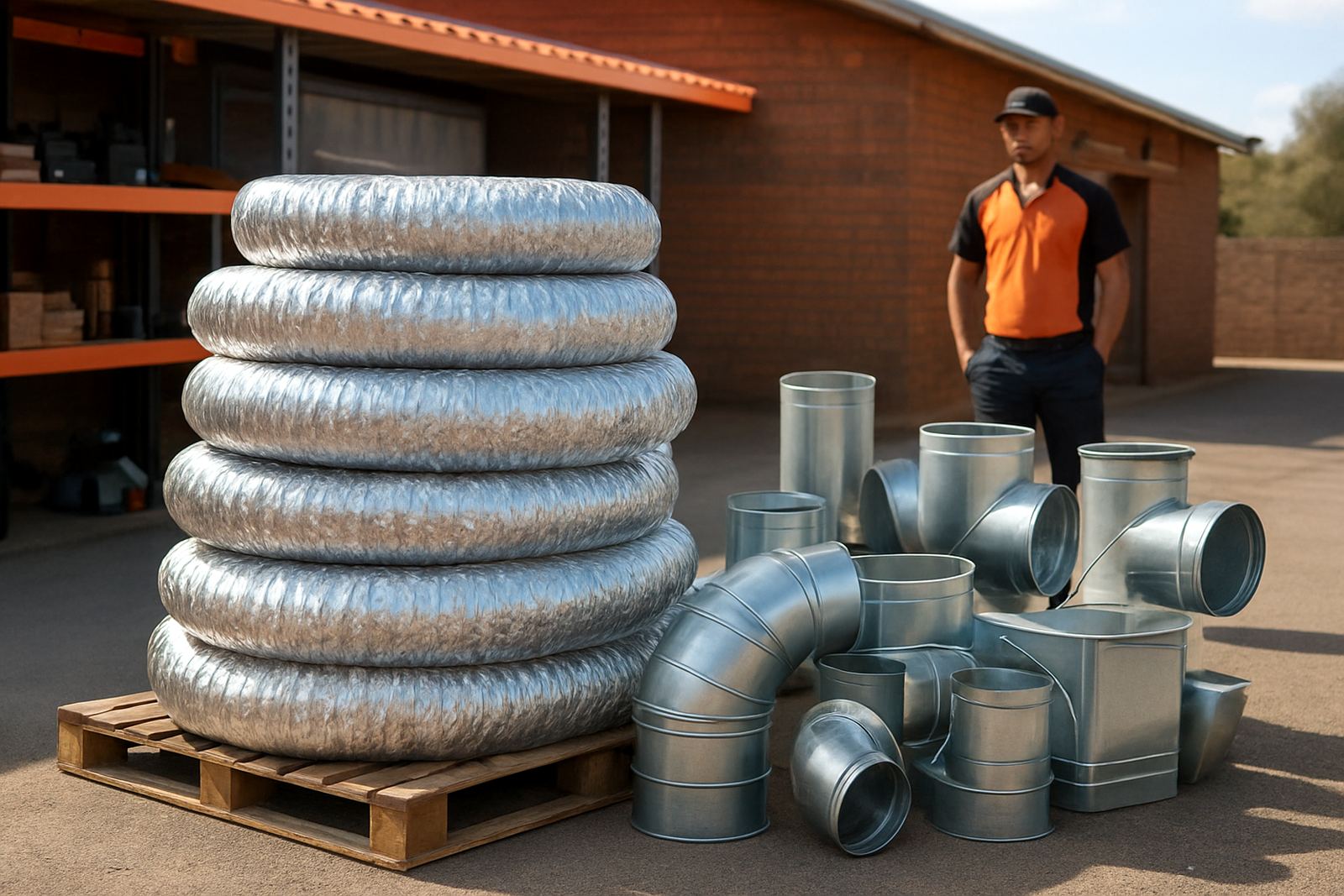
Flexible ducting is used to move air from an aircon unit or ventilation fan to the area that needs supply or extraction. The outer jacket gives the duct shape, while the insulation helps reduce condensation and heat transfer, which matters in hot Northern Cape conditions and in ceilings that get very warm by mid afternoon.
It is a practical choice where a rigid run would need too many bends or fittings. In many jobs it can save time on site, but it still needs the right support, the right diameter and a clean route. If the duct is undersized or crushed, airflow drops and the system has to work harder, which can show up in higher power use and poor room temperatures.
Common sizes and build options
We supply flexible insulated ducting in the sizes most often used for domestic, commercial and light industrial work. The correct size depends on the air volume required, the fan pressure available and the route length. Longer runs and more bends usually need a larger diameter or shorter branch lengths.
- Typical diameters: 100 mm, 150 mm, 200 mm, 250 mm, 300 mm and 350 mm
- Standard lengths: usually supplied in 6 m sections, with other pack lengths available by request
- Insulation thickness: commonly around 25 mm to 50 mm depending on the application
- Construction: inner air core, thermal insulation, and outer vapour barrier jacket
- Temperature use: suitable for chilled air and general ventilation where the system design allows
For exposed or humid areas near Upington or where roof spaces run hot, thicker insulation is often worth choosing. It helps limit sweating on the duct and protects ceilings, insulation and light fittings below.
Where this ducting suits best
This product suits split units, packaged systems, ventilation extract lines, fresh air supply, and short to medium distribution runs in shops, offices, homes, workshops and plant rooms. It is also useful on cold room support ventilation and general services where a little flex is needed around beams, purlins or tight roof spaces.
- Retail spaces and office ceilings in Kimberley and Roodepan
- Homes with ceiling voids in Galeshewe and New Park
- Workshops and storage spaces where equipment sits off centre
- Ventilation lines for utility rooms, kitchens and extractor systems
- Light commercial plant rooms where service access must stay open
In dusty areas, the duct should be routed so that it can be inspected and cleaned without disturbing other services. In coastal or high humidity use this is less common in the Northern Cape, but condensation control still matters where air is very cold and roof spaces are warm.
Installation points that keep the duct working properly
Flexible ducting should be installed with gentle bends, not tight kinks. The duct should be fully stretched out before fixing, because a slack run creates drag and reduces airflow. Support spacing should keep the run from sagging, and joints must be sealed properly with the right tape, clamps or bands so the air goes where it should.
For aircon work, follow the unit’s airflow requirements and check that return air is not starved. For ventilation, make sure the fan duty matches the duct length and number of bends. If you are running the system on solar backup or during load-shedding changeover, good duct sizing helps reduce unnecessary strain when power returns and the system starts again.
- Keep bends wide and avoid sharp turns at ceiling level
- Do not compress insulation at straps or hangers more than necessary
- Seal every connection to reduce air loss and dust ingress
- Allow access points where future servicing is likely
- Keep duct away from hot electrical gear and sharp edges
Power, fan pressure and gas related checks before ordering
Flexible ducting itself does not use power or gas, but it must match the system that pushes air through it. If the fan or indoor unit is too small for the total run, performance will suffer. If the duct is part of a cooled air line, good insulation helps maintain supply temperature and can reduce the load on the refrigeration circuit. That is especially important on long runs in summer heat.
Before ordering, check the air volume required, the fan static pressure, and whether the run is supply or return air. Also note whether the system uses cooling gas, because poor airflow can make an otherwise healthy system appear to underperform. In many cases the issue is not the unit, but the duct size or the route taken to get air to the room.
Care, cleaning and signs that service is due
Flexible ducting should be kept free of dust build-up, crushed sections and water damage. If insulation gets wet, it can lose value and may hold odour or mould. Regular inspection is a good idea in areas with fine dust, open doors or high ceiling spaces. We often see duct problems only after occupants complain of weak airflow, uneven room temperatures or noisy fans.
- Check for sagging sections and damaged outer jackets
- Look for loose clamps or tape lifting at joints
- Inspect for condensation marks around cold supply lines
- Make sure access panels and ceiling covers are returned properly after service
- Replace sections that have tears, collapsed insulation or heavy dirt build-up
When the duct is part of a larger HVAC or ventilation system, service it at the same time as filters, grilles and the fan. That keeps airflow closer to spec and makes fault finding much easier.
Key facts
| Product type | Flexible insulated ducting for air distribution and ventilation |
|---|---|
| Typical sizes | 100 mm to 350 mm diameters, subject to order |
| Section length | Commonly 6 m per length |
| Insulation | Thermal insulation with vapour barrier outer jacket |
| Use cases | Aircon supply, return air, extract and fresh air lines |
| Main benefit | Helps reduce heat gain, condensation and airflow loss |