How evaporative cooling works in dry Northern Cape air
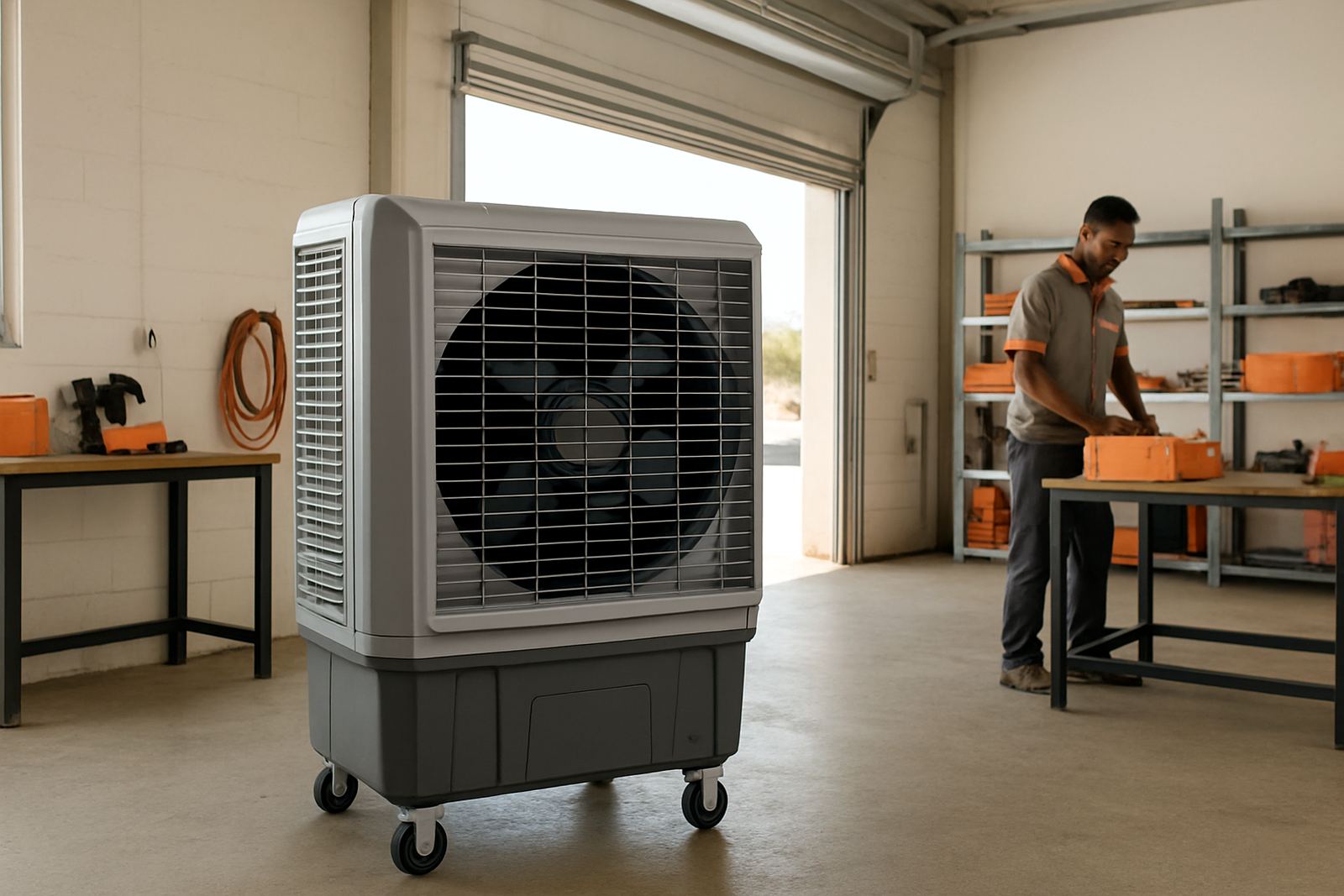
Evaporative coolers draw warm outside air through wet pads, then push cooler air into the space with a fan. In dry conditions like Kimberley, Kuruman and Upington, that process can lower the feeling of heat without the high running cost of large compressor-based systems. They are best used where doors open often, where people work in one area for long periods, or where full sealing is not practical.
The air they deliver is not dry like a split unit, it carries a bit of moisture. That makes them well suited to workshops, waiting areas, livestock sheds, covered loading bays and large open-plan spaces. If a building already has a lot of dust, heat from machinery, or poor air movement, an evaporative cooler can help shift the air better but it must be matched to the site correctly.
Sizes and options for small rooms to large bays
Evaporative coolers come in different air volumes, tank sizes and fan arrangements. Small portable units are useful for a single room, guard area or small trade office. Medium units suit tyre bays, auto aircon workshops and repair spaces. Larger roof mounted or ducted units are used for factories, stores, or halls where air has to reach several work points.
- Portable units for spot cooling and short term use
- Wall or window units for single rooms and staff areas
- Roof mounted units for larger workshop coverage
- Ducted units for multiple delivery points or long bays
- Units with manual fill or plumbed water supply options
We can help size a unit by floor area, roof height, heat load and how often doors stay open. A unit that is too small will run hard and still not move enough air, while a unit that is too large can waste water and power.
Where evaporative coolers work best
These systems suit dry inland conditions and buildings that need air movement more than closed-room refrigeration. They are a practical choice for metal workshops, agricultural stores, panel shops, packing areas, hardware stockrooms and event spaces. They can also help in mining support areas and municipal workshops where budget and running cost matter.
- Open or semi-open buildings with cross ventilation
- Sites where loading doors open through the day
- Dry climates with lower humidity
- Areas needing fresh air turnover, not recirculated air
They are less suitable for sealed rooms, areas with high humidity, or places where moisture-sensitive stock is stored. If the site is close to welding, paint spray or fine dust, extra filtration and regular cleaning become even more important.
Installation, water supply and power needs
Installation depends on the unit type and the building layout. Portable units usually need a standard electrical point and a stable water fill arrangement. Fixed units need correct mounting, water connection, drain planning and balanced air delivery through ducts or discharge openings. On roof installations we also check access for service, safe isolation and weather sealing around penetrations.
Power use is normally much lower than compressor cooling, which helps during load-shedding planning and high tariff periods. Most units run on standard single phase supply, while larger systems may need three phase power. Water quality matters too, because hard water can leave scale on pads, pumps and nozzles. In Northern Cape towns, where borehole water is often used, that needs to be checked before ordering.
If you want the cooler to work properly in summer heat, think about the whole airflow path. Fresh air must get in, hot air must get out, and the unit must not blow straight into a wall or over a blocked aisle. That kind of basic planning saves trouble later.
Care, cleaning and servicing to keep airflow steady
Evaporative coolers need regular care, especially in dusty trade spaces. Pads should be checked for mineral build-up, pumps need inspection, fans and belts should be kept in good order, and the sump or tank must be cleaned out before sludge forms. If the unit stands unused for winter, drain it properly so the pads do not go stale or smell when summer returns.
- Check pads monthly in heavy dust conditions
- Inspect pump, float valve and fan before each season
- Clean the tank and screen strainers regularly
- Look for water leaks around fittings and drain points
- Test airflow after cleaning to make sure delivery is even
Our service team supports repairs, replacement parts and commissioning support across Kimberley, Roodepan, Galeshewe, Kuruman and Upington. Good maintenance keeps airflow up and prevents small faults from becoming bigger ones.
What to check before you place an order
Before ordering, measure the area to be cooled and note roof height, wall openings, heat sources and whether the space is open on one side. Also check the water supply, electrical capacity and where the drain will discharge. If the site has sensitive stock, electronics or paper goods, tell us that first so we can advise whether evaporative cooling is the right fit.
Useful order details include the required air volume, whether you need portable or fixed equipment, and if a ducted layout is needed for several work bays. It also helps to know if the cooler must run during outage periods, or on a backup supply, because that changes the electrical planning. We work from New Park in Kimberley and support Northern Cape sites with practical sizing and setup advice, not guesswork.
For workshops and large open areas, the right evaporative cooler should move plenty of air, use water sensibly and fit the way your team actually works. That is the point of specifying it properly from the start.
Key facts
| Cooling method | Water evaporates through pads and lowers incoming air temperature |
|---|---|
| Typical supply | 220V single phase or 380V three phase, depending on unit size |
| Air delivery | About 3 000 to 30 000 m³/h, model dependent |
| Water use | Approx. 5 to 45 litres per hour in working conditions |
| Application | Workshops, warehouses, sheds, bays and open-plan areas |
| Maintenance | Pad cleaning, pump checks, belt inspection and seasonal draining |