What copper pipe fittings do in a refrigeration line
Copper pipe fittings connect tubing where the pipe run needs a bend, a branch, a size change or a service joint. In air-conditioning and refrigeration work, the pipe has to carry refrigerant cleanly with very little pressure drop, so the fitting choice is just as important as the pipe size itself. The right fitting helps the installer keep the line straight, shorten the braze time and reduce the chance of oil traps or nuisance leaks later.
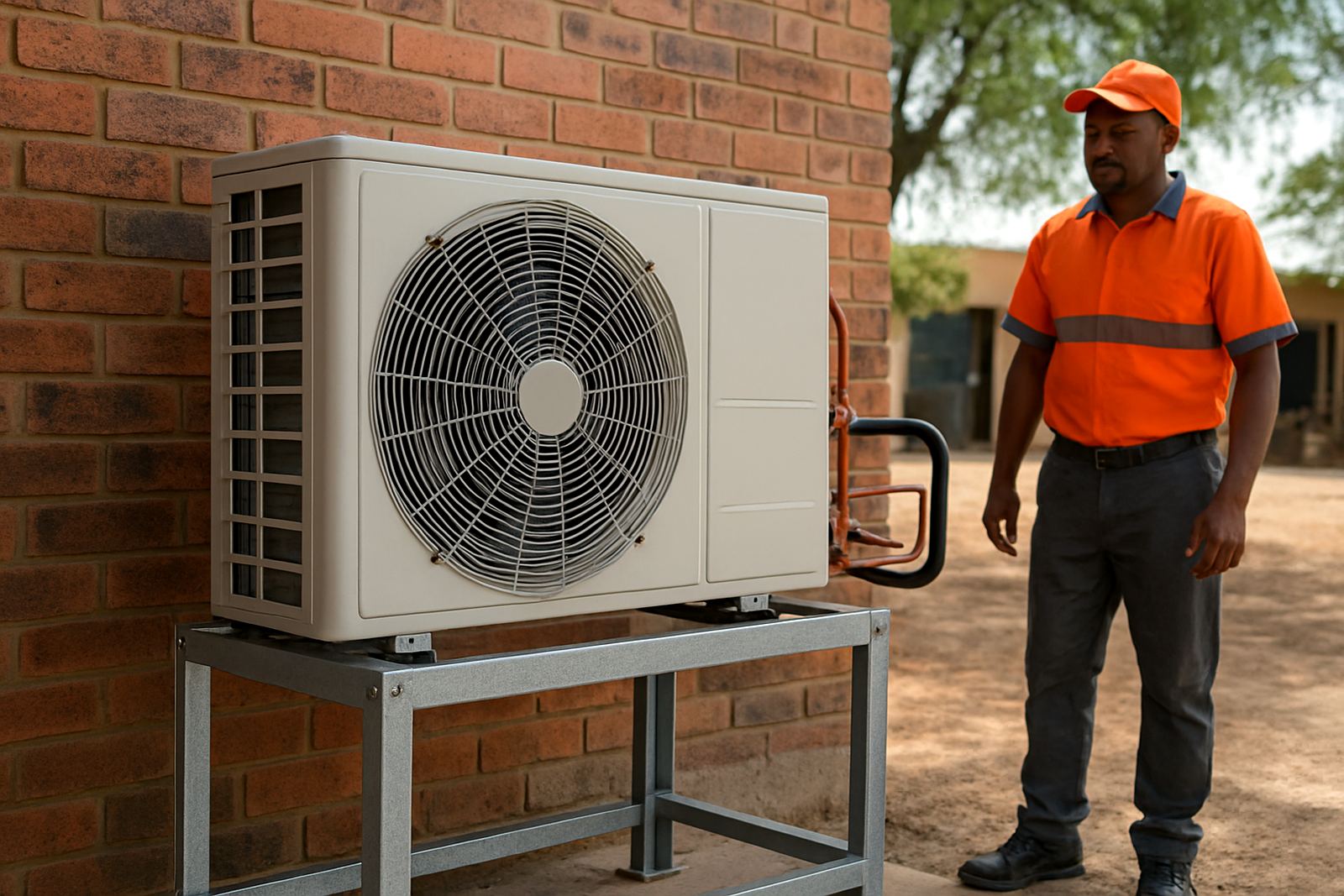
These fittings are used on liquid lines, suction lines and condensate related pipework where copper is specified. For many jobs in Kimberley, that means wall-mounted split units, ceiling units, cold rooms, bottle stores, small plant rooms and workshop cooling. If the system is in a dusty yard, a hot roof space or a place with load-shedding, a proper pipe joint gives you less trouble when the plant starts up again after an outage.
Sizes and fitting options we commonly supply
Copper pipe fittings are normally selected by outside diameter, with common refrigeration sizes ranging from 1/4 inch up to 7/8 inch, and larger sizes available for bigger systems. In metric terms, that covers pipework around 6 mm, 8 mm, 10 mm, 12 mm, 15 mm, 18 mm and 22 mm depending on the application. The correct size must match the tube exactly. A loose fit is not acceptable, and forcing the pipe into the fitting often leads to a weak joint.
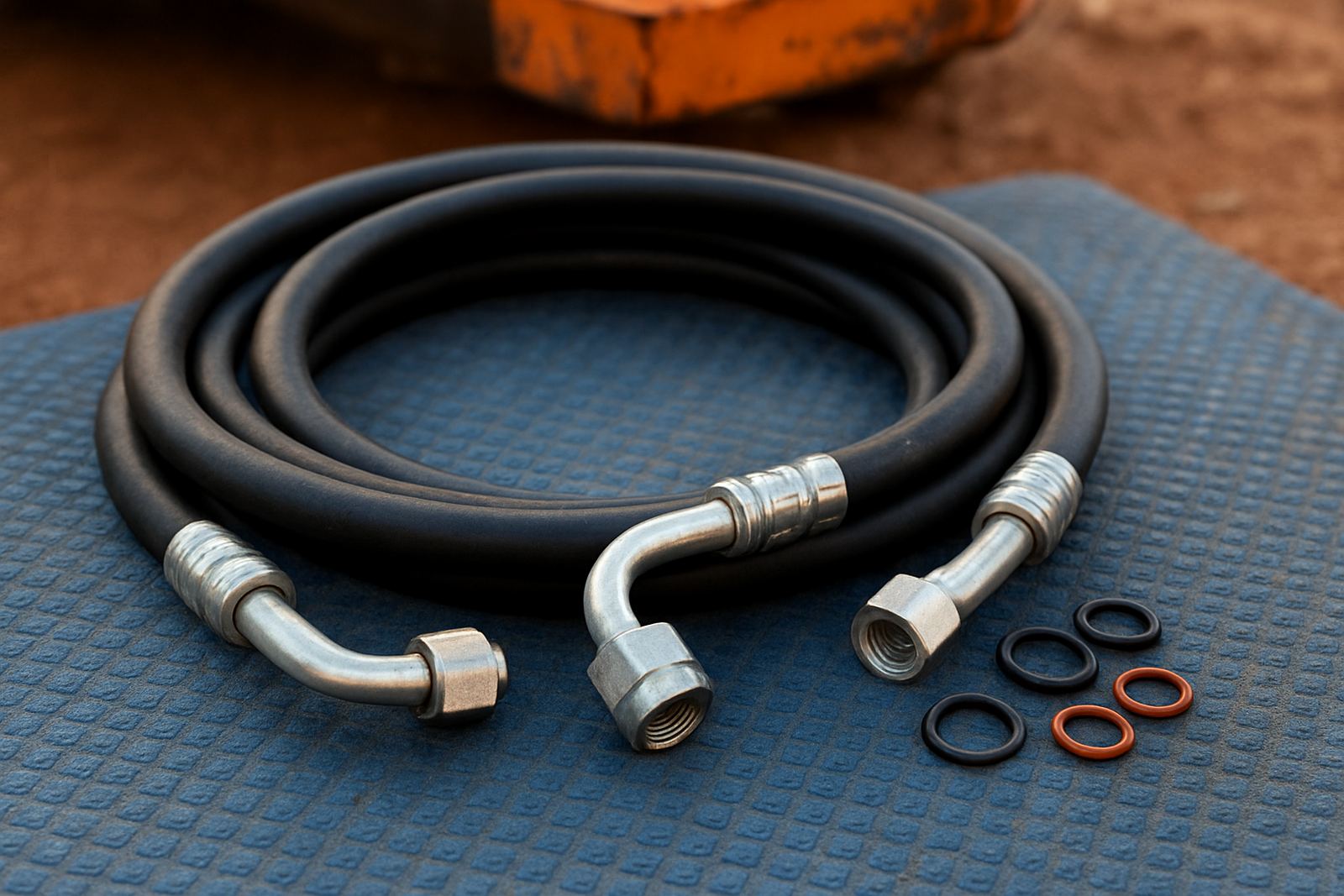
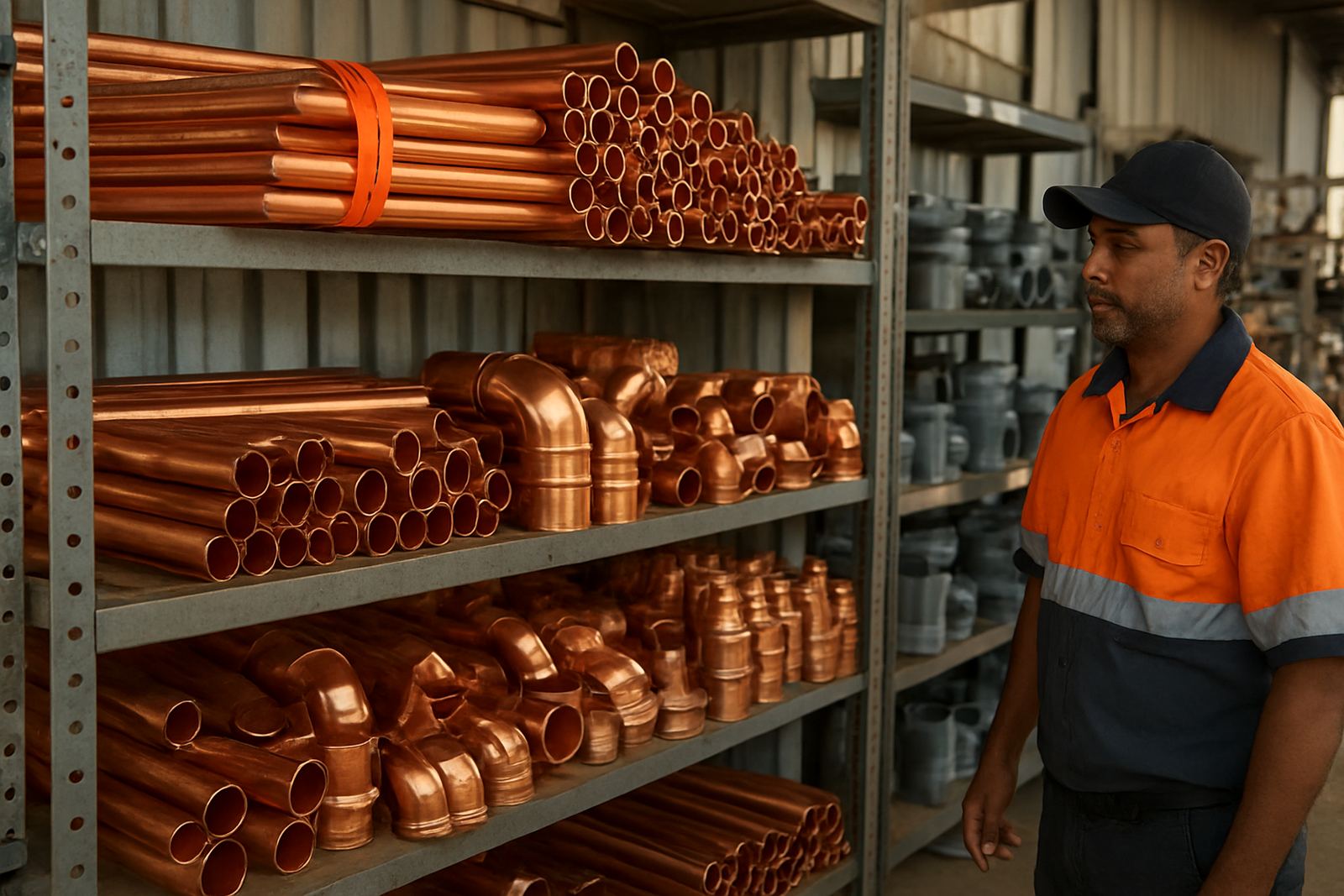
Available options usually include straight couplings, elbows, tees, reducing couplers, end caps and adapters for joining copper to service components. Some jobs need short-radius elbows in tight ceiling voids, while others need long sweeps for better refrigerant flow. We also supply fittings suited to brazing work and general copper line assembly, so the installer can match the fitting type to the job instead of making do with a near-enough part.
- Straight couplings for joining two tube ends
- 90 degree and 45 degree elbows for direction changes
- Tees for branching pipe runs
- Reducing fittings for size transitions
- Caps and adapters for terminating or linking service parts
Where copper fittings suit best in Northern Cape conditions
Copper pipe fittings are a practical choice for air-conditioning and refrigeration work in homes, shops, workshops and light industrial sites across Kimberley, Roodepan, Galeshewe, Kuruman and Upington. They suit split systems in offices, display fridges in spaza and convenience stores, cold rooms for butcheries, and pump rooms where compact pipe runs are needed. Copper handles temperature change well and, when installed correctly, gives a clean route for refrigerant and oil return.
In the Northern Cape, heat, dust and long pipe runs can put extra pressure on a system. That makes accurate sizing and neat routing important. Fittings help the installer keep the run tidy where the unit is mounted far from the condenser or where the line has to pass through a roof space, a boundary wall or a plant enclosure. For coastal humidity you worry about corrosion differently, but here the bigger issue is often sun exposure, dust and poor access for service. If the job is on a public-facing building, the pipe route should also be protected from damage and checked against local municipal requirements where penetrations or visible lines are concerned.
Installation points that save time and avoid leaks
Copper fittings must be installed with clean pipe ends, the correct clearance and good workmanship. Before brazing, the pipe should be cut square, deburred and cleaned so the joint closes properly. The installer should use the right filler material and protect valves, filters and sensitive parts from heat. For refrigeration work, dry nitrogen purging is standard practice during brazing to keep scale out of the system, and that helps protect expansion devices and compressors later on.
Pressure testing and vacuum pulling are not optional on new pipework. The line set should hold test pressure, then be evacuated to remove moisture before refrigerant charging. If the system is going onto backup power or solar supply, the pipework still has to be correct because low voltage and frequent switching can reveal weak joints very quickly. A neat copper run is not only about looks, it affects service life and gas retention too. Small leaks can show up only after a few hot days, so it pays to test properly on day one.
- Measure twice and match the fitting to the exact tube size
- Keep pipe ends round and free of burrs
- Use approved brazing practice and nitrogen purge
- Pressure test before charging the system
- Insulate suction lines where required to reduce sweating and heat gain
Care, servicing and replacement signs
Once installed, copper fittings need very little day-to-day attention, but the surrounding system does. Insulation should stay dry and intact, because wet insulation can lead to sweating, stained ceilings and hidden corrosion on nearby supports. On rooftops and outdoor runs, UV and bird damage can expose joints and cause gradual loss of efficiency. It is worth checking the pipe clamps, line supports and wall sleeves during routine servicing, especially after strong wind or building work.
If a system is losing gas, taking longer to cool or leaving oil marks near a joint, the fittings should be inspected as part of the fault-finding process. Vibration from poorly mounted condensing units, pump sets or compressors can stress a bend or coupling over time. Repeated leak repair without correcting the pipe support is a false fix. In many cases, the answer is to replace the suspect fitting, remake the joint and pressure test again rather than keep topping up refrigerant.
What to check before you order
When ordering copper pipe fittings, check the outside diameter, the wall thickness if relevant, the type of joint, the number of bends and whether the line will carry refrigerant, oil return or condensate. It also helps to know the distance between units, the mounting height and whether there are service valves, flare points or hard-to-reach sections in the route. If you are unsure, send the system make-up or the pipe schedule and we can help identify what is needed before the installer gets on site.
For projects in Kimberley and surrounding areas, it is also useful to confirm stock for the full job, not just one or two pieces. Missing a tee or reducing fitting can stop a crew halfway through a install, which costs time and usually means a second trip. If the line set is part of a larger aircon, refrigeration or solar backup project, we can help with the fittings, tools and related components needed to finish the work properly.
- Tube size in mm or inch
- Fitting type required
- Quantity per line run
- Whether brazing or flare connection is needed
- Insulation and support requirements
- Site location and access for installation
Key facts
| Product type | Copper pipe fittings for refrigeration and air-conditioning pipework |
|---|---|
| Common sizes | 6 mm, 8 mm, 10 mm, 12 mm, 15 mm, 18 mm, 22 mm and matching inch sizes |
| Fitting styles | Couplings, elbows, tees, reducers, caps and adapters |
| Use areas | Split units, cold rooms, display fridges, plant rooms and line sets |
| Installation method | Clean cut, deburr, braze, pressure test and vacuum pull |
| Supply area | New Park, Kimberley and the Northern Cape, including nearby towns |