Submersible pumps built for boreholes, not surface tanks
Borehole pumps are submersible pumps that sit below the water level and push water up the pipework to where it is needed. They are used where a normal surface pump cannot lift water reliably, especially on deeper boreholes, sandy sites and places where you need a steady flow to tanks, livestock points or irrigation lines.
For Northern Cape conditions, that matters. Water tables can vary a lot between farms, smallholdings and municipal standby supplies, and a borehole often has to carry the load through hot months, load-shedding and long pipe runs. A correctly selected pump will move water with less strain and better pressure, while the wrong one can run dry, overheat or pull too much current.
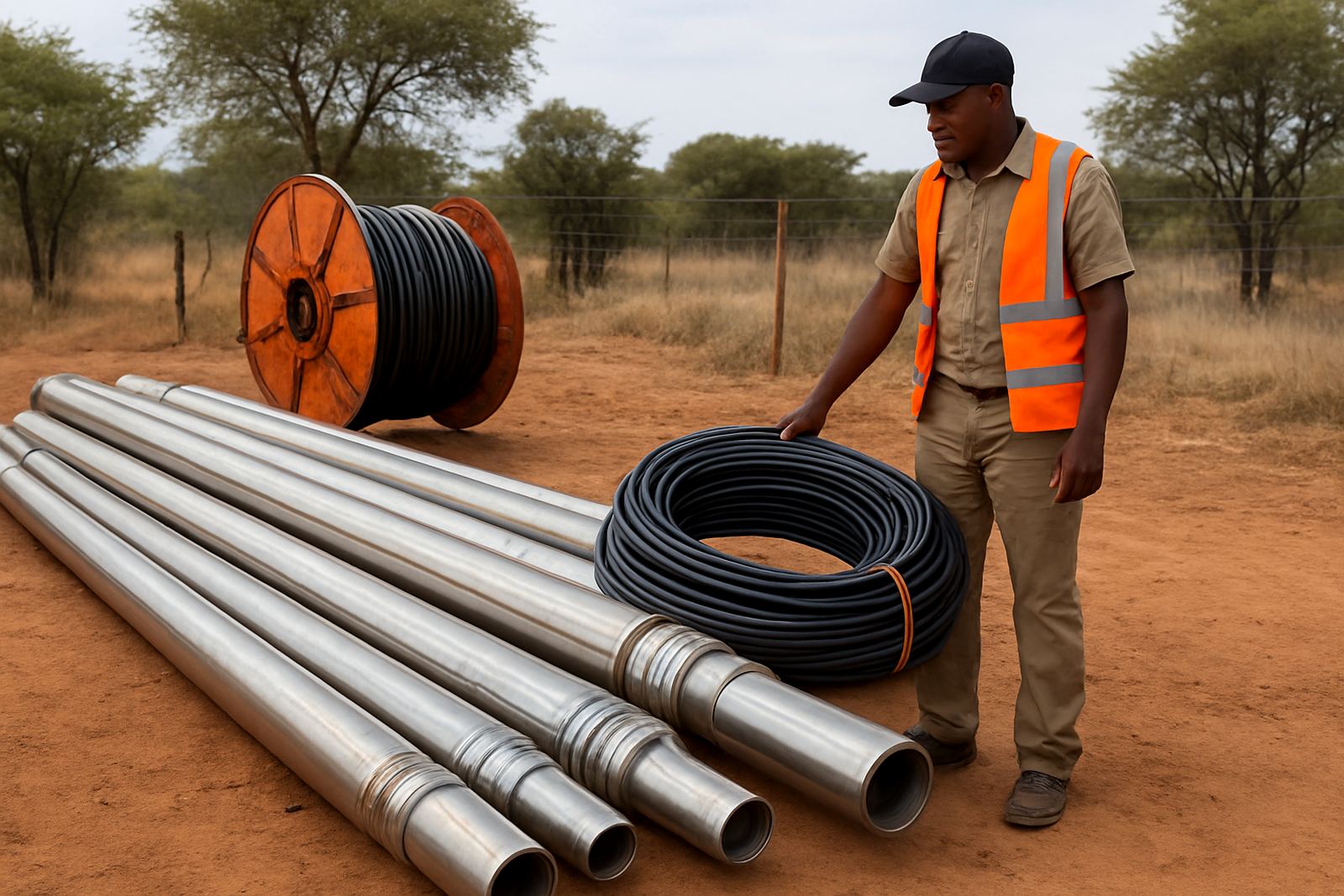
We supply borehole pump solutions for domestic use, agricultural water transfer and remote delivery points. That includes pump units, control gear, cable, float controls, risers, check valves and the fittings needed to get water from the borehole to the tank or line.
Sizes, depths and flow rates that match the job
There is no one-size pump for boreholes. The right selection depends on borehole depth, static water level, total lift, pipe length and the volume of water you need per hour. A pump that is fine for topping up a 2 500 litre tank at a home may be far too small for a cattle point or crop irrigation line.
Common options include compact units for light domestic use, medium pumps for smallholdings and higher output models for farms, workshops and longer transfer runs. Depending on the application, pumps are typically matched to borehole diameters such as 4 inch or similar submersible sizes, with motor ratings from smaller fractional kilowatt units up to larger three-phase sets. Flow rates can range from modest delivery for household tanks to higher outputs for continuous agricultural supply.
- Shallow to medium depth boreholes for tank filling
- Deeper boreholes with a high lift requirement
- Higher flow systems for stock watering and irrigation feed
- Single-phase and three-phase power options depending on site supply
- Stainless or corrosion-resistant wet end options for tougher water conditions
We also help with pressure control where the borehole pump feeds a pressure system, so the water supply stays usable for taps, showers and wash points rather than only to a storage tank.
Where borehole pumps suit best in the Northern Cape
Borehole pumps are a good fit for farms outside Kimberley, smallholdings around Roodepan and Galeshewe, remote storage points near Kuruman and up to outlying properties around Upington. They are also used on business sites that need backup water for cleaning, gardens, wash bays or process water.
On agricultural property, the pump may feed an elevated tank, a header tank, animal drinking troughs or drip irrigation. On rural homes, it often supports the house water supply, especially where municipal pressure is weak or water delivery is irregular. In dry months, a borehole system can also reduce reliance on trucks and limit pressure on storage tanks.
If the site has sandy water, high mineral content or long cable runs, we look at the full setup not just the pump. That means checking cable sizing, protection against dry running, non-return valves and the tank arrangement. A small error there can shorten pump life quickly.
Installation requirements, power supply and backup options
Borehole pumps need the correct installation to perform well. The pump must be set at the right depth, below the working water level but not so deep that it silt up or runs in poor conditions. Pipework needs secure joints, the drop cable must be sized correctly, and the control panel should protect the motor from overload, low voltage and dry running where possible.
Power supply is a major part of the job. Some borehole pumps run on single-phase supply, while larger or more demanding systems need three-phase power. If the site experiences load-shedding, solar backup or inverter support can keep the water moving, provided the pump size and starting current are planned properly. We can advise on what will work with the available supply, because a pump that starts up hard can trip a small backup system every time.
- Confirm borehole depth, water level and expected drawdown
- Check the available power supply and starting current
- Match pipe size, cable length and pump output
- Include dry-run protection where the borehole conditions need it
- Plan for tanks, pressure control or irrigation demand before installation
For remote sites, we also look at the practical side: access for maintenance, security of the control box and whether spares can be reached quickly if a fault does happen.
Care, servicing and signs the pump needs attention
A borehole pump does not ask for much, but it does need basic care. Keep the borehole head tidy, check for leaking joints, watch the pressure and water volume, and listen for changes in motor sound. If the pump starts cycling too often, delivers less water than normal, or trips the breaker, it needs checking before it burns out.
Routine servicing should include inspection of the control gear, cable terminations and fittings, plus a check on delivery pressure and flow. Where water contains grit or fine sand, wear can build up faster than expected, so it is worth monitoring the system after heavy use or after repairs to the borehole itself. It is cheaper to catch a drop in performance early than to replace a motor that has run hot for weeks.
We assist with repairs and commissioning support, including replacement parts, troubleshooting and setup after installation. If a borehole has been idle for some time, or the pump has been changed, the system should be tested properly before it is put back into everyday use.
What to have ready when you order a borehole pump
The best way to order the right borehole pump is to bring the facts from site. If you are not sure, our team can help interpret the borehole report and the water demand you have. The more detail you can give, the better the match will be and the less chance of paying for the wrong unit.
- Borehole depth and the measured water level
- Required flow rate in litres per hour or litres per minute
- Height to the tank or discharge point
- Pipe size and approximate cable run
- Available power supply: single-phase, three-phase, solar or backup system
- Water quality notes, including sand, silt or high mineral content
If you are replacing an old pump, bring the nameplate details if available, plus the pipe size and the reason it failed. That helps us work out whether the issue was wear, dry running, power supply problems or a poor match in the first place. A quick check now can save a lot of downtime later, especially on a farm or remote property where water is not optional.
Key facts
| Pump type | Submersible borehole pump |
|---|---|
| Typical use | Farm, smallholding, domestic tank filling and remote water delivery |
| Common power options | Single-phase and three-phase |
| Common materials | Stainless and corrosion-resistant pump sections |
| Common accessories | Control panel, cable, riser pipe, non-return valve and fittings |
| Support available | Supply, installation, servicing, repairs and commissioning |