What a centrifugal water pump does on site
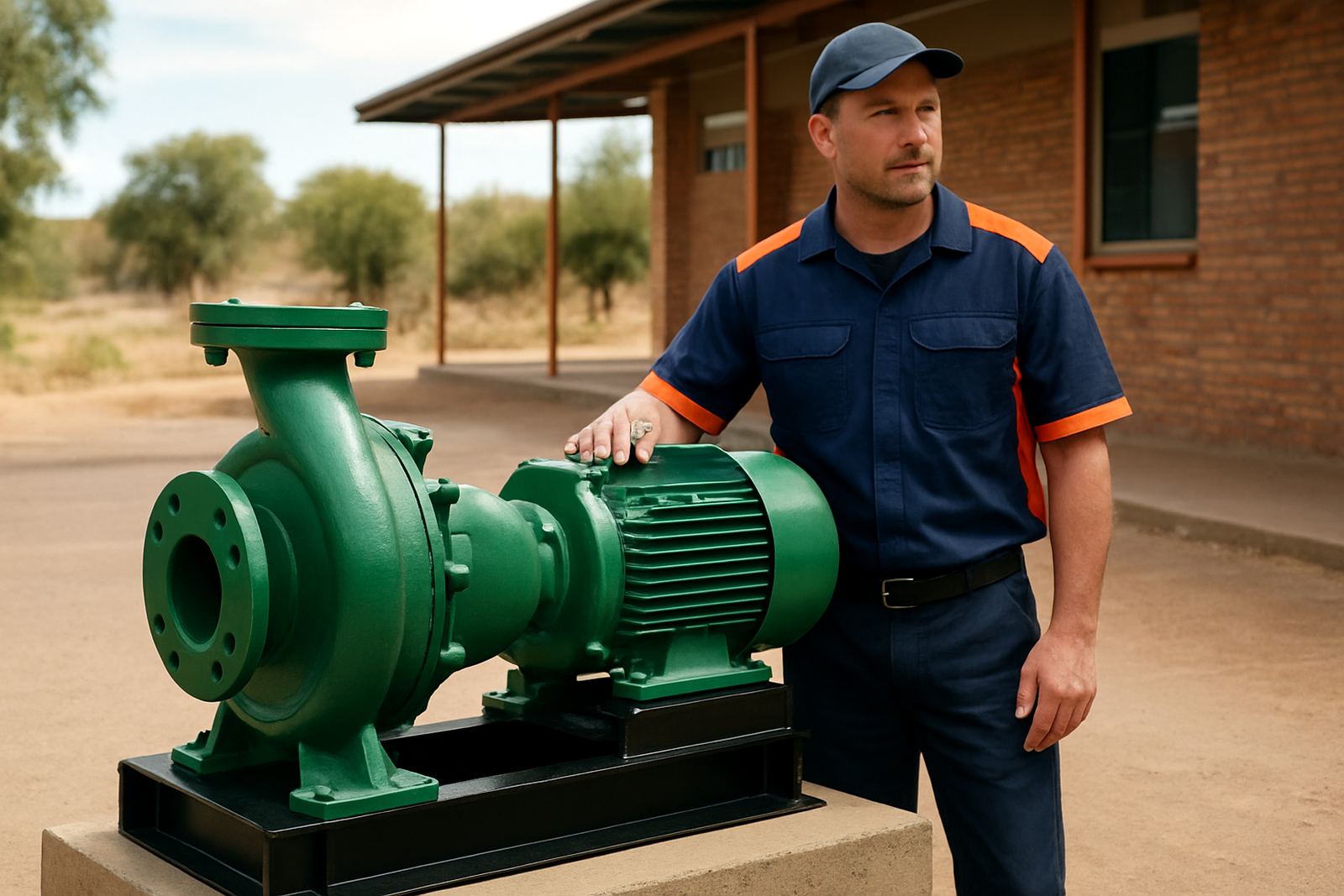
A centrifugal water pump uses a spinning impeller to move clean water from one point to another, or to increase pressure in a line. It is one of the most common choices for surface pumping because it is simple to work with, quick to service and suited to many transfer jobs around Kimberley, Kuruman and Upington.
These pumps are normally used for water transfer from tanks, borehole holding tanks, dams, reservoirs and municipal storage to another point on the property. They are also used for irrigation support, pressure boosting and general circulation where the water is reasonably clean and free of heavy solids.
If you need to move water from a tank to a washing bay, feed a small reticulation line, or keep a pressure system working during peak demand, a centrifugal pump is often the practical choice. It is not the right option for sewage or thick dirty water, so application must be checked before ordering.
Common sizes, heads and motor options
We supply single-stage centrifugal pumps and related surface pump sets in practical sizes for small, medium and larger transfer duties. Depending on the duty point, you may need a compact unit for short runs, or a higher head pump where the water has to travel further or rise to a higher point.
- Motor sizes commonly start around 0.37 kW and can go up to 7.5 kW and above, depending on flow and head requirements
- Typical inlet and outlet sizes include 25 mm, 32 mm, 40 mm, 50 mm and 65 mm connections
- Single-phase 230 V models suit lighter domestic and small workshop use
- Three-phase 400 V models suit larger transfer, irrigation support and commercial installations
- Open impeller and closed impeller designs are available, depending on water quality and required performance
- Flow rates and head must be matched to pipe length, pipe diameter and lift height
A pump that is too small will run constantly and struggle to build pressure. A pump that is too large can waste power, create noisy operation and put strain on the pipework. Matching the duty point correctly saves money and reduces call-backs.
Where centrifugal pumps suit best in the Northern Cape
These pumps suit clear water applications where steady movement is needed rather than suction from difficult sources. In our area they are often installed for homestead water systems, farm water transfer, small irrigation lines, rooftop tank filling and workshop supply systems.
They work well where the pump can be fitted close to the water source and where the suction lift is kept within sensible limits. On hot days and in dusty yards, it helps to position the pump under shade or in a ventilated plant area so the motor does not work harder than necessary.
- Tank-to-tank transfer on farms and small holdings
- Booster duties for pressure lines and washdown points
- Irrigation support for light agricultural use
- Water movement for workshops, depots and storage sites
- General clean water circulation in commercial facilities
For boreholes, it is important to confirm whether the system needs a surface pump or a submersible solution. A centrifugal surface pump can only draw water within practical suction limits, so the layout matters a lot.
Installation points that protect the pump and the pipework
Correct installation makes a major difference to performance and service life. The suction line should be short, straight and airtight. Any air leak on the suction side can cause poor priming, loss of flow and noisy running. A foot valve or non-return valve is often needed, together with proper strainers where the water source may carry grit or leaves.
Pipe diameter should be selected to keep friction losses under control. If the suction or delivery pipe is too small, the pump has to work harder and the flow drops. Good electrical protection also matters, especially with load-shedding and voltage swings that can affect motors, contactors and control gear.
- Install on a level base with proper anchor points
- Use correct cable sizing and motor protection
- Check phase rotation on three-phase units before full load running
- Fit pressure controls, isolators and dry-run protection where needed
- Allow space for maintenance, gasket changes and seal inspection
In dusty locations around Kimberley and the wider Northern Cape, keep the motor vents clear and avoid placing the pump where sand can collect around the bearing housing. If the unit sits near coastal-type humidity in storage yards or enclosed sheds, corrosion protection and regular checks are worth doing.
Power supply, controls and backup options
Centifugal pumps may be powered by single-phase or three-phase electricity, depending on the size and duty. For smaller systems, 230 V supply is often enough. Larger systems usually need 400 V three-phase power, especially where higher flow rates or longer duty cycles are expected.
Where outages are common, the pumping schedule should be planned around available power or supported by backup supply. Some installations work with solar backup, battery support or generator changeover, but the pump must be sized correctly for the available supply. A motor that is hard to start can trip inverters or overload backup systems.
When working from solar or backup power, tell us the start current, running load and how many hours the pump must operate per day. That allows the right controls and cabling to be matched to the job, rather than guessing and hoping for the best.
Servicing, wear parts and what to order with the pump
Regular care keeps a centrifugal pump dependable. The usual wear points are the mechanical seal, bearings, impeller and gaskets. If a pump starts to hum, leak at the shaft or lose pressure without an obvious pipe fault, it is time to inspect it before the motor is damaged.
Basic servicing includes checking alignment, cleaning strainers, inspecting suction valves and confirming that the pump primes correctly after any shutdown. On dusty sites, give the motor body and fan cover a clean at intervals so cooling remains effective. If the system is used only seasonally, run it briefly now and then to keep the seal from sticking.
When ordering, it helps to have full details ready so the correct set is supplied the first time.
- Pump duty required, such as transfer, boosting or circulation
- Flow rate needed in litres per minute or cubic metres per hour
- Total head or lift height in metres
- Pipe sizes, length and whether the line is suction or delivery
- Power supply available, single-phase or three-phase
- Water source details and whether there is any grit or debris
For a proper match, we also recommend sharing the application, the tank height, and whether the pump must start and stop often or run for longer periods. That small bit of detail can save a lot of trouble later.
Key facts
| Pump type | Surface centrifugal pump for clean water transfer and boosting |
|---|---|
| Typical capacities | 0.37 kW to 7.5 kW and above, depending on duty |
| Connection sizes | 25 mm to 65 mm inlet and outlet options |
| Power supply | 230 V single-phase or 400 V three-phase |
| Use cases | Tank transfer, boosting, irrigation support, general circulation |
| Maintenance items | Mechanical seal, bearings, impeller, gasket and electrical protection |