What insulation lagging does on a working system
Insulation lagging is fitted around chilled water pipes, refrigerant lines, cold room pipework and sometimes hot water or process lines to control heat transfer. On the cold side, it slows down heat gain from the air and helps stop water beads forming on the pipe surface. That matters in New Park, Roodepan and Galeshewe where day and night temperatures can swing hard, and where humid summer weather can leave exposed pipework sweating. On the warm side, lagging can cut unnecessary heat loss and keep temperatures steadier over longer runs.
Good lagging also protects the pipe surface from light knocks and general wear. In plant rooms, roof spaces and service routes, it gives a neat finish and can help keep copper, steel and plastic lines in better condition for longer. For refrigeration and aircon jobs, the right insulation can also make the plant easier to balance because the system is not fighting outside conditions as much.
We supply insulation lagging for installations, repairs and upgrades on homes, shops, workshops and industrial sites around Kimberley, Kuruman and Upington. The key is to match the pipe size, operating temperature and the place where the line runs, not just to wrap it up and hope for the best.
Sizes, materials and finish options
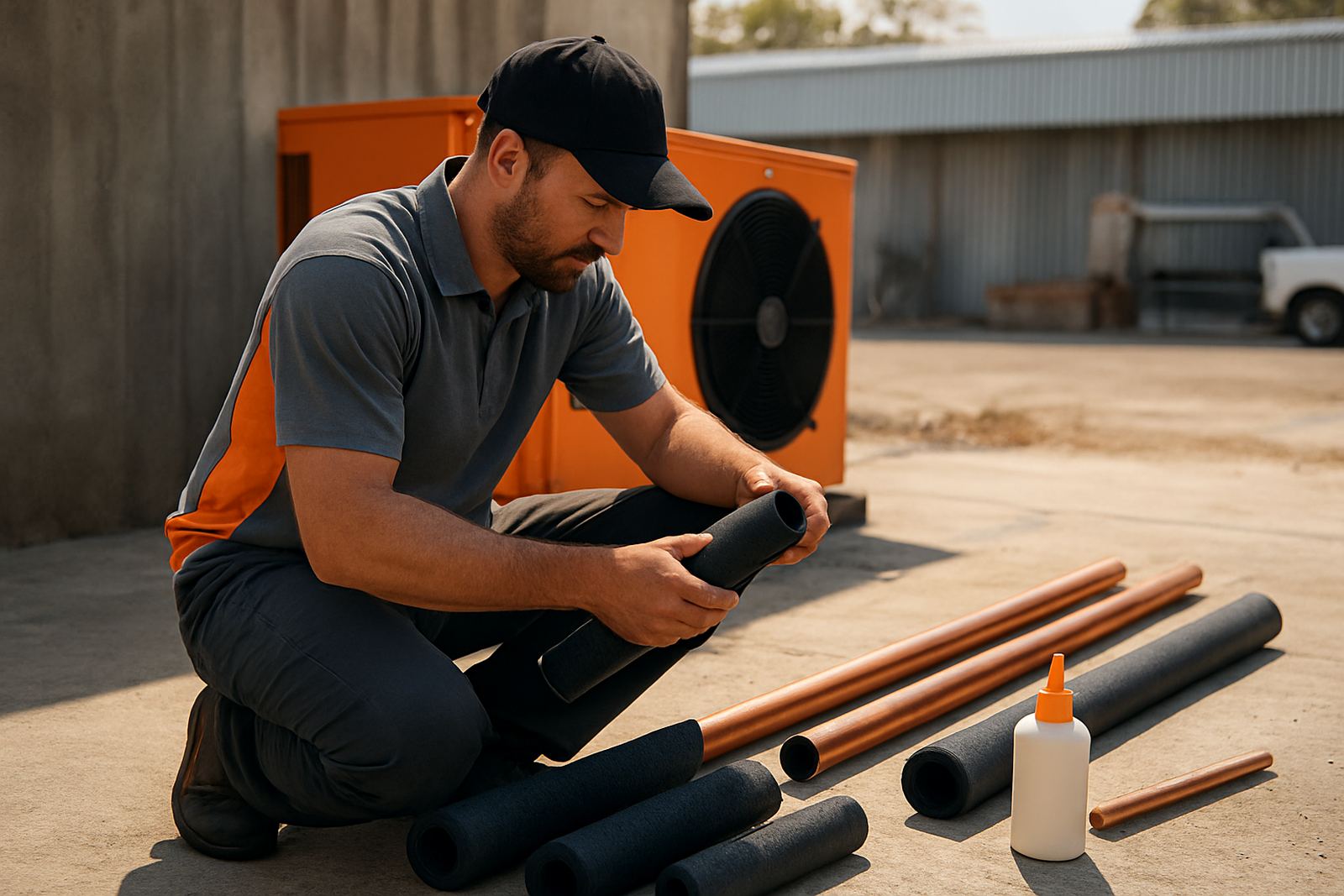
Lagging comes in a few common forms, and the choice depends on the pipe size and how cold or hot the line will run. Most aircon and refrigeration jobs use closed-cell foam insulation because it handles condensation well and is simple to fit around bends and joints. Larger commercial runs may use thicker wall sections, foil-faced finishes or protective outer wrapping where the pipe is exposed to sun, dust or regular handling.
Typical options include split tubing, sheet insulation, adhesive-backed wrap and protective tape for sealing joints. We can help match the bore and wall thickness to the pipe or tubing size on site. Common sizes used on local jobs include small-bore copper lines for split units, larger chilled water pipe sections and assorted sizes for pumps and service pipework.
- Small-bore tubing for domestic and light commercial aircon lines
- Thicker wall insulation for colder refrigeration runs and cold room pipework
- Sheet lagging for irregular shapes, valves and fittings
- Outer protective tape or cladding for UV, dust and handling protection
- Fire and moisture considerations where the route passes through roofs or ceiling spaces
If the run passes through a roof space, boundary wall, or near direct sun, ask for insulation that can handle local conditions better than basic low-cost foam. In the Northern Cape, exposed pipework gets hot fast in summer and brittle over time if it is under-specced.
Where lagging is the right choice
Insulation lagging suits a wide range of services. It is used on air-conditioning suction lines, chilled water pipes, refrigeration pipe sets, cold room services and some pump lines where temperature control is important. It is also useful on auto aircon service work where the pipe route needs proper thermal protection after repairs or replacement.
It is especially worth fitting when the system runs through ceilings, outside walls, plant rooms, roof spaces or open service corridors. Those routes are often the first to pick up heat, dust and physical damage. In cold rooms and freezer rooms, any weak spot in the insulation can lead to condenssation, frost build-up or a line that is harder to keep stable.
This product is practical for new builds and for older systems being repaired in New Park, the wider Kimberley area and outlying towns. If the installation is linked to solar backup or load-shedding support, good insulation becomes even more useful because the plant may cycle differently when power comes back on and the system is asked to recover faster.
Fitting, sealing and what the installer must check
Correct fitting matters as much as the product itself. Joints need to be butted tightly, seams sealed and all exposed copper covered fully. Any gap, slit or loose wrap will let moisture in and that usually becomes a drip or a cold spot later. On refrigeration and chilled water work, the vapour barrier must stay continuous from end to end.
Before ordering or installing, check these points on site:
- Pipe outside diameter and whether the line is straight or heavily bent
- Operating temperature of the line, cold or hot
- Indoor, outdoor or roof space exposure
- Need for UV resistance or extra outer protection
- Whether valves, unions or fittings need shaped sections
- Any fire stopping or municipal access requirement in the route
For rooftop and exterior runs, use proper sealant at the joins and make sure the insulation is not left exposed to hard sun. In a Kimberley summer, unprotected lagging can dry out and split quicker than many people expect.
Power, gas and system conditions to consider before lagging
Lagging itself does not use power, but it must suit the equipment around it. If the line serves an aircon system, refrigeration plant or a pump line in a building with load-shedding backup, the insulation should support the way the system starts, stops and holds temperature. Poor insulation can force the unit to work harder after an outage, which can show up as longer run times and higher electricity use once power is restored.
On refrigerant lines, the size and condition of the gas charge also matter. A system with the wrong charge, blocked airflow or a damaged compressor will not be fixed by insulation alone. The same applies to pump installations where pipe lagging is only one part of keeping the line stable. If the route is long or the equipment is outside, check for pressure drops, vibration and support spacing before the insulation goes on.
Where gas piping or hot service lines are involved, use lagging rated for the expected temperature. It should stay in place without shrinking, softening or pulling away from the pipe. That keeps the line safer and easier to inspect later.
Care, servicing and replacement signs
Lagging should be checked during normal aircon or refrigeration servicing. Look for cracked foam, loose seams, wet spots, mould, sun damage and places where birds, rodents or general wear have opened the wrap. On cold room and cellar jobs, a damp section often means the barrier has failed and moisture is getting into the insulation.
When servicing a system, it helps to inspect the lagging after leak checks, valve work or compressor maintenance. If the pipe was opened, cut or moved, the insulation should be resealed properly before the unit is run again. It is small work, but it saves trouble later.
Replace insulation if it has gone soft, crumbly or flattened, or if it no longer fits tightly around the pipe. In dusty areas like workshops and yards, dirty lagging also gives off a poor finish and can make leaks harder to spot. A clean, tight wrap makes future inspection easier for our workshop and field teams.
Key facts
| Product type | Pipe insulation and lagging for HVAC, refrigeration and pump lines |
|---|---|
| Common forms | Split tube, sheet, adhesive-backed wrap, protective tape |
| Typical sizes | Small-bore aircon lines through to larger chilled water and process pipe sizes |
| Key function | Reduces heat gain, condensation and temperature loss |
| Best suited to | Aircon, refrigeration, cold rooms, pump lines and plant rooms |
| Service area | Kimberley, New Park, Roodepan, Galeshewe, Kuruman and Upington |