What a recovery machine does on site
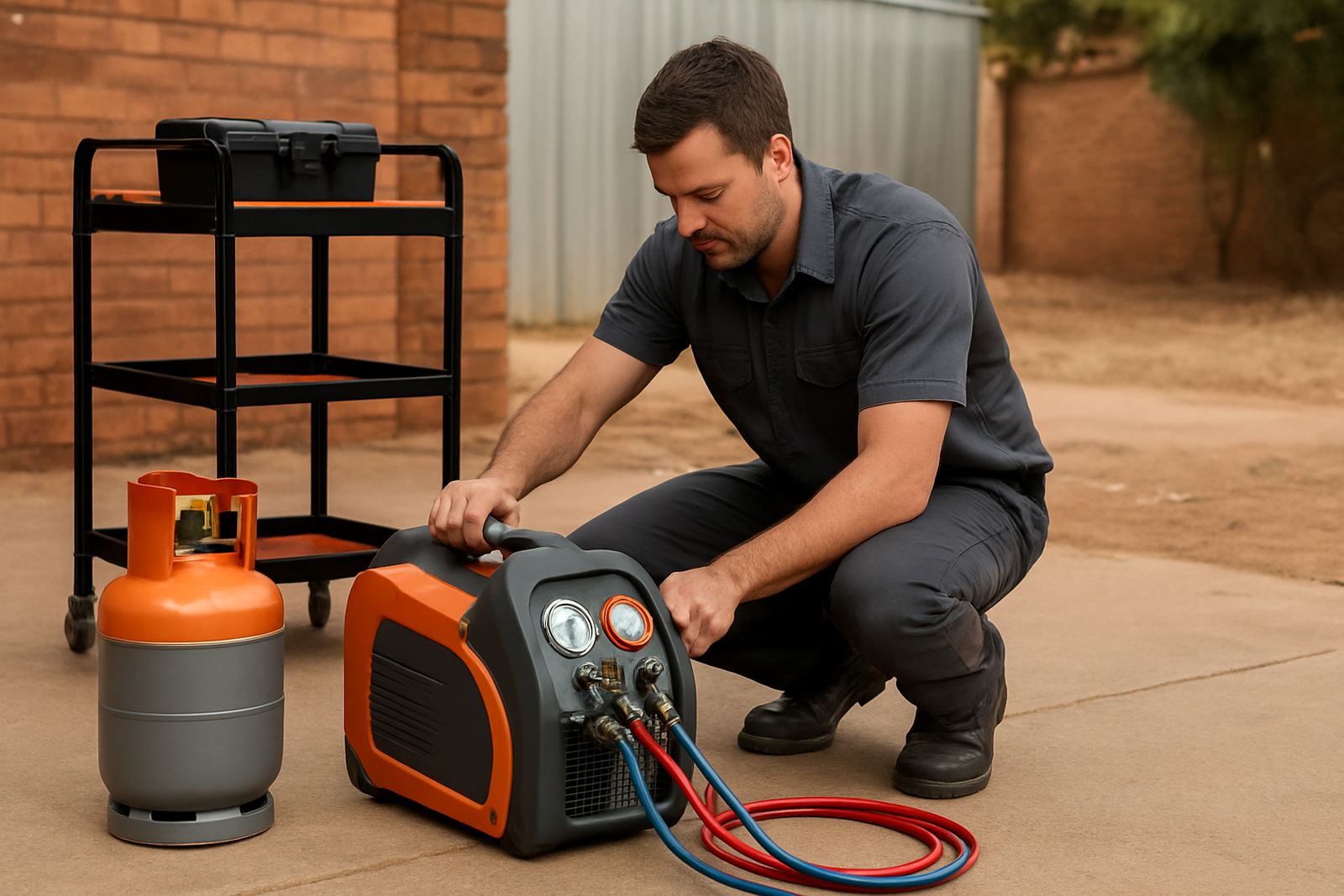
A recovery machine removes refrigerant from a system and transfers it into a suitable recovery cylinder. That means the gas is kept out of the atmosphere while the technician works on leaks, compressor changes, coil replacement or full strip and rebuild jobs. In workshop use, it helps keep cylinders organised, refrigerant types separated and service work more controlled.
For air-conditioning, refrigeration and auto aircon work, recovery is often the first step before opening a circuit. It is especially useful where systems are being moved, replaced or repaired in occupied buildings, mineshaft support areas, vehicle workshops and cold room plant rooms. In the Northern Cape heat, losing gas during service is costly and avoidable.
These machines are not one-size-fits-all. Some are made for smaller split systems and vehicle work, while others can handle heavier refrigeration circuits and repeated daily use. The right unit depends on the gas type, the line sizes, the amount of refrigerant in the system and how often the machine will be used.
Typical machine sizes and recovery rates
Most recovery machines are chosen by recovery speed, gas compatibility and duty cycle. Small portable units suit auto aircon bays and light service teams, while higher-capacity units suit refrigeration contractors, cold room installers and workshops handling multiple callouts in one day.
Common options include single-cylinder portable machines, twin-cylinder models with higher pull-down rate and heavier units for workshop benches. Some units are designed for vapour recovery only, while others can handle liquid recovery as well. Liquid recovery is faster on larger systems, but it requires the right machine setup and trained operators.
- Portable units for field work and vehicle aircon servicing
- Mid-size units for general HVAC and light refrigeration repair
- Higher capacity units for cold rooms, packhouses and busy workshops
- Units suitable for multiple refrigerant types, depending on model
- Options with carry handles, gauges and easy-clean filter access
When comparing sizes, check the recovery rate in grams per minute or kilograms per hour, not just the motor size. A unit that sounds powerful but recovers slowly can waste valuable time on a job, especially when technicians are working between Kimberley, Kuruman and Upington.
Where recovery machines fit in local work
Recovery machines suit service teams that handle air-conditioning installs, refrigeration repairs and auto aircon jobs every week. They are also practical for contractors working on cold rooms, bottle store plant, small supermarkets, municipal buildings, clinics and agricultural sites with refrigeration plant.
In areas like Roodepan, Galeshewe and New Park, many callouts involve split systems, cassette units and light commercial refrigeration. In Kuruman and Upington, the travel time between jobs makes reliable equipment more important because technicians cannot afford a breakdown halfway through a service route. A machine that starts every time and recovers without drama saves fuel, labour and repeat visits.
These machines also matter where compliance checks are part of the job. If a system is being changed out or repaired, gas should be recovered into the correct cylinder before work continues. That is cleaner, safer and better for the customer. It also helps a workshop keep records in order, which is important when multiple staff members handle the same job card.
- Aircon servicing and change-outs
- Refrigeration repairs and decommissioning
- Cold room builds and plant modifications
- Auto aircon service bays
- Commissioning support before final handover
Power, gas and site setup requirements
Recovery machines usually run on standard mains power, but the exact supply depends on the model. Many smaller units use 220V single phase power, which suits service vans, workshop benches and sites with ordinary plug points. Larger units may need a more dedicated supply and proper extension protection, especially where multiple tools are running on the same circuit.
Because load shedding and unstable site supply are part of normal working life in South Africa, it helps to plan for surge protection and backup power where needed. If a job site runs from a generator or inverter system, check the starting load and running draw before ordering. Some machines are happy on a smaller supply, but others need a cleaner power source to avoid nuisance trips.
On the gas side, the machine must match the refrigerant type you handle. Not every recovery unit suits every gas. The recovery cylinder must also be the right type and clearly marked for the refrigerant in use. Use the correct hoses, valves and filter drier setup so the machine does not pull dirt or moisture into the system. A short, proper hose run often works better than a long messy one.
Care, cleaning and servicing to keep it working
A recovery machine works best when it is kept clean and used with basic discipline. After each job, check the hoses, valves, filter and cylinder connections for oil residue, dirt and signs of wear. In dusty Northern Cape conditions, fine grit can work its way into couplings and cause slow leaks or poor performance.
It is good practice to replace filter elements as needed and to keep the machine stored in a dry place. Moisture is a problem on refrigeration work and can affect both the machine and the cylinders if they are left open. If a unit starts running hot, recovering slowly or cutting out under load, it should be inspected before the next callout.
- Inspect seals and hoses for cracking
- Keep inlet filters clean and replace when blocked
- Check electrical cords and plugs for heat damage
- Drain or manage oil according to the machine design
- Store cylinders upright and clearly labelled
Good care extends machine life and keeps service work orderly. It also reduces the chance of contaminating refrigerant during recovery, which can save a lot of trouble later on.
What to check before you order one
Before ordering a recovery machine, check the refrigerant types you work with most often, the average system size, and whether you need a portable or workshop unit. A small auto aircon outfit does not need the same capacity as a contractor building cold rooms or maintaining commercial refrigeration plant.
Also check the electrical supply on site, the recovery cylinder size you use and whether you need liquid recovery, vapour recovery or both. If the team travels across the Northern Cape, weight and portability matter too. A lighter unit is easier to move between the bakkie and the job site, but a heavier machine may suit fixed workshop use better.
When matching a machine to your work, ask about:
- Compatible refrigerant types
- Recovery speed and duty cycle
- Power supply requirements
- Portability and physical size
- Approved cylinder connection type
- Service parts and filter availability
For Kimberley workshops, schools, farms and service teams, the right recovery machine is the one that fits real daily work, not just the catalogue description. If you are unsure, it helps to compare the system type, the refrigerant and the typical job size before buying.
Key facts
| Power supply | 220V single phase options common, higher-capacity units may vary |
|---|---|
| Recovery type | Vapour recovery and liquid recovery, depending on model |
| Suitable refrigerants | Model dependent, confirm gas compatibility before ordering |
| Use area | Aircon, refrigeration, auto aircon and service workshop work |
| Connection | Standard hose and cylinder connections, model specific |
| Best for | Service teams, refrigeration contractors and workshop handling |