What an auto aircon condenser does
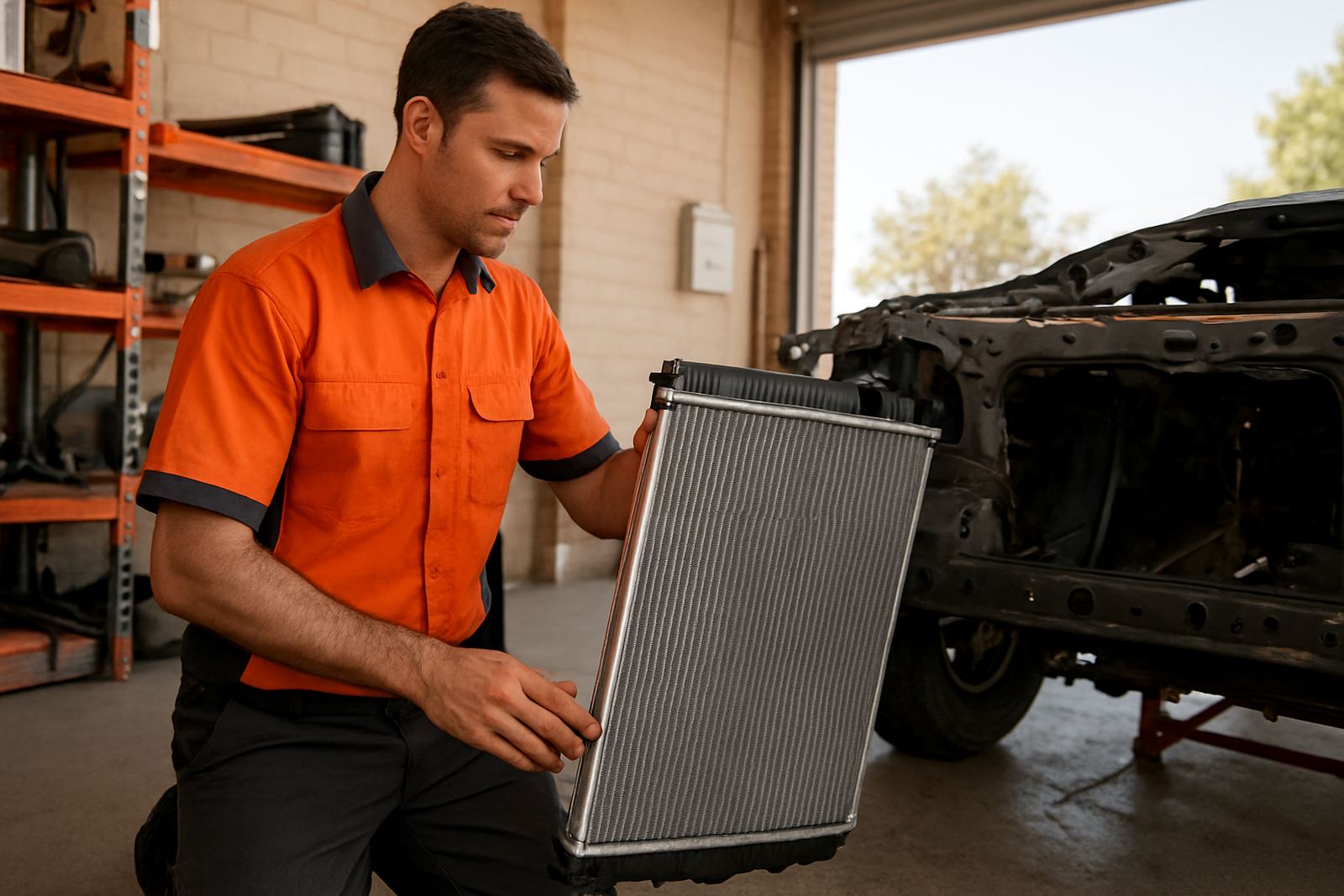
The condenser sits at the front of the vehicle, usually ahead of the radiator, where it can release heat to the air moving through the grille. When the compressor pushes refrigerant through the system, the condenser cools that hot gas until it becomes a high pressure liquid. If the condenser is blocked, bent, leaking or corroded, the whole aircon system works harder and cabin cooling drops fast.
In Kimberley heat, and in stop start driving around Roodepan or Galeshewe, a tired condenser shows up quickly as weak cooling, longer pull down times and higher head pressures. On bakkies used for deliveries, trades or farm runs, stone strike and dust can also damage the fins, so a proper replacement matters more than a quick patch.
Sizes and fitment options for common vehicles
Auto aircon condensers are not one size fits all. They differ in core size, mounting points, inlet and outlet position, port style and receiver drier arrangement. Some units are simple parallel flow designs, while others are matched to the vehicle’s factory layout and pipe routing. Choosing the correct unit helps keep refrigerant flow and pressure within spec.
- Core size matched to vehicle front end space and cooling load
- Tube and fin or parallel flow construction depending on application
- Integrated or separate receiver drier, where the system calls for it
- Top or side mount brackets for passenger and light commercial vehicles
- Single, double or offset hose connections depending on pipe layout
If you are ordering for a fleet, bring the old part, the vehicle make and model, or the VIN details so the team can compare the dimensions and port position properly. A few millimetres out can mean pipe strain, poor alignment, or a unit that simply will not fit behind the grille.
Where these condensers suit best
These condensers suit passenger cars, panel vans, double cab bakkies and smaller work vehicles that need reliable cabin cooling on local roads and long Northern Cape trips. They are suitable for daily commuting, courier work, site visits and service vehicles that spend plenty of time idling in traffic or loading zones.
For vehicles working in hot, dusty places such as Kuruman, Upington and the roads between towns, a clean and correctly sized condenser helps the system hold performance through the hottest part of the day. If the vehicle carries tools, goods or passengers, steady aircon output matters for comfort and driver focus.
In some cases the condenser also needs to match the compressor output and refrigerant type already in the vehicle. That is why it is worth checking the full system, not only the condenser core itself.
Installation, refrigerant charge and electrical checks
Fitting a condenser is not only a bolt on job. The system must be checked for bent fins, blocked airflow, damaged pipe seals and old contamination before the new part goes in. The receiver drier or desiccant function should be confirmed as well, because moisture in the circuit can damage the compressor and reduce cooling.
After installation, the aircon circuit needs to be evacuated with the correct vacuum procedure, then charged with the right refrigerant type and oil balance for that specific vehicle. Power supply to the compressor clutch, pressure switches, fans and relays should be tested too, since weak fans or poor wiring can make a good condenser look faulty.
- Inspect radiator fans and airflow before charging
- Replace O-rings and seals that show flattening or cracking
- Vacuum test for leaks and moisture before gas is added
- Charge to the stated refrigerant weight, not by guesswork
- Check operating pressures at idle and under load
If the vehicle has had a front end repair, ensure the condenser is square in its mounts and not rubbing on the radiator or bodywork. Even a small misalignment can cause noise, chafing and future leaks. On load shedding days, workshop testing may take longer if the vehicle battery is low, so it helps to arrive with a well charged battery.
Care that keeps cooling performance steady
A condenser lasts longer when it stays clean and protected. Dust, insects, grass seeds and road grime collect between the fins and reduce heat transfer. On coastal routes and in wetter storage conditions, corrosion can also creep in around the edges and joints. A quick rinse with low pressure water and a soft brush helps, but high pressure washing can flatten the fins and cause more harm than good.
Watch for early warning signs such as a faint oily mark, a sweet smell inside the engine bay, or cooling that gets better at speed and worse in traffic. Those signs often point to airflow issues or a small refrigerant leak. If the vehicle has been in a front bumper knock, the condenser should be checked even if there is no visible hole, because internal damage can still show up later.
Regular aircon servicing, especially before the hot season, helps protect the condenser and the rest of the system. That includes checking fan operation, pressures, pipe condition and refrigerant charge. A clean condenser is not a luxury, it is part of keeping the vehicle usable day after day.
What to check when ordering a replacement
Before placing an order, make sure the details line up properly. The wrong condenser can delay a repair, and once the old unit is out the vehicle is left off the road until the correct part arrives. If possible, compare the old part number, dimensions and fitting points before collection or dispatch.
- Vehicle make, model, year and engine size
- VIN or chassis number where available
- Old condenser core size in millimetres
- Inlet and outlet position, plus thread or O-ring type
- Whether the drier is built in or separate
- Refrigerant type already used in the system
For workshop orders in Kimberley, New Park, Upington or Kuruman, clear details help the team supply the right unit first time. If the vehicle has been converted, repaired or imported, say so upfront because pipe layout and pressure requirements may differ from standard fitment.
Northern Cape supply and workshop support
Modern Equipment has supported air conditioning and refrigeration work in Kimberley since 2002, with service across New Park, Roodepan, Galeshewe, Kuruman and Upington. Our team can assist with condenser supply, related aircon parts and practical advice for fitment on passenger and light commercial vehicles. For customers handling fleet maintenance, municipal vehicles or work bakkies, that local support saves time and repeat trips.
We understand the demands of hot weather, dust, rough roads and busy working vehicles. A condenser that matches the system correctly helps reduce compressor strain, improve cabin comfort and cut the chance of follow up faults. If you need help identifying a unit, speak to our sales and workshop team before the vehicle is stripped down, it saves hassle and down time.
Key facts
| Product type | Auto aircon condenser for vehicle cooling systems |
|---|---|
| Use | Passenger cars and light commercial vehicles |
| Construction | Parallel flow or tube and fin, depending on application |
| Connections | O-ring or threaded inlet and outlet ports |
| Fitment | Front mounted behind grille or radiator pack |
| Service need | System vacuum, leak test and correct refrigerant charge after fitting |