Workshop heat, fumes and dust in the Northern Cape
In New Park, Roodepan, Galeshewe and nearby industrial yards, workshop conditions change fast through the day. Steel bays heat up by mid morning, vehicle bays trap exhaust fumes, and fabrication areas throw fine dust into every corner. If the air is not moved properly, the space gets hot, hazy and unpleasant long before lunch.
The usual client situation is simple: the work is growing, the old fans are doing very little, and staff are spending too much time opening doors to get air. That does not help when you need cleaner conditions for spray work, machine work, parts handling or tyre and service bays. A proper setup is planned around heat gain, people flow, open doors, and what machines run all day.
In Kimberley, summer heat and dust are one issue, but winter mornings can be just as uncomfortable in enclosed bays. If the building sits near traffic, gravel yards or loading areas, the air system must cope with dirt and not pull fumes back through the work area.
Typical equipment used in a working bay
A workshop setup usually combines several types of equipment instead of one big unit. That gives better control and reduces dead spots where hot air sits. For most vehicle and fabrication spaces, we look at cooling, extraction and general air movement as one system.
- Wall mounted or ceiling mounted air-conditioning units for offices, parts counters and small enclosed rooms
- High capacity fans or air movers for open bays and assembly areas
- Extraction fans for welding fumes, paint overspray and exhaust build up
- Ventilation ducting for corners, wash bays and enclosed stores
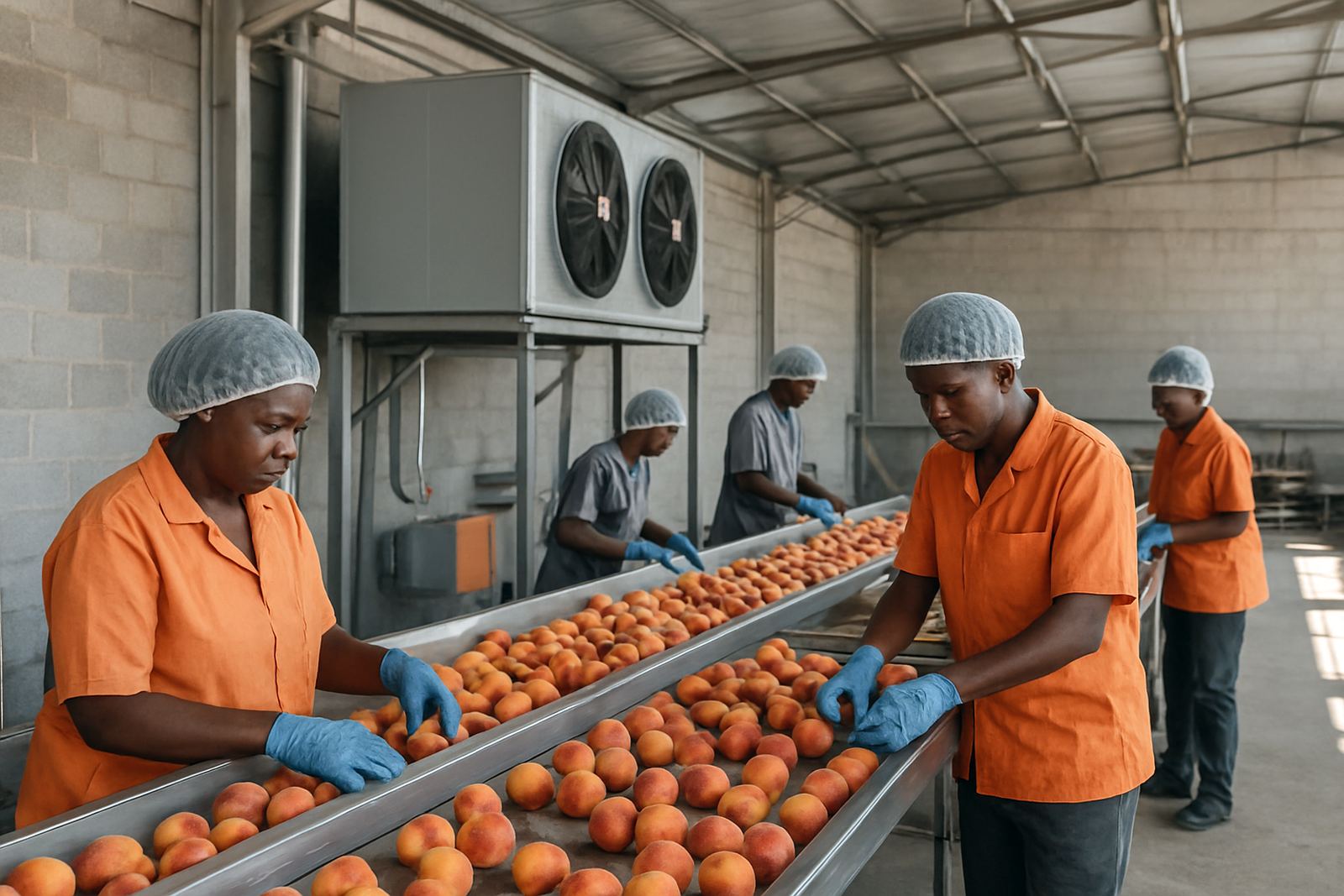
- Cold room or chilled storage support where parts, stock or perishables must be protected
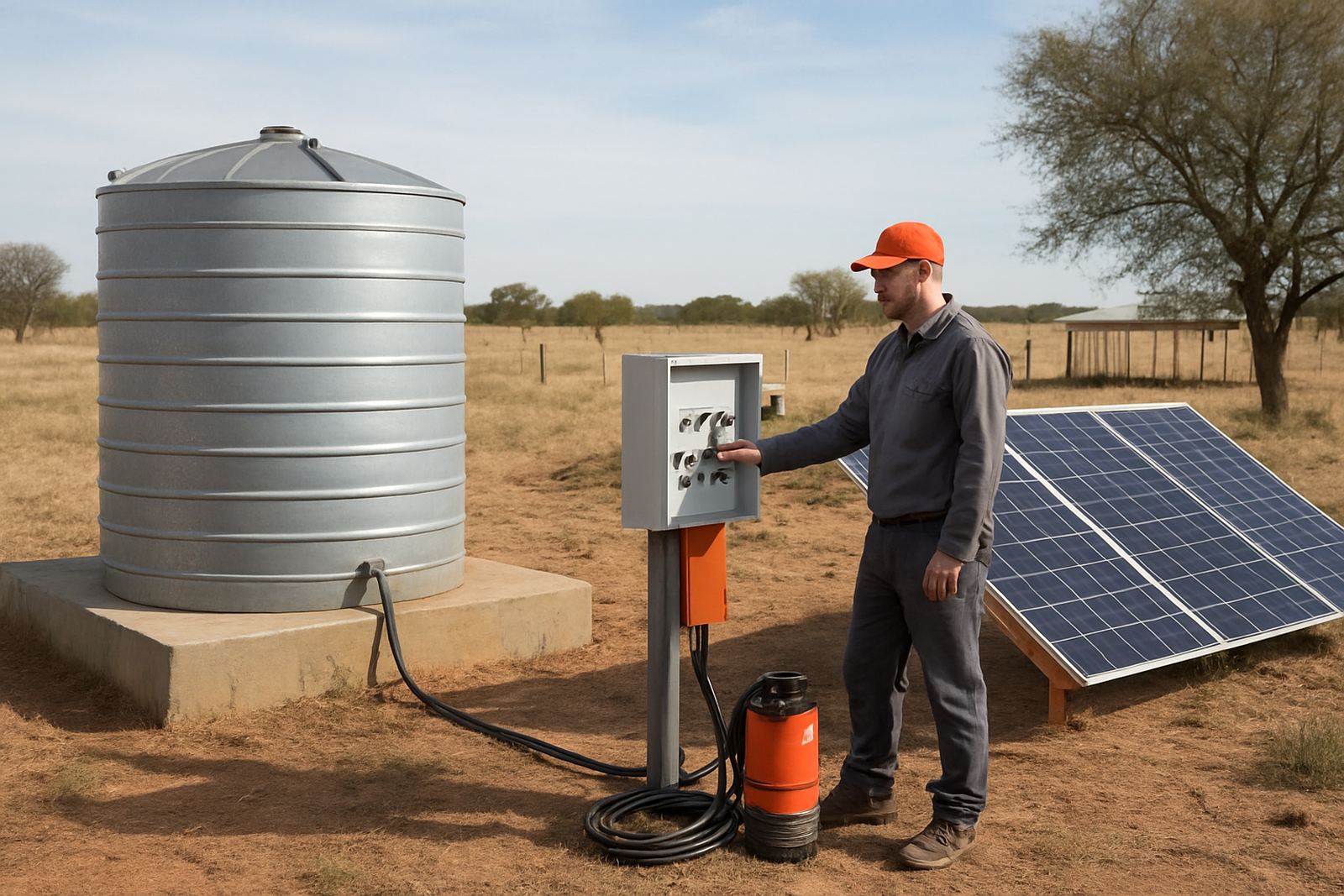
- Solar backup and battery support for load-shedding periods, where critical equipment must stay online
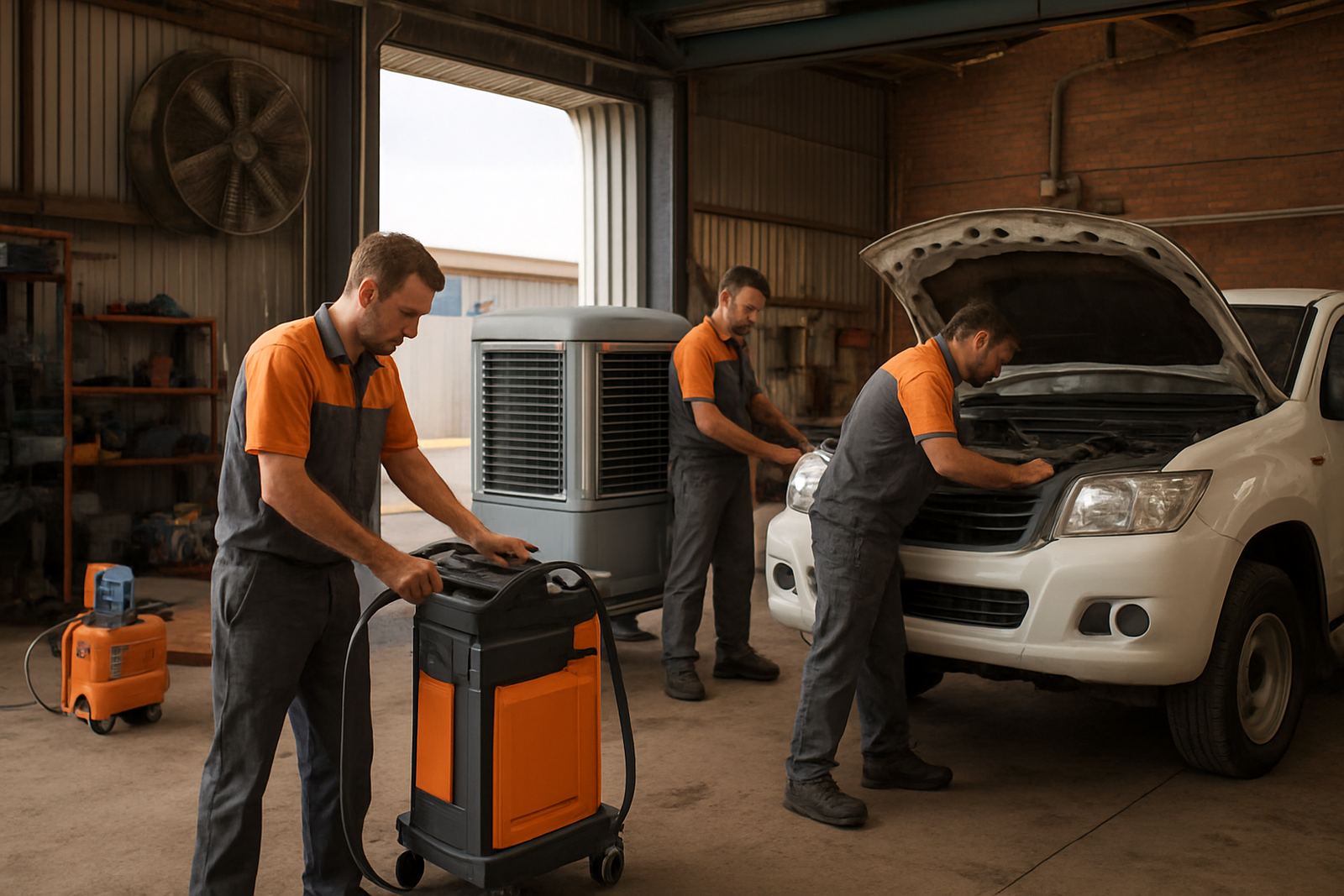
Auto aircon service equipment can also matter where the workshop handles vehicle climate systems. If you are repairing compressors, testing gas circuits or commissioning after repairs, the work area should be clean, well lit and dry.
Planning the layout before you buy equipment
Good workshop planning starts with the floor plan, not the catalogue. Measure the bay lengths, ceiling height, open door size and where heat is created. A spray corner, compressor room and welding bay each need different treatment. If you put the equipment in the wrong spot, the air just circles around the roof while the people below stay hot.
The most useful approach is to divide the site into zones. Put enclosed admin and stores areas on a normal cooling circuit. Treat service bays with stronger air movement. Put extraction at source where possible, rather than trying to pull fumes across the whole workshop. It also helps to think about maintenance access, because filters, fan motors and drain lines must be reached without stopping the day.
On bigger sites in Kuruman or Upington, power quality and distance between buildings matter too. Long cable runs, weak supply points and frequent outages can affect start up and running costs. If the site depends on refrigeration, pumping or compressed air, the electrical plan should match the equipment load from day one.
Common mistakes that cost time and money
The biggest mistake is buying too little capacity. A small unit in a large, open workshop may cool one corner while the rest stays unbearable. The second mistake is forgetting exhaust and dust control. Cooling alone does not remove fumes, and moving air without extraction can spread the problem from one bay to another.
Another common issue is poor drainage. In hot weather, air-conditioning units produce water that must be drained properly, especially where floors are uneven or concrete has been patched. If that water pools near tools or walkways, it becomes a nuisance and sometimes a slip risk. Filters that are not cleaned also drive running costs up very quickly.
We also see systems installed without thinking about the load-shedding schedule. If the building loses power in the middle of the day, staff are left with hot stagnant air and no plan. In those cases, backup power or staged operation may be worth more than extra cooling capacity on its own.
Budget ranges for workshop cooling and ventilation
Budget depends on the size of the building, the number of bays, roof height and whether you need extraction, cooling or backup power. For a small service workshop or enclosed parts area, basic cooling and air movement may start from around R18 000 to R45 000, depending on equipment size and installation work.
For medium sized vehicle or fabrication workshops with multiple bays, fans, ducting and a few cooling points, budgets often sit between R45 000 and R140 000. Larger sites with extraction, controls and solar backup support can move well above that, especially where the building is older and needs electrical upgrades or new mounting points.
- Small enclosed room: from about R18 000
- Mid sized workshop bay setup: about R45 000 to R140 000
- Large multi bay or mixed use site: from R140 000 upward
- Ongoing service allowance: keep 5 to 10 percent of the install value each year for cleaning and repairs
It is usually cheaper to do the planning properly once than to keep adding small fixes later. A correct layout also reduces energy use, which matters when tariffs rise and the site runs long hours.
What Modern Equipment supports on workshop sites
Modern Equipment works with workshop owners, site managers and contractors across Kimberley, New Park, Roodepan, Galeshewe, Kuruman and Upington. The team handles air-conditioning installation and servicing, refrigeration repairs, cold room builds, ventilation installations, pump installations, pump repairs, solar backup installation, auto aircon service and commissioning support.
That makes it easier to deal with a mixed workshop site where one contractor may need cooling in the office, another needs extraction in the weld bay, and the owner wants backup power for essential tools. With Marius Jacobus van der Merwe leading the business, the team can look at the full site and not only one machine at a time. Lerato Mokoena handles sales planning, Pieter Johannes Botha oversees workshop support, Ayanda Ndlovu coordinates projects, Charlene Daniels manages parts and stores, Thabo Molefe attends field service, and Nadia September helps with customer support.
If your workshop in Kimberley or the wider Northern Cape is getting too hot, too dusty or too full of fumes, the right mix of equipment can make the day easier for staff and less costly for the owner.