What farm clients usually need on site
On farms around Kimberley, Roodepan, Galeshewe, Kuruman and Upington, the call is usually the same: keep water moving, keep milk, meat or produce cool, and keep the place running through load-shedding. Some properties need a borehole pump that can handle distance and height, others need irrigation support for camps, sheds or tunnels, and many need backup power for essential equipment. In summer the heat is hard on motors and controls, so the first step is to match the gear to the real duty cycle, not just the nameplate size.
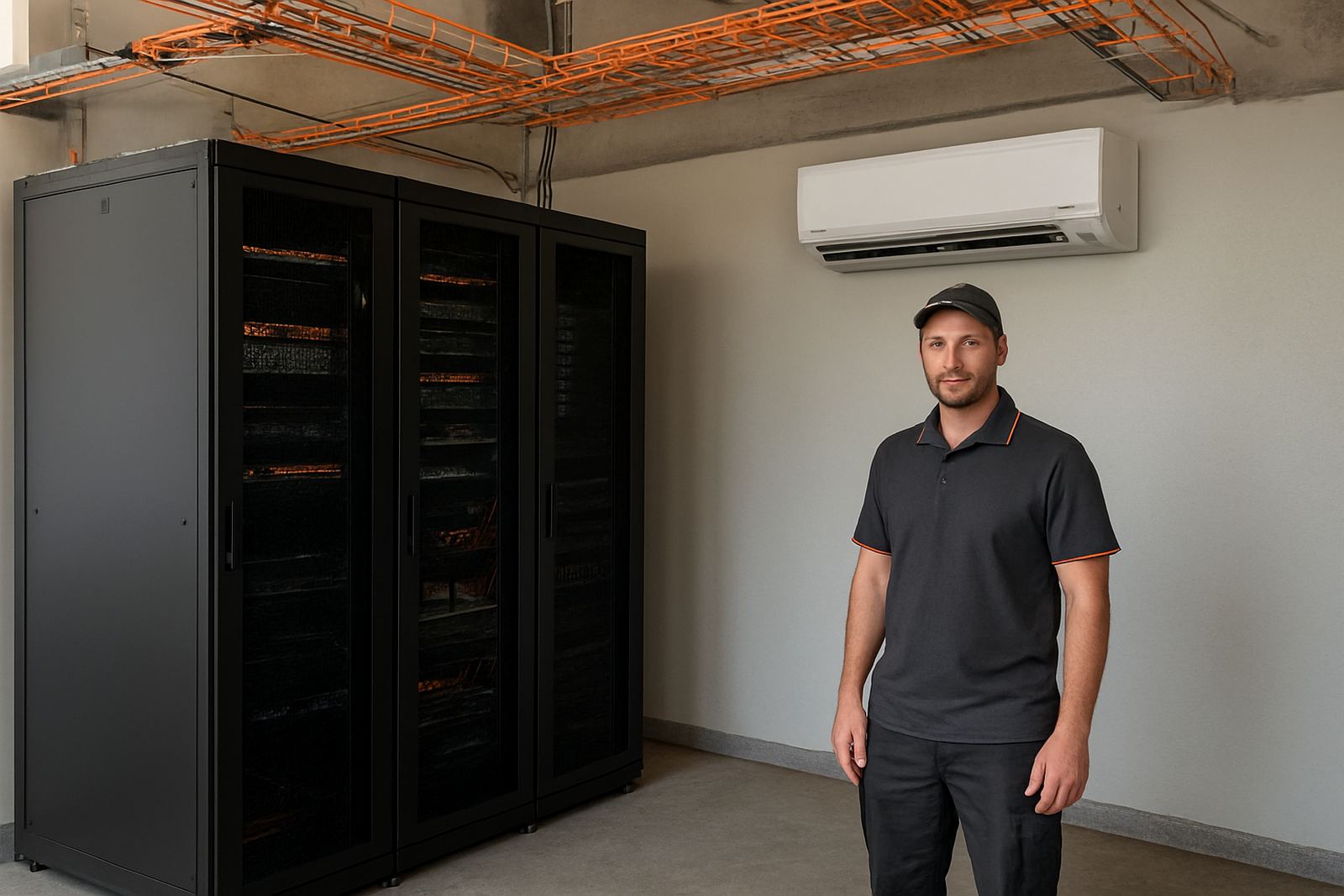
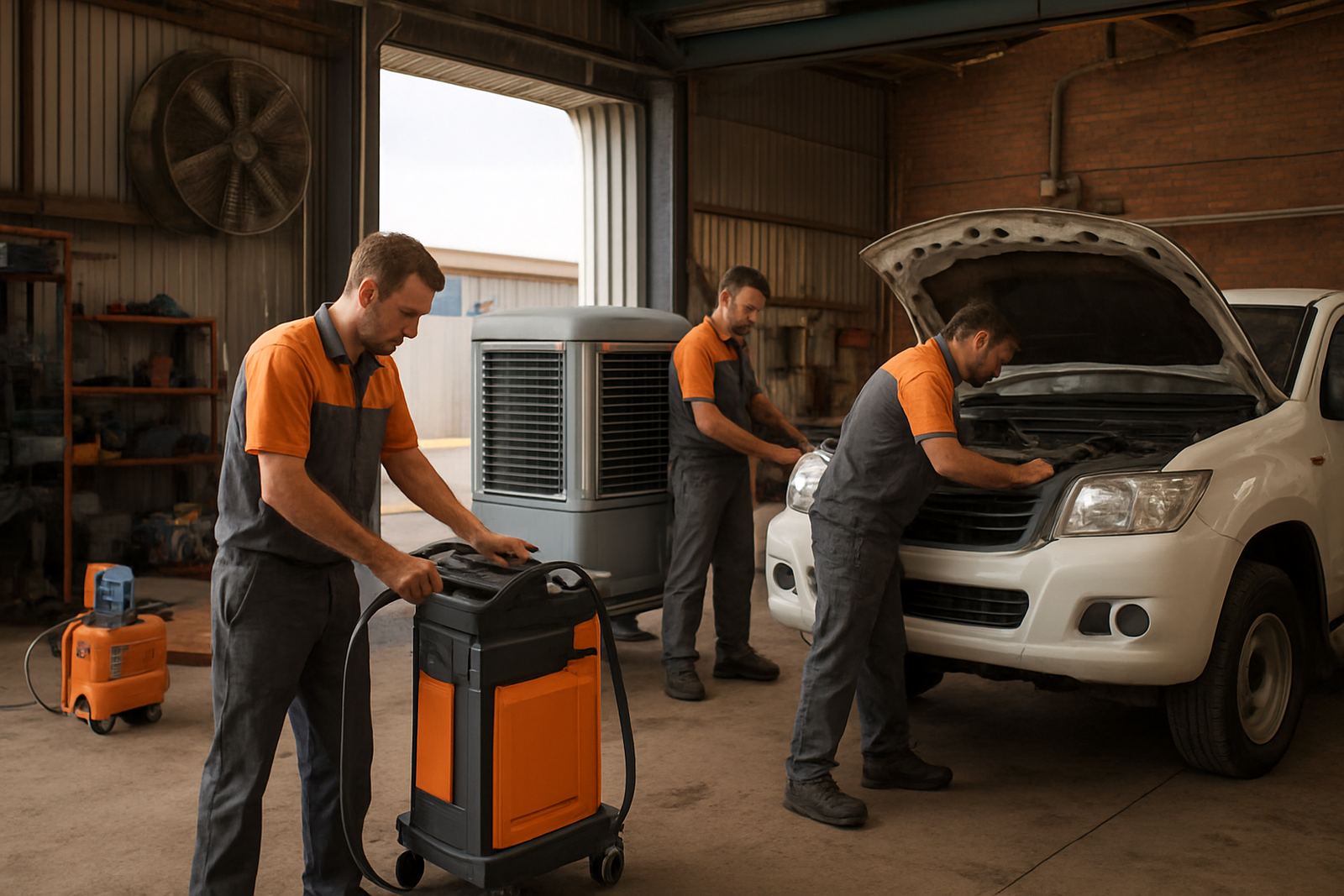
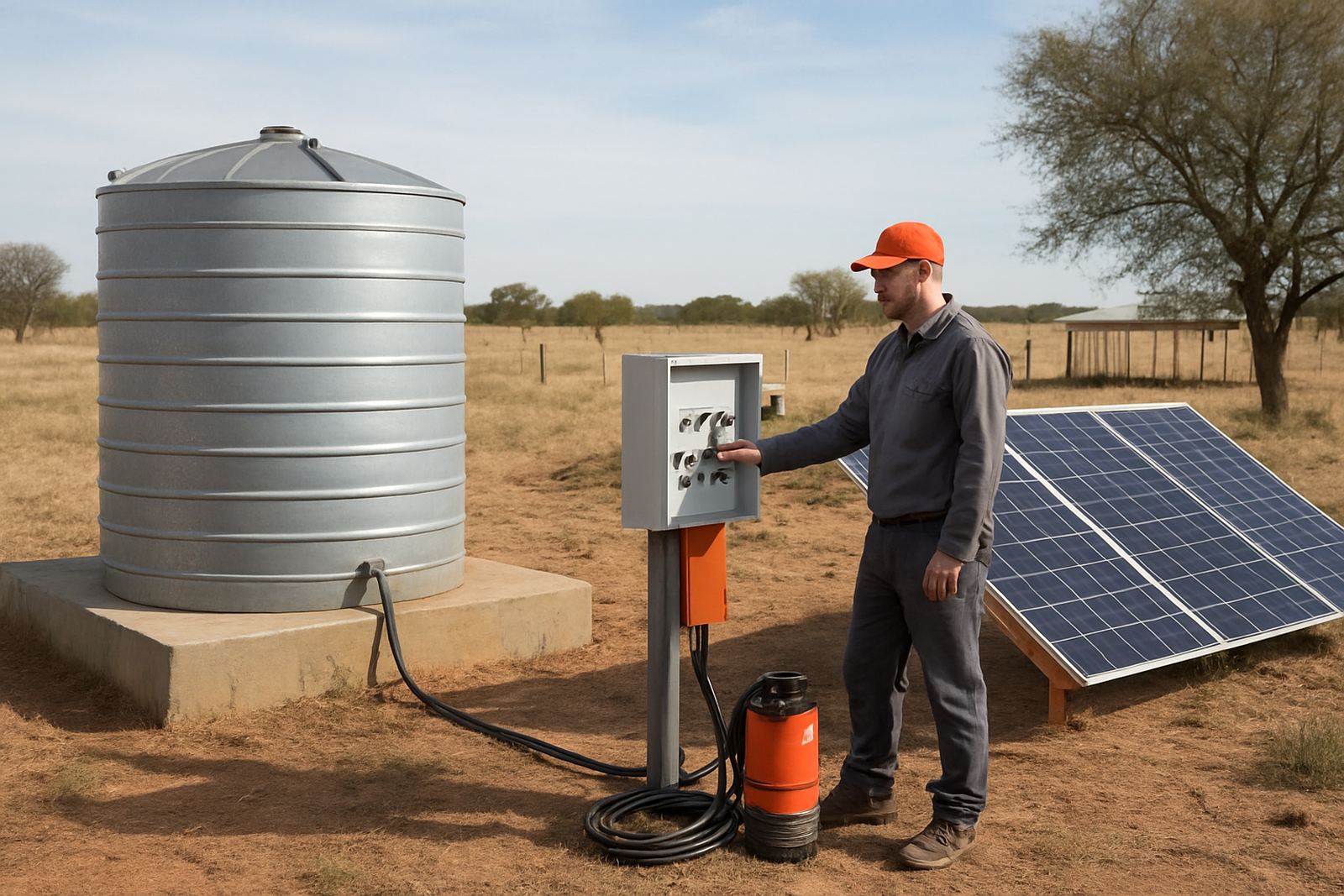
A typical farm setup may include a borehole or surface pump, pressure control, filtration, water storage tanks, solar backup for the pump room, a small cold room, a split aircon for control rooms or clinics, and ventilation for workshops and livestock areas. We also help with auto aircon for bakkies and farm vehicles, because downtime in the field is expensive and often the cab is where a driver spends half the day.
Typical equipment we supply and fit
Every property is different, but most farm systems need a practical mix of water, cooling and backup items. We supply and fit equipment for new builds and upgrades, and we can support existing systems when a part fails or the layout needs a change. For remote farms, we often plan around long cable runs, dusty conditions and high daytime temperatures.
- Pumps for boreholes, transfer lines, pressure boosting and livestock water points
- Solar backup for pumps, control panels and small essential loads
- Air-conditioning for offices, clinics, staff rooms and instrument spaces
- Refrigeration for produce, milk, meat and feed additives
- Ventilation for stores, workshops and animal housing
- Auto aircon servicing for farm bakkies, tractors and utility vehicles
For cold storage, the usual choices are insulated panels, a cold room unit, door seals, evaporators and proper drainage. For pumping, we look at the source depth, delivery distance, pipe size and the pressure needed at the furthest point. A pump that is too small will cycle hard and burn out early, while one that is oversize wastes power and can hammer the line.
How to plan the layout before you buy
Good planning saves money on a farm. Before equipment is ordered, we look at the water source, tank position, electrical supply, solar exposure and where the loads actually sit. If the borehole is far from the main shed, the cable route and pipe route must be planned together, not separately. If the cold room sits in a corrugated building, the sun side and air flow around the condenser matter a lot.
It also helps to map out who uses what during the day. A dairy, pack store or feed room may need cooling first thing in the morning, while irrigation pressure may be needed later when staff are on site. If you are adding solar backup, the battery bank should be sized for the load you want to carry through outages, not for the whole farm unless that is truly the target. That one detail changes the budget a lot.
- Place tanks high enough to reduce pump strain where possible
- Keep service access around pumps, filters and condensers
- Use weatherproof housings for controls in dusty yards
- Allow for spare capacity if you plan to expand later
Common mistakes we see on agricultural properties
One common mistake is buying a pump on price alone. In the Northern Cape, heat, water quality and long run times can shorten cheap equipment very quickly. Another problem is fitting solar panels and batteries for the wrong load. If the system is only built for daytime use, then the farm still goes dark when the sun drops or cloud moves in. We also see cold rooms set up with poor insulation or undersized compressors, which leads to high running costs and spoilage.
For ventilation, the error is often too little fresh air or the wrong fan position. In sheds and work areas, stagnant air makes heat build up fast and can affect both staff comfort and equipment life. Some clients also forget about maintenance access. If you need to pull a pump, clean a filter or replace a fan belt, there must be enough space to do it without stripping half the room first.
- Incorrect pipe sizes that choke flow over long distances
- No surge protection on sensitive controls and inverters
- Drainage not planned for cold rooms and aircon condensate
- Equipment installed where dust and sun shorten service life
Budget ranges for farm water, cooling and backup
Budgets depend on size, distance and the level of backup needed. A small pump replacement or repair can start from about R3 500 to R12 000, depending on the fault and parts. A more complete borehole or transfer pump installation often sits in the R18 000 to R55 000 range, especially where pipework, controls and cabling are included. Solar support for a pump or essential load can start around R25 000 and move well above R120 000 if battery storage and a larger inverter are needed.
For cooling, a basic split aircon for an office or room may start around R8 500 fitted, while refrigeration repairs vary widely from a few hundred rand for a small electrical fault to many thousands for compressors, coils or controls. A small cold room build can begin around R65 000, and larger farm stores can reach R180 000 or more depending on insulation, doors, motors and internal size. We prefer to quote after a site check, because the cost of running cable 40 metres is very different from 4 metres.
Service support from Kimberley into the wider Northern Cape
We are based in New Park, Kimberley and work across the Northern Cape, including Upington and Kuruman, with support into surrounding farming areas as needed. When equipment is down, fast response matters because spoiled stock, dry water lines and idle staff cost money by the hour. Our team can help with sales, workshop repairs, on-site installation, project coordination and commissioning support.
That means we can supply the parts, fit the system, test it under load and show your team what to watch for. We also handle routine servicing so filters, contactors, fan motors and pump components are checked before they fail. On farms, prevention is cheaper than a breakdown in harvest week, and it avoids panic callouts in the middle of a hot spell.
A practical next step for farm owners
If you are planning a new borehole line, replacing a tired pump, adding backup power or building a small cold room, start with the load and the distance. Send us the site details, what you want to run, and any photos of the current setup. From there we can advise on the right kit, the likely Rand range, and whether the job needs staged installation or a single visit.
For farm work, the best result usually comes from simple gear that is sized properly and serviced on time. That keeps water available, protects stock, and gives you fewer surprises when the power cuts or the temperature climbs.