Start With the Room, Not the Catalogue
Before you look at model types, measure the room properly. Note the floor size in square metres, ceiling height, window size and whether the room gets full afternoon sun. A small north-facing room in New Park will need a different unit from a shaded bedroom in Galeshewe or a lounge with big glass doors in Roodepan.
As a practical rule, bigger is not always better. An oversized unit cools too fast, switches off too often and may leave the room clammy. An undersized unit runs flat out and still struggles on hot days. The aim is steady cooling, not just cold air blowing for a few minutes.
- Measure length and width of the room
- Check ceiling height and insulation
- Count windows and doors
- Note direct sun exposure
- List the people usually in the room
Choose the Right Type for the Way You Live
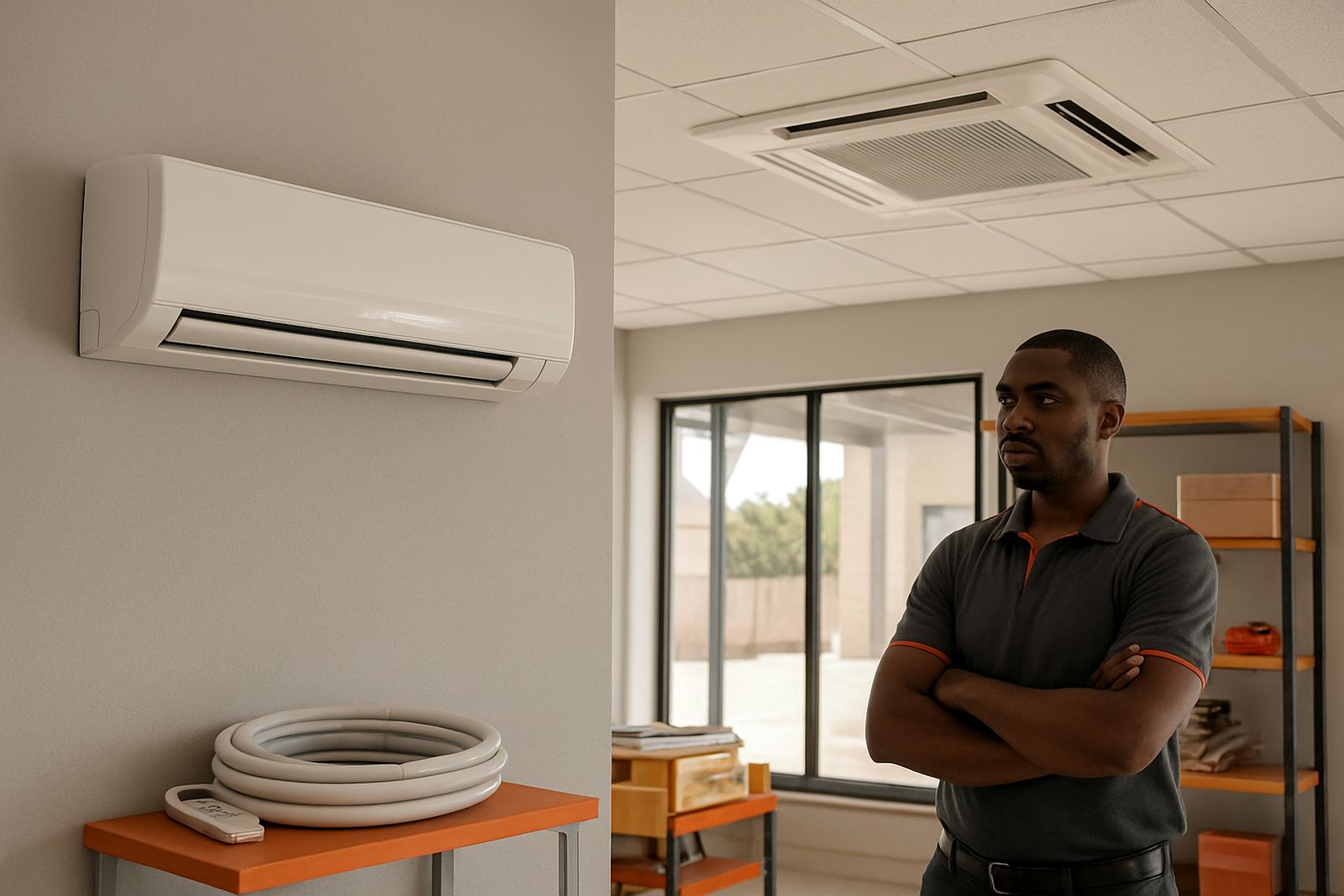
For most homes, a split system is the common choice because it is quieter and suits bedrooms, living rooms and family areas. A compact wall-mounted unit works well where wall space is available and you want a neat finish. For homes with several rooms or a large open-plan area, you may need more than one unit instead of forcing one machine to do all the work.
If you only want cooling in one room, keep the installation simple. If you want year-round comfort, ask about units that can also provide heating for winter evenings. In Kimberley, where dust and dry air can be an issue, regular filter cleaning matters just as much as the unit type.
- Single room use: compact wall-mounted unit
- Bedroom use: quiet unit with sleep settings
- Living area use: higher capacity unit
- Multiple rooms: plan for more than one system
Match Capacity to Room Size and Heat Load
Aircon capacity is usually measured in BTU or kilowatt ratings. A small bedroom does not need the same output as a large lounge or an enclosed sunroom. The final size depends on more than floor space, including insulation, roof type, ceiling height and how much heat comes in through the windows. In a Northern Cape summer, a tin roof or poorly insulated ceiling can change the answer quickly.
As a general guide, a smaller bedroom may suit a lower-capacity unit, while a medium lounge often needs a mid-range unit. Very large spaces, rooms with multiple windows, or open-plan areas usually need a proper site check before you buy. We often see customers in Kuruman and Upington choose a unit by guesswork, then find it never quite catches up on the hottest days.
If you are unsure, measure the room and get advice before you pay. It is cheaper to size it right first than to replace a wrong unit later.
Check Power Supply Before You Commit
Home aircon is only useful if your power supply can handle it. Check the circuit size, cable condition and whether the home has enough spare capacity for the new unit. Older houses in parts of Kimberley may need a proper electrical check before installation, especially where geysers, stoves and other heavy loads already share the board.
If your area sees load-shedding, think about restart behaviour. Some units recover better after power returns and some settings help reduce strain on the system. If you are pairing aircon with solar backup, it is worth planning the full electrical picture instead of adding parts one by one.
- Confirm the electrical circuit size
- Check if the DB board has spare capacity
- Ask about cable route and isolator position
- Consider solar backup if outages are common
Installation Details That Matter Later
A good unit can still perform badly if installed poorly. The outdoor position must have enough airflow, drainage and protection from direct weather where possible. In hot, dusty areas around the Northern Cape, the location should also allow for easy cleaning and servicing. If the unit is too close to a wall or trapped in a tight corner, performance drops and noise can become an issue.
The indoor unit should be placed where air can move across the room without blowing straight on a bed or couch. Condensate drainage also needs attention. Bad drainage leads to leaks, stains and complaints after the first summer. We often find the little things, like line length or poor bracket placement, cause the biggest problems.
- Keep outdoor units clear of blocked airflow
- Allow access for servicing and cleaning
- Check drainage route before drilling
- Position the indoor unit for even air spread
Use This Quick Buying Checklist
When you are ready to buy, use a simple checklist and avoid choosing only on price. Ask what room size the unit suits, what power it needs, how loud it is and what is included in the installation. Also ask whether parts and servicing are available locally, because a unit is only as good as the support behind it.
This is the quickest way to narrow it down:
- Room size measured in metres
- Sun exposure checked
- Power supply confirmed
- Indoor and outdoor positions planned
- Drainage route confirmed
- Service access available
- Warranty and after-sales support explained
If you are buying for a home in New Park, Galeshewe, Roodepan, Kuruman or Upington, a local supplier can help you match the unit to the climate and the house, not just the box label.