What each system does best in a Kimberley building
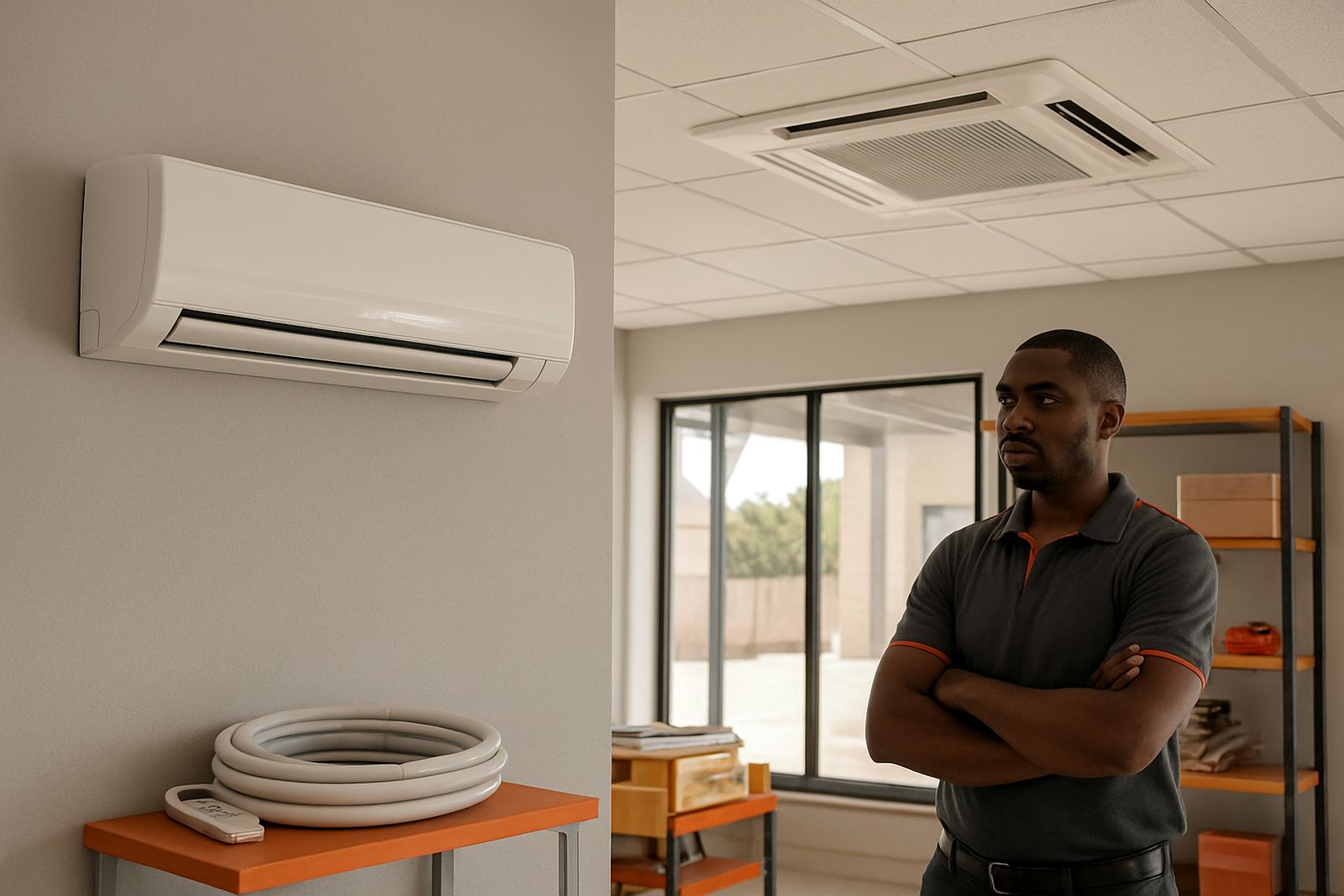
A wall split has an indoor unit fixed high on a wall and a separate outdoor unit. It suits small to medium rooms, private offices, bedrooms, small shops and meeting rooms where the air can throw across the space without being blocked by partitions or shelving. A cassette unit sits inside a ceiling opening and spreads air in 4 directions, so it works well in open offices, reception areas, classrooms and larger retail spaces.
In New Park, Galeshewe and Roodepan we often see split units chosen for straightforward retrofits because they need less ceiling work. Cassette units make more sense where you have a proper ceiling void, planned drainage and easy access for servicing. If the room has a high ceiling, a cassette can help avoid hot spots at floor level.
- Split: best for single rooms, quick installs and lower ceiling work
- Cassette: best for open spaces, even airflow and cleaner wall space
- Both: need correct sizing, good drainage and solid electrical supply
How to choose between them before you spend a cent
Start with the room, not the unit. Measure floor area in square metres, check ceiling height, note the number of windows and whether the room faces direct afternoon sun. In Kimberley and Upington, sun load can be heavy, so a room that looks small may still need more cooling capacity than expected.
Then think about the use of the space. A split unit is usually quieter in the room because the fan and compressor are spread between inside and outside units. A cassette gives more even air distribution, but it needs a ceiling space and a neat route for the condensate drain. If the ceiling is low, irregular or packed with services, a split is often the safer choice.
- Choose a split if wall space is available and the room is divided into smaller zones
- Choose a cassette if the room is open plan and you want airflow from the centre
- Check whether the site has stable power, especially where load-shedding or generator changeover is common
Installation checks that save trouble later
A proper installation is as important as the unit itself. For a split system, the indoor unit needs a strong wall, a clean route for the copper lines and a drain line with enough fall. For a cassette, the ceiling opening must be accurate and the ceiling structure must carry the panel and service access needs. If the drain is poorly set, you end up with water marks, smells or dripping during humid weather.
Before work starts, the installer should confirm supply voltage, isolation point, pipe run length and drain route. In some Northern Cape sites dust can build up quickly, so filter access should be easy. We also recommend checking whether the outdoor unit will get full sun, wind or vibration from a metal roof. Those small things affect noise, efficiency and wear.
- Confirm electrical size and protection before mounting anything
- Keep outdoor units clear of dust blowback and blocked airflow
- Test drains with water before commissioning the system
Running costs, comfort and maintenance differences
Both systems can be energy efficient when they are sized properly and serviced on time. A split unit may cost less to install on a single room, while a cassette may give better comfort in a shared space because the cooling is more even. If one area is always too cold and another too warm, the issue is often poor sizing or bad air distribution, not the unit type.
Maintenance is different too. Split units are simple to reach for filter cleaning and basic checks. Cassette units need ceiling access, which can add time during servicing. In dusty towns like Kuruman and some parts of Kimberley, clogged filters and dirty coils can push up running costs fast. For businesses that cannot afford downtime, that service access matters.
If your building runs after hours or during load-shedding on solar backup, speak to us about start-up currents and changeover planning. The wrong combination can trip a supply or leave the unit struggling on inverter power.
Practical checklist for homeowners, shops and offices
Use this quick checklist before you decide which system suits the site. It helps avoid overspending and avoids the common mistake of buying a unit that fights the room layout.
- Measure the room length, width and ceiling height
- Count windows, doors and direct sun exposure
- Check whether ceiling space is available for a cassette
- Confirm where the outdoor unit can sit without noise complaints
- Ask how often the filters can be cleaned and who will do it
- Plan for drain fall, power supply and future servicing access
- Match the unit to the actual use of the room, not only the size
For cold rooms, pumps, auto aircon or ventilation tie-ins, the same basic rule applies: the right equipment must fit the site, the duty cycle and the budget. If the room changes often, such as a shop layout or a rented office, flexibility usually favours a split unit. If the space is fixed and open, a cassette can give a neater finish and steadier comfort.
When to ask for commissioning support and site advice
If the room is large, the power supply is uncertain or the ceiling is crowded with ducting and pipes, get site advice before buying. A quick visit can prevent expensive rework. Commissioning support is useful on new offices, retail fit-outs, lodges, workshops and municipal spaces where the cooling system must work properly from day one.
Modern Equipment has been serving Kimberley and the Northern Cape since 2002 from New Park, with support into Roodepan, Galeshewe, Kuruman and Upington. We work with air-conditioning, refrigeration, ventilation, solar backup and pump equipment, so we understand how one system affects another on site. If you need parts, servicing or a straight answer on split versus cassette, it is better to compare the site first than guess later.