When a drip is just a warning, not a major failure
Water coming from an indoor air-conditioning unit often starts as a small drip from the front cover or the back of the unit. That can look minor, but in Kimberley homes, offices and small shops it can stain ceilings, damage plaster and run down walls fast. In some cases the unit is still cooling, which is why people ignore it until the leak becomes regular.
The first question is simple: is the unit producing water where it should, or is it spilling into the room? An aircon must remove moisture from the air and send it away through a drain path. If that path gets blocked, tilted wrong, dirty or iced up, the water has nowhere to go. Then it finds the nearest opening instead.
Blocked drain lines are the most common cause
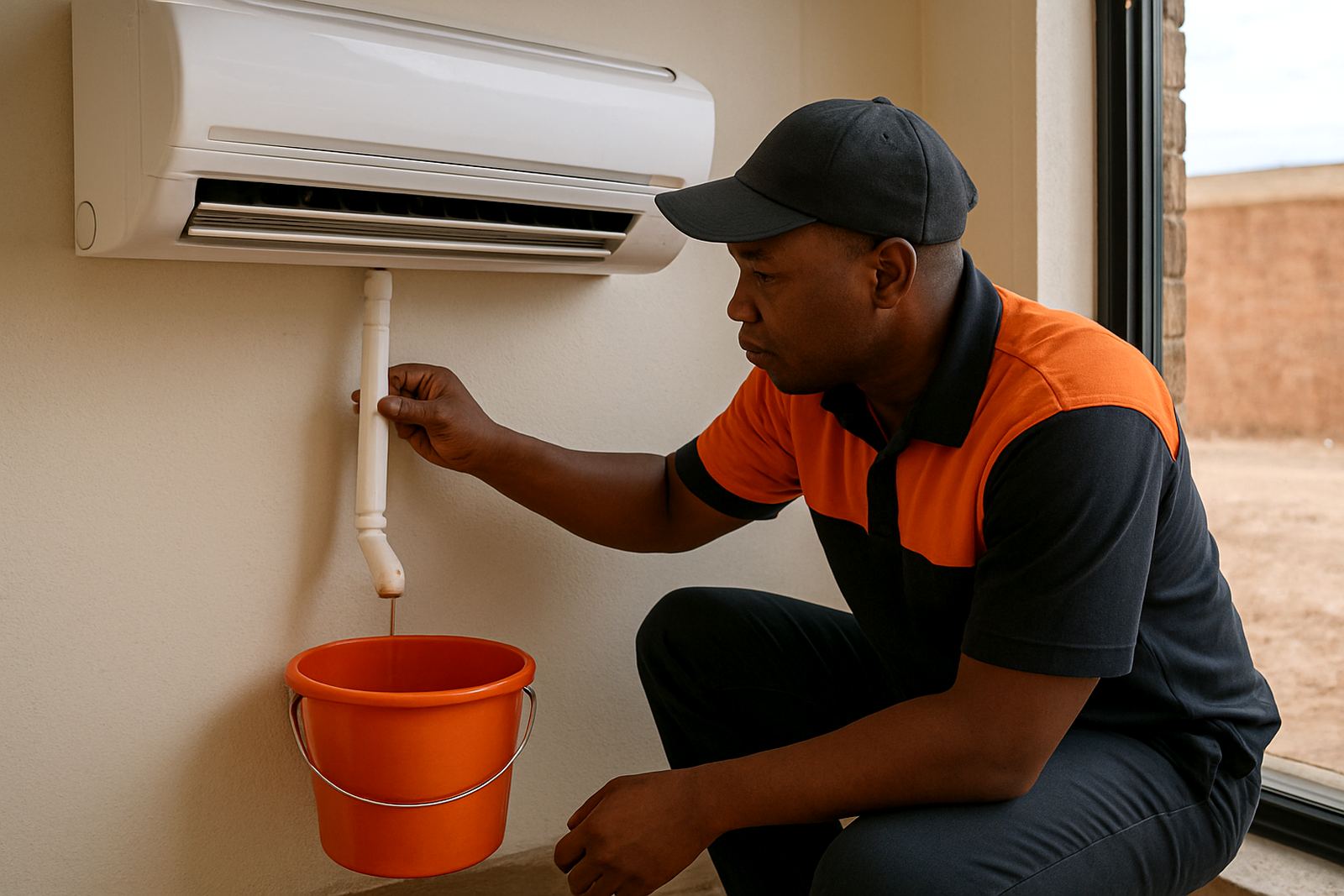
The drain line carries condensate from the indoor unit to the outside. Dust, mould slime, insect nests and dirt can clog the pipe over time. In dry Northern Cape conditions people often expect less moisture, but air conditioners still pull water from indoor air, especially in summer when the unit runs for hours.
Signs of a blocked drain line include dripping from the front panel, water on the wall below the unit, or a faint gurgling sound after switch-off. In some properties the pipe runs through a roof space, and a low section in the line can hold water and cause backflow. If the end of the drain pipe is buried in soil or sitting in a dirty gutter, the blockage can keep coming back.
- Check whether water is dripping outside from the drain outlet when the unit is running.
- Look for kinks, sagging sections or crushed pipe near the indoor unit.
- Make sure the outside end is open and not blocked by dust, leaves or insects.
A dirty filter can lead to icing and then dripping
When filters are packed with dust, the indoor coil cannot move air properly. The coil gets too cold and can ice over. Once the ice starts melting, the meltwater may overflow the drip tray and run into the room. This happens a lot in places where units run daily and filters are left for months without cleaning.
For homes and offices in Galeshewe, Roodepan and New Park, the first thing to do is isolate the unit and check the return filters. If they are grey, blocked with lint, or bent out of shape, they need cleaning or replacing. A clean filter helps the unit breathe and keeps the coil at the right operating temperature. It also improves cooling without forcing the machine to work harder than it should.
- Remove the filter and wash it gently with clean water if it is reusable.
- Let the filter dry fully before refitting it.
- If the coil is visibly iced, switch the unit off and let it thaw before restarting.
Poor slope, loose installation or a cracked tray can spill water
An indoor unit must sit level enough for internal parts to work correctly, but the drain side also needs the right fall so water can move away. If the installer has not set the unit properly, the condensate can pool inside and overflow. Even a small tilt in the wrong direction can cause repeated leaks.
Plastic drip trays can crack with age, especially on older systems that have been serviced many times. Screws can loosen, pipe connections can shift and vibration can open up small gaps. A unit that is not secured properly may only drip under heavy use, which is why the problem appears and disappears.
If water marks keep returning after cleaning the filter, a mounting or tray problem should be checked. That is the point where a proper inspection saves time. It is better to fix the cause than mop the floor every afternoon.
High humidity, blocked airflow and heavy use can make it worse
Indoor units drip more often when they are pushed hard in hot weather, or when the room has high humidity. That is common in kitchens, staff rooms and offices where doors open and close all day. In some cases the aircon is undersized for the room, so it runs flat out and collects more moisture than the drainage system can handle if there is another small fault present.
Other airflow issues can add to the problem. Closed vents, furniture placed too close to the unit, dirty return air paths and stuffed ceiling spaces can all reduce movement around the coil. The unit then becomes colder in patches, which encourages icing and later dripping. A unit may look fine from the outside, but still be starved of air.
- Keep furniture, curtains and signage clear of the indoor unit.
- Do not block return air grilles or ceiling openings.
- Ask whether the room size matches the unit capacity if dripping happens in peak heat.
What to check first before calling for help
Before you book a repair, there are a few simple checks that usually tell the story. These can prevent unnecessary downtime, especially in small businesses where a leaking unit is right above stock, computers or a reception area. If the leak is active, turn the unit off first so the water does not keep spreading.
- Confirm the indoor filters are clean and seated properly.
- Check that the drain pipe is not blocked, kinked or reversed.
- Look for ice on the indoor coil or water around the tray.
- Make sure the unit casing is closed correctly after cleaning.
- Check whether the leak happens only when the unit runs for long periods.
If the water only drips after the unit has been running for a while, that often points to drainage or icing. If it leaks immediately after switch-on, the problem may be a blocked tray, damaged pipe connection or a fitment issue inside the casing.
A Kimberley example and when service is the right step
A small office in New Park may notice water marks above a filing cabinet after the unit has run through a hot afternoon. The filter looks dusty, the drain line at the outside wall is barely dripping and the room door stays open most of the day. In that case the first checks would be the filter, drain outlet and air movement around the unit. If the leak continues after cleaning, the drainage slope or tray could need attention.
That is a common pattern across Kimberley and nearby areas like Kuruman and Upington. Dry weather does not stop condensate. It just means the warning signs are sometimes missed until the ceiling shows them. If a unit keeps dripping after basic checks, a technician should inspect the drain line, tray, coil condition and installation angle. The goal is to stop repeat water damage and get the system back to normal cooling, not just dry the floor once.
Modern Equipment supplies air-conditioning, refrigeration and ventilation gear from New Park in Kimberley, and supports customers across the Northern Cape. If a drip is already affecting your space, act early before it becomes a bigger repair.