When Cooling Starts Falling Behind
The most common sign is simple: the unit runs, but it does not cool the room or cabinet the way it used to. You may wait longer for a space to pull down to temperature, or find that the air coming out of the vents feels only slightly cool. In a home, that means a lounge that never really reaches comfort on a hot afternoon. In a shop or cold room, it can mean stock sitting just outside the safe range.
Low refrigerant is not the only cause of weak cooling, but it is one of the first things a technician should check. A system with low gas often has to run for longer periods, which pushes up electricity use and increases wear on compressors, fans and controls.
Ice, Frost or Wet Patches on the Piping
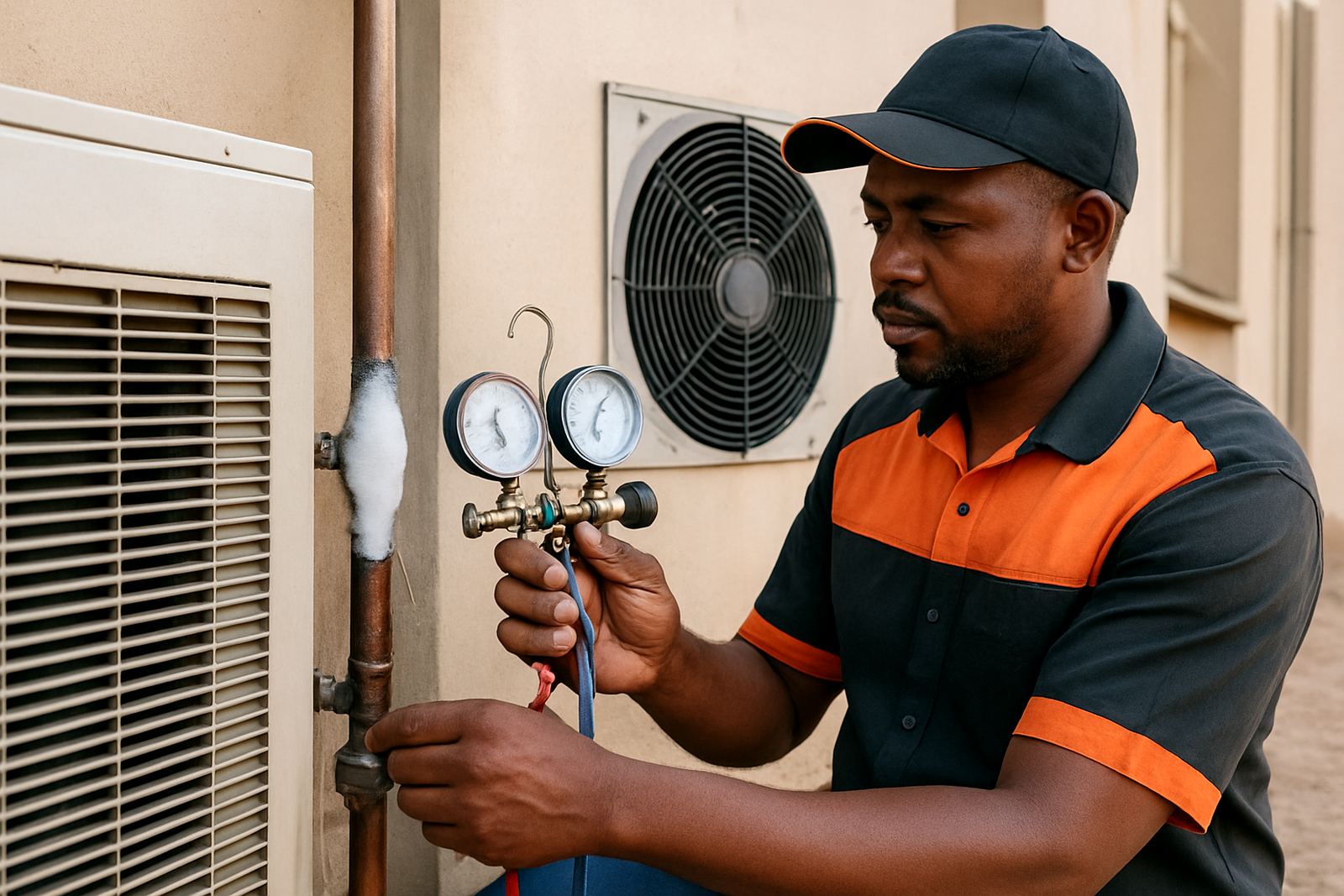
Frost on the indoor coil, ice on the copper lines or damp patches around joints can point to a refrigerant problem. When gas levels drop, the evaporator can get too cold and start icing over. Once that happens, airflow drops even further and the system can struggle to recover.
Do not chip away at ice with a screwdriver or knife. That can damage the coil and turn a small issue into a repair job. Switch the unit off, let it defrost fully and arrange an inspection. If the icing returns soon after restart, the system needs proper diagnosis.
- Frost on suction piping
- Ice building up on the indoor coil
- Water dripping after the ice melts
- One part of the coil colder than the rest
Longer Run Times and Higher Bills
Another common clue is a system that runs almost nonstop. If a split unit used to cycle on and off but now stays on for long stretches, low refrigerant could be part of the reason. The same applies to cold rooms and display fridges that seem to be working harder for the same result.
On the power side, this is where load-shedding and tired equipment can make things worse. A system that already lost gas will struggle more when it has to restart after outages. In solar-backed installations, the extra run time also puts unnecessary pressure on battery capacity and inverter settings. If the unit is drawing more power but doing less work, it is time to have it checked.
Unusual Sounds and Warm Air at the Vents
People often expect low refrigerant to be noisy, but the sound is not always obvious. Some systems make a faint hissing, bubbling or gurgling sound in the lines. Others become oddly quiet because the compressor is short of load, then start sounding strained later on.
Pay attention if the air from the vents feels warmer than expected, especially when the thermostat is set correctly and the filters are clean. Warm air can also come from blocked airflow, dirty coils or a faulty fan, so a proper inspection matters. The point is not to guess. It is to catch the problem before the compressor starts running hot.
What Low Refrigerant Means for Cold Rooms and Refrigeration
For refrigeration equipment, the warning signs can show up in product temperatures rather than room comfort. A cold room may take longer to pull down after loading, and the temperature may drift during the day. In some cases, the compressor runs continuously while the evaporator still does not reach the right operating pattern.
If you manage a butchery, takeaway, storeroom or small cold room in Kimberley, do not ignore these changes. South African health and municipal requirements expect food held at safe temperatures, and refrigerant loss can put stock at risk. One small leak can affect the whole chain, from the compressor to the product on the shelf.
- Stock not holding temperature after loading
- Long pull-down times after a door opening
- Compressor running longer than usual
- Temperature drifting overnight or after peak trading
A Local Check Before a Small Problem Becomes a Breakdown
A practical example from the Northern Cape: a small shop in New Park called because its split unit was still running, but the counter area felt stuffy by midday. The filters were clean, the fan was moving air, yet the room never cooled properly. On inspection, the system had a low refrigerant charge caused by a leak at a joint that had slowly opened over time. The fix was not just topping up gas. The leak was located, repaired and the system was tested under working conditions.
That is the key point. Refrigerant does not disappear on its own. If the charge is low, there is usually a reason, and that reason must be found before the fault returns. A proper service checks for leaks, pressures, airflow, electrical condition and the general state of the equipment.
For homes and businesses in New Park, Roodepan, Galeshewe, Kuruman and Upington, early inspection is the cheaper option. It protects compressors, saves power and avoids spoilage or lost comfort during the hottest parts of the day.
When to Call for Inspection
Call for help when cooling is weaker than normal, ice keeps forming, the unit runs too long, or your bills rise without a clear reason. If you hear odd line noises or notice a temperature that will not hold, do not wait for a full breakdown. The earlier the fault is checked, the simpler the repair is likely to be.
Modern Equipment works with air-conditioning, refrigeration, ventilation, pumps, solar backup and auto aircon from our base in New Park, Kimberley, serving the wider Northern Cape. If you need a technician to inspect a suspected refrigerant loss, arrange servicing before the next heat wave or outage puts more strain on the system.