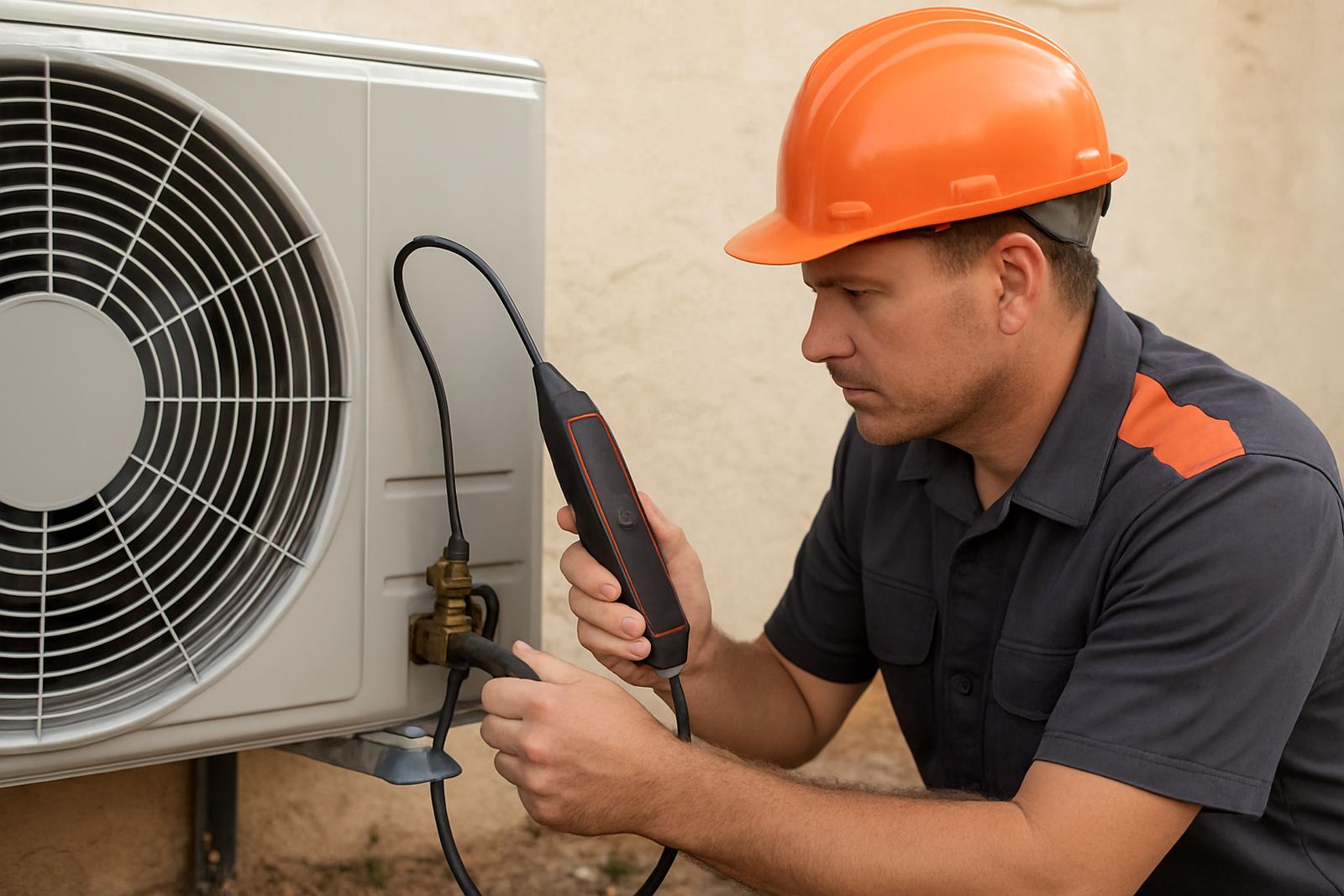
When cooling starts slipping, look for the pattern
A refrigerant leak does not always show up as a puddle on the floor. More often, the first clue is that a room, cold room, or vehicle takes longer to cool and never seems to reach the set temperature. In Kimberley, where summer heat can climb fast and load-shedding puts extra strain on equipment, that slow drop in performance is worth attention.
With air-conditioning and refrigeration, gas levels should stay stable in a sealed system. If cooling performance changes without a clear reason, the system may be losing refrigerant through a loose joint, damaged pipe, worn valve core, or split coil. The leak can be small enough to go unnoticed for weeks, but the signs usually build up.
- Longer cooling times than usual
- Warm air from an aircon that used to blow cold
- Cold room temperatures drifting above target
- Ice forming where it should not
Ice on the pipework or coil is a warning, not a good sign
Many people assume ice means the system is working extra hard. In practice, ice on suction lines, indoor coils, or refrigeration pipes often means the refrigerant charge is low or airflow is restricted. Low gas can cause the evaporator pressure to drop too much, which allows moisture in the air to freeze on the coil. Once that happens, cooling gets worse, not better.
For a shop in Galeshewe or a cold room in New Park, this can become a business problem quickly. Frozen coils reduce airflow, compressors run longer, and stock may not stay at safe temperatures. If the ice returns after defrosting, there is likely an underlying fault that needs proper testing.
- Frost that comes back soon after switch-off
- Water dripping after the ice melts
- Uneven cooling across the coil
- A compressor that keeps running for long periods
Hissing, oily marks and chemical smells matter
Some leaks give away their location. A faint hissing sound can point to gas escaping under pressure, although small leaks are often silent. Oily residue around flare joints, braze points, valves, or service ports is another clue because refrigerant carries oil with it as it escapes. On vehicle systems, greasy dirt around the pipe work is often the first thing people notice.
A sharp chemical smell near the unit is also worth checking, especially if the smell is stronger after start-up. It is not safe to ignore these signs. Refrigerant loss can lead to poor cooling, compressor damage, and in some cases a complete breakdown. The sooner the leak is found, the less chance there is of needing major parts replacements.
- Oily stains on joints or fittings
- Greasy dust build-up around one spot
- Hissing at the indoor or outdoor unit
- Unusual smell near pipework or service valves
Your electricity bill and running noise can tell a story
A system low on refrigerant often runs for longer cycles to reach the same result. That means more power use, more wear, and more noise. You may hear the compressor start and stop more often, or keep running with a strained sound. In a vehicle, the aircon may sound normal at idle but struggle once the car is moving in heat or traffic.
If your monthly electricity costs rise while the cooling load has not changed, it is worth checking the refrigerant system along with filters, thermostats, and fan performance. It is easy to blame the weather, but the pattern usually shows up before total failure. A unit that is flat-out all day and still not coping needs proper attention.
In Northern Cape conditions, dust and heat can make the symptoms worse. A system already low on gas will struggle even more during a power outage restart, when it has to pull temperatures back down from a hot room or vehicle interior.
What to check before calling for help
There are a few simple checks you can do without opening the system. Keep the area around the unit clear, make sure filters are not blocked, and confirm that fans are running properly. For cold rooms, check that doors are sealing, curtains are in place, and stock is not blocking airflow. For vehicles, confirm the cabin filter is not choked with dust and that the system is set correctly.
These checks help rule out basic airflow problems, which can look very similar to a refrigerant fault. But do not try to top up gas yourself or keep running a unit that is icing heavily. A recharge without leak detection is only a short-term fix, and it can mask a larger problem.
- Check filters and clean them if needed
- Look for blocked vents or closed louvres
- Confirm fans and blowers are operating
- Inspect for obvious oil marks or frost
A Kimberley example: small leak, big downtime avoided
We often see systems in New Park and nearby areas that still appear to be working, but not at the same level they did a month ago. A small leak in a split system or refrigeration circuit can cause slow cooling, longer compressor hours, and rising bills long before complete failure. In one typical case, a business in Roodepan noticed a display fridge taking longer to pull down after each door opening. The issue was traced to a minor leak at a fitting, which was repaired before the compressor was damaged.
That is the value of acting early. Whether it is a home aircon in Galeshewe, a workshop unit in New Park, or a vehicle aircon serving trips between Kimberley and Kuruman, the warning signs are similar. Catching them early usually means a smaller repair, less downtime, and less spoilage or discomfort.
If the system is losing performance, making unusual noises, or showing frost and oily marks, have it checked by a qualified technician. Leak testing, pressure checks, and proper repair work are the only reliable way to find the real cause.