Why Ducting Leaks Matter More Than People Think
Ducting is meant to carry conditioned air from the unit to the spaces that need it, but every gap changes how the system performs. When air escapes into the roof space, ceiling void or plant room, the unit must run longer to reach the same temperature, and that means more wear on compressors, fans and controls.
In hot inland towns like Kimberley, Upington and Kuruman, even a small loss can be felt quickly. The system may still switch on, but the room never quite gets there, especially at midday when heat build-up is strongest. In winter, the same leakage allows warm air to disappear into unused spaces so the heater works harder too.
The problem is not only comfort. Poor ducting can throw off air balance, create noisy vents, and make some areas of a building too cold while other areas stay warm. That leads to complaints from staff, customers or tenants, and the first thing people blame is the aircon unit itself when the real issue is the ducting around it.
Common Signs Your Ducting Is Losing Air
Most duct leaks give warning signs long before a system fails outright. The trouble is that those signs get ignored until the energy bill starts climbing or the workshop starts feeling stuffy. If you manage a shop, office, cold room or production area, it pays to check the ducting at least once a season.
- Rooms take too long to cool or never reach the set temperature
- Some vents blow strongly while others feel weak
- Rattling, whistling or flapping sounds in the ceiling space
- Dust marks around joints, grills or flexible sections
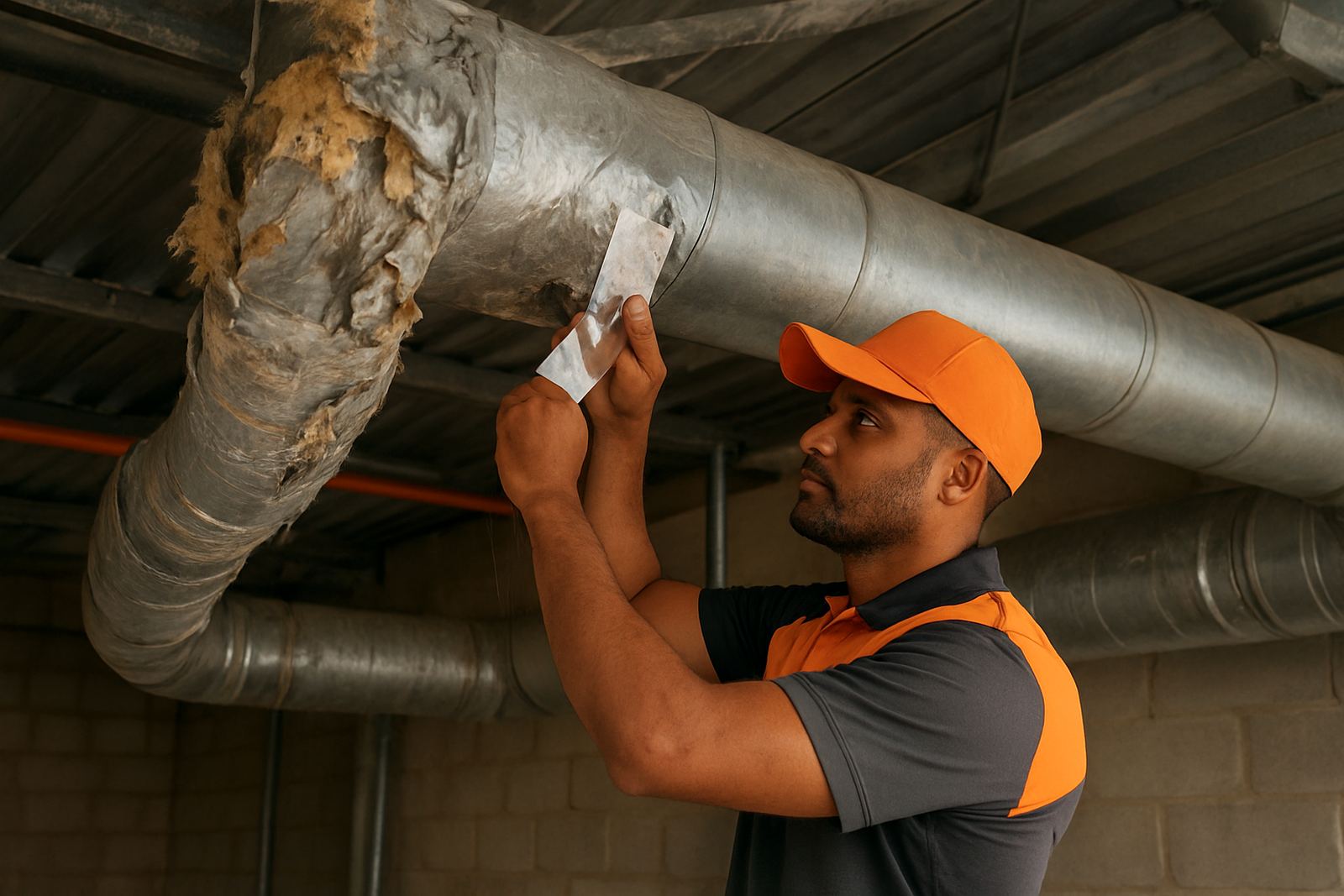
- Insulation hanging loose or showing damp patches
- Power use rising without any real change in workload
One of the clearest signs is a system that seems to run all day on hot afternoons in New Park or Galeshewe, but still leaves the area uncomfortable. That usually means air is escaping before it reaches the vents, or the duct sizes and layout are not suited to the load.
What Usually Causes Leaks And Losses
Leaks come from a few repeat causes. Flexible ducting can loosen at the collar if the clamp is not tightened correctly. Sheet metal duct sections can separate at joints if sealant was applied poorly or damaged during maintenance. Insulation can tear, exposing cold surfaces to hot humid air and causing condensation. In some cases, the ducting was simply installed with too many bends and restrictions from the start.
Mechanical damage is common too. Tradesmen working in roof spaces may step on duct runs, crush sections or pull on them while doing cable or plumbing work. Vibration from fans and equipment can slowly work fasteners loose if the supports are not spaced properly. In dusty areas around Kimberley and Roodepan, blocked returns can also increase pressure in the ductwork, which pushes weak joints apart over time.
- Loose clamps and failed tape on flex duct
- Poor sealing at take-offs, elbows and access doors
- Crushed runs from roof traffic or stored materials
- Insulation damage from heat, moisture or pests
- Unsupported spans that sag and restrict airflow
How Leaks Affect Energy Use And Equipment Life
Every litre of air that escapes is air the system has already paid to cool or heat. That wasted effort shows up in higher running costs, but the bigger issue is what happens to the equipment. Fans work against extra resistance, compressors cycle longer and motors heat up more often than they should.
In commercial buildings, loss through ducting can also upset pressure control and fresh air delivery. A kitchen, workshop or store room may start pulling air from the wrong places, which can bring in dust, fumes or hot outside air. Over time that creates more strain on filters and coils, and service intervals become shorter than expected.
For owners trying to manage load-shedding and solar backup, leaking ducting is especially frustrating. You may have invested in a good backup power system, but if the cooled air is disappearing into ceiling voids the batteries and inverter are carrying a bigger load than necessary. That shortens runtime and reduces the benefit of the backup installation.
A Local Example From A Kimberley Workshop
We often see the same pattern in workshops and small industrial sites around Kimberley. A system cools one bay well, but the next bay stays warm and staff complain about poor airflow. When the ducts are checked, there is usually a mix of loose joins, damaged insulation and a few sections that have sagged after years of vibration.
One practical example is a light engineering workshop near New Park where the owner thought the air-conditioning unit was undersized. After a duct inspection, it turned out that a long flexible section had split near the ceiling and a return line was drawing warm roof air back into the system. Once the damaged sections were repaired and the duct supports were corrected, the room cooled faster and the unit stopped running constantly. The owner said the biggest change was not the temperature alone, but the drop in noise and the more even airflow across the floor.
That is the point many people miss. A leaking duct system can make a perfectly serviceable unit look weak. Fix the air path first, then judge the machine.
What To Check Before Calling For Repairs
Some basic checks can help you decide whether the problem is a simple leak, a support issue, or a bigger design fault. You do not need to open every ceiling space to spot obvious losses, but it helps to look carefully at vents, accessible joints and any section exposed in a plant room or workshop roof.
- Check whether all vents have similar airflow
- Look for visible gaps at joints, bends and flexible connectors
- Inspect insulation for tears, wet spots or loose wrapping
- Listen for air noise at the ceiling or wall penetration
- Make sure access panels close properly and seal well
- Confirm that filters are clean before blaming the ducting
If the system serves a cold room, pharmacy, server area or food business, do not leave the fault unattended. Even small leaks can affect temperature stability, and that may conflict with hygiene requirements or internal stock limits. It is better to sort the ducting before the first item spoils or a room starts cycling outside its normal range.
Repair, Seal Or Replace The Problem Section
Not every duct leak needs a full replacement. In many cases the answer is to reseal a joint, replace a crushed length, or add proper support and insulation. The right fix depends on the material, age of the ducting and whether the system was installed correctly in the first place.
For older installations, patching may buy time but it will not solve a badly planned layout. If the duct route is too long, too narrow or full of sharp bends, the system will keep losing performance even after a few repairs. A proper inspection should look at both the damage and the design. That is how you avoid spending good money on repeat call-outs.
For businesses in Kimberley, Roodepan, Galeshewe, Kuruman and Upington, the best approach is to treat ducting as part of the full system, not an afterthought. Good airflow saves power, reduces wear, and keeps staff more comfortable through the heat and dust that Northern Cape sites know well.