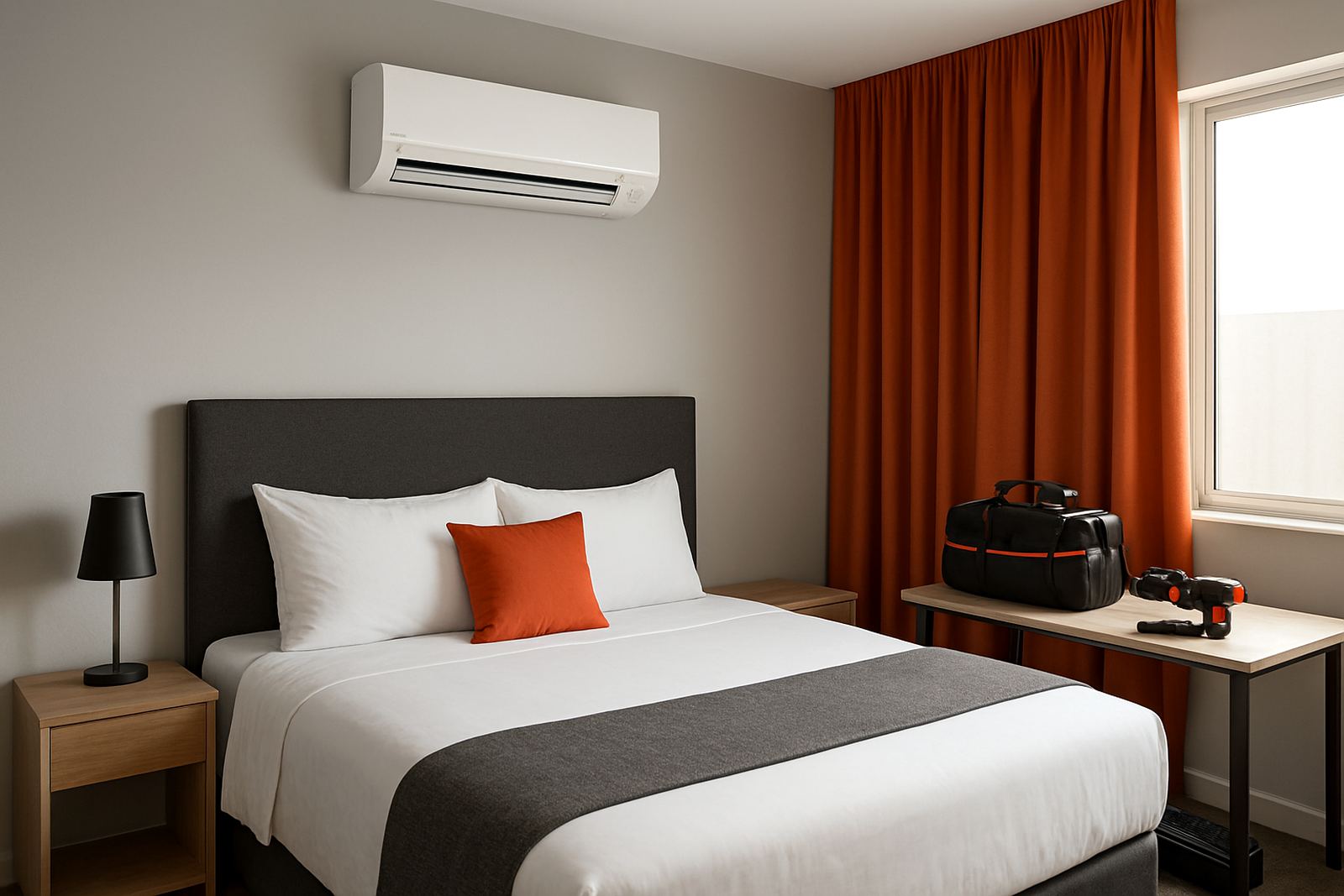
Start With the Room, Not Just the Unit
Many hospitality owners ask what size air-conditioner to fit, but the better question is how the room behaves through the day. A north-facing room with big windows, thin curtains and a tin roof will hold heat longer than a shaded room on the same floor. In the Northern Cape, that difference shows up fast when the afternoon sun starts pushing temperatures up and the wind brings dust through gaps around frames.
Before choosing equipment, look at the room envelope. Check ceiling insulation, window seals, curtain weight, roof colour and how often the room is occupied. A guesthouse that runs fully booked over weekends has a different cooling load from one that only fills on certain nights. If you size for the room properly, you avoid short cycling, weak airflow and unhappy guests phoning reception at 10 pm.
- Measure room size in square metres and note ceiling height
- Check sun exposure from late morning to sunset
- Look for heat sources such as geyser cupboards or fridges in the room
- Confirm whether the room can keep doors and windows closed during operation
Quiet Cooling Matters More Than Owners Expect
Guests usually forgive a plain room before they forgive a noisy one. A unit that rattles, clicks too often or blows too hard across the bed will show up in reviews. In hospitality, sound travels further than you think, especially in older buildings in New Park or converted homes in Galeshewe where passages are narrow and doors are lighter than modern hotel doors.
Look for indoor units that suit sleeping spaces rather than office spaces. Airflow should reach the full room, but not blast directly at the pillow area. It also helps to position the unit where maintenance is possible without disturbing guests too much. A cleaner filter and properly tightened fittings can prevent the little noises that become complaints.
- Avoid placing the indoor unit above the headboard if possible
- Use vibration control on outdoor units and wall brackets
- Keep filters on a fixed cleaning schedule
- Check condensate drains so water does not drip into ceilings or patios
Cooling Costs Are Easier to Control Than Refunds
Guesthouse owners often focus on the purchase price, but the real issue is operating cost across a full season. Older equipment, poor insulation and bad thermostat settings can push electricity use higher than necessary. That is a problem during load-shedding too, because guests expect comfort even when the power has been off and the building is trying to recover temperature afterwards.
It helps to use timers, sensible setpoints and units matched to occupancy. For many guest rooms, the target should be a stable, comfortable temperature rather than ice-cold air. In summer, a room that cools steadily is better than one that goes from hot to freezing and back again. Owners should also think about backup power for critical areas like reception, security lighting and selected rooms, especially where late check-ins are common.
- Set realistic temperature limits and avoid overcooling
- Use occupancy control where practical
- Service filters and coils before peak season
- Plan backup supply for essential guest areas during outages
Maintenance Gaps Show Up First in Hospitality
A guesthouse can look spotless and still lose marks because the room smells damp or the unit struggles on the first hot evening of spring. That usually points to maintenance that has been left too long. Dust build-up, blocked drains, low gas charge and tired fan motors all reduce comfort, and they tend to show up at the busiest time. In a place like Kimberley, where dust and dry heat can work their way into equipment, routine servicing is not optional.
Owners should keep a simple maintenance calendar for each room and common area. That record should include service dates, faults reported by staff, filter cleaning and any parts replaced. It also helps with budgeting. Rather than waiting for a breakdown in peak season, you can plan service around quieter periods and avoid emergency call-outs when the guesthouse is full.
- Log every fault by room number
- Test cooling before public holidays and long weekends
- Check drains, insulation and thermostats together
- Keep spare remotes, batteries and basic parts on site
Think Beyond Bedrooms to the Whole Guest Stay
Room comfort starts in the bedroom but it affects the whole stay. A guest arriving from Kuruman after a long drive wants the room to feel ready within minutes. If the lounge, passage or breakfast area is hotter than the room itself, the overall impression drops. The same goes for ventilation in bathrooms, laundry spaces and kitchens, where trapped moisture can create odours that drift into nearby rooms.
For smaller guesthouses, it can be worth balancing room cooling with extraction and ventilation in service areas. That supports fresher air and helps appliances last longer. It also matters in coastal or humid conditions when owners extend their business to towns with more moisture in the air, because damp rooms and slow-drying linen create a different set of problems.
- Match bedroom cooling with extraction in bathrooms and kitchens
- Use ventilation to reduce odours and moisture
- Review how quickly rooms recover after cleaning
- Check that staff can operate controls without confusion
A Practical Northern Cape Example
Consider a guesthouse in New Park, Kimberley with six rooms, a small breakfast area and afternoon sun on two north-facing rooms. The owner may think the answer is to fit the same unit in every room. In practice, the sun rooms may need extra attention to curtains, sealing and perhaps a different capacity, while the shaded rooms can run on lighter loads. That is the kind of detail that protects guest comfort and keeps power use in line.
For owners across Roodepan, Galeshewe, Kuruman and Upington, the best approach is to treat cooling as part of guest service, not just building maintenance. When rooms are sized properly, serviced on time and backed by sensible power planning, guests sleep better and staff spend less time handling avoidable complaints. In hospitality, that calm after check-in is worth a lot more than a cheap unit on paper.