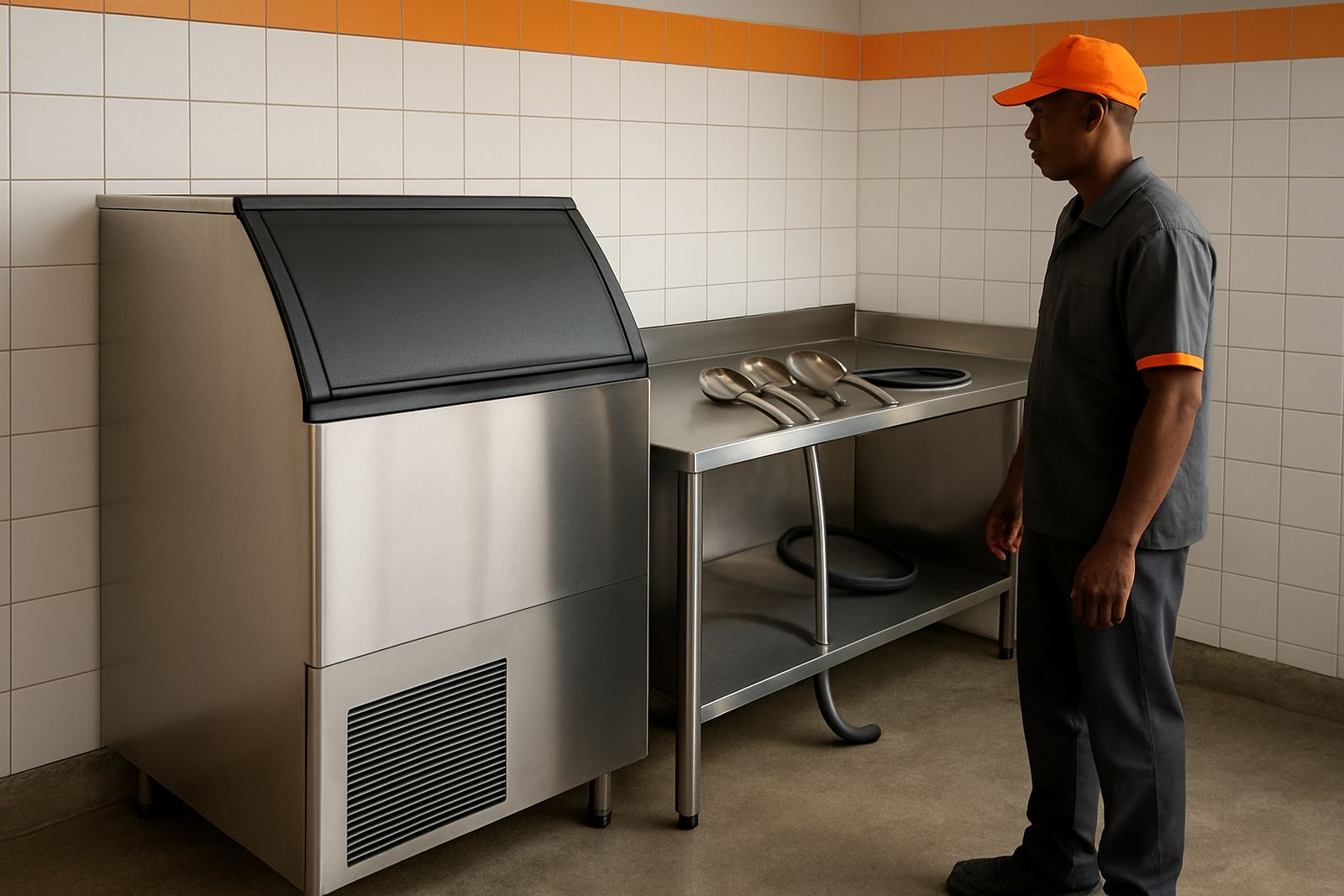
Ice makers for everyday service demands
An ice machine makes its own supply on site, so you are not waiting for deliveries or relying on bags that melt before the shift is done. For restaurants, guest houses, bottle stores, cafés, butcheries and canteens, that means better control over service and less waste. In Kimberley and towns like Kuruman and Upington, a unit that keeps up during hot days and busy weekends makes a real difference.
Most machines used in trade settings fall into two groups. Cube ice works well for drinks, display and general serving. Flake ice is better for fish, meat counters, cold displays and packing where the ice needs to mould around product. Some sites use a compact undercounter unit at the point of use, while larger kitchens and prep rooms go for a higher output machine with a bin underneath or a separate storage bin.
Common sizes, output rates and storage options
Choosing the right size starts with the amount of ice used in a normal day, not the busiest day only. A small café may manage with a machine producing 20 to 40 kg per day, while a hotel kitchen, caterer or butcher shop may need 80 kg, 150 kg or more each day. Storage bin size matters too, because a machine can make ice quickly but still run short if the bin fills slowly or if staff draw ice during peak hours.
- Compact units: about 20 to 40 kg per day, often for bars, small kitchens and offices.
- Mid-size units: about 50 to 100 kg per day, suitable for cafés, takeaways and guest houses.
- High-output units: 120 kg plus per day for hotels, food prep rooms and busy caterers.
- Storage bins: matched to daily use so the machine is not overworked by constant draws.
It also helps to check the cube size. Smaller cubes chill drinks quickly, while larger cubes melt slower and suit self-service or packaged drinks. Flake output is measured differently, but the main point stays the same: the machine must match the way your site uses ice, not just the space available. A unit that is too small will struggle on hot days, and a machine that is oversized can sit underused.
Where ice machines suit best
These machines are used where hygiene, speed and steady output matter. That includes food handling areas, hospitality counters, medical and laboratory support spaces, bars, bakeries and retail food stores. In the Northern Cape, dust and heat are part of daily life, so placement should allow for clean airflow and easy access for cleaning. A machine pushed into a tight corner against a hot wall will not last as well.
They are also useful for prep areas that need ice for display or product cooling during loading and packing. Butcheries often prefer flake ice for wrapping and display, while restaurants and guest houses normally prefer cubes for drinks. Catering teams may choose units with a larger bin because service days can run long and unpredictable. If the site already has a cold room or other refrigeration plant, the ice machine should still be planned as its own item, not added as an afterthought.
- Restaurants, bars and hotels
- Butcheries and food counters
- Catering kitchens and function venues
- Guest houses and lodges
- Fish, meat and fresh produce handling
Power, water and installation needs
Most ice machines need a stable electrical supply, clean water and enough ventilation around the unit. Some smaller machines run on standard single phase power, while larger units may need three phase supply depending on output. If the site is affected by load-shedding, it is worth checking whether the machine will restart cleanly when power returns and whether your backup power can carry the starting load. Ice production also drops when ambient temperatures are high, so Kimberley summer conditions should be part of the sizing decision.
Water quality is another key point. Hard water, sediment and poor filtration can affect ice clarity, slow production and shorten service life. In many cases a filter is fitted before the machine to reduce scale and dirt. Drainage also needs to be planned. The unit must have a proper drain point so melt water does not pool under the machine or run across the floor. On busy sites, that sort of small fault becomes a bigger problem quickly.
For installations in New Park, Roodepan, Galeshewe, Kuruman or Upington, Modern Equipment can help check the space, water point, drain position and electrical supply before the machine is ordered. That saves rework later and helps the unit fit into the site properly the first time.
Care, cleaning and servicing that keep output steady
Ice machines need regular care because they sit in a wet environment and work with water all day. The bin should be cleaned, the air intake kept free of dust and the condenser area checked for blockage. In a dusty town like Kimberley, this matters more than many people realise. If airflow is restricted, ice production drops and the compressor runs harder than it should.
Daily and weekly attention is simple but important. Staff should remove stale ice, wipe down high-contact surfaces and look for unusual noise, slow freezing or cloudy ice. Filters should be changed or cleaned on time, and the machine should be serviced before the peak season if possible. If the site uses the machine for food handling, hygiene records are worth keeping so cleaning is not left to memory. Many faults start small, like a blocked spray arm, poor water flow or a worn seal, and then grow into a full breakdown.
- Clean bins and contact points regularly
- Check water filters and inlet pressure
- Keep vents and condenser fins free of dust
- Watch for low output, odd smells or slow freeze times
- Book servicing before busy periods, not after a failure
What to confirm before you order
Before ordering, measure the actual daily ice use and think about peak demand, not just average demand. Confirm whether you need cube ice or flake ice, and whether the ice is for drinks, display or packing. Then check where the machine will stand, whether there is a nearby drain, and if the floor can take the weight of a full unit plus bin. If the area gets hot, that should be mentioned too because heat affects output.
You should also confirm power availability, water pressure and whether a filter is needed. If the site has limited space, an undercounter model may be better than a larger floor unit. If staff will be drawing ice throughout the day, a bigger bin can prevent shortages. When the machine is for a new kitchen or cold room area, it helps to plan it alongside the rest of the service layout so piping, drainage and electrical points are sorted early. That is the easiest way to avoid problems later and it usually costs less than changing things after the fact.
Modern Equipment in Kimberley supplies ice machines with practical advice for Northern Cape sites, from New Park and Galeshewe to Upington and Kuruman. If you need help matching output, power and space to the work on site, our team can advise before you place the order.
Key facts
| Ice type | Cube or flake, depending on use |
|---|---|
| Daily output | About 20 kg to 150 kg plus, based on model |
| Power supply | Single phase or three phase, model dependent |
| Water connection | Clean potable water supply with filtration recommended |
| Drainage | Gravity drain or suitable drain arrangement required |
| Typical use | Bars, kitchens, butcheries, catering, cold display and food prep |