What Municipal Sites Usually Need
In a municipal setting the problem is rarely one item, it is the whole site working as a system. A depot may need office cooling, workshop extraction, secure store refrigeration, yard lighting support and a pump system that keeps water moving when pressure drops or power trips.
We normally start with the building use, the number of people inside, the hours of operation and the service risk if one unit stops. A licensing office, traffic administration block, clinic store room and maintenance yard all have different needs, even if they sit on the same erf.
- Office split units for admin blocks and customer-facing rooms
- Ventilation for workshops, ablution areas and plant rooms
- Cold room and freezer support for stores, clinics or waste holding points
- Pumps for water transfer, pressure support and stormwater tasks
- Solar backup for essential circuits during load shedding
Planning Around Kimberley Heat, Dust and Power Cuts
Kimberley summers can be hard on condenser coils and electrical components, especially where dust builds up around municipal yards and service roads. Rooftop units and outdoor condensers need space, airflow and access for cleaning, not just a spot where they fit on paper.
For sites in New Park, Galeshewe, Roodepan or the outer parts of town, power stability and cable runs need proper checking before installation starts. If a municipality wants the system to last, it helps to plan for voltage dips, load shedding and maintenance access from day one.
- Keep outdoor units clear of rubbish, weeds and tight boundary walls
- Allow service access for filters, belts, contactors and drain lines
- Separate control wiring from high-load pump and compressor circuits
- Use weatherproof isolators and correct cable sizing for long runs
Typical Equipment Set for Offices, Depots and Public Buildings
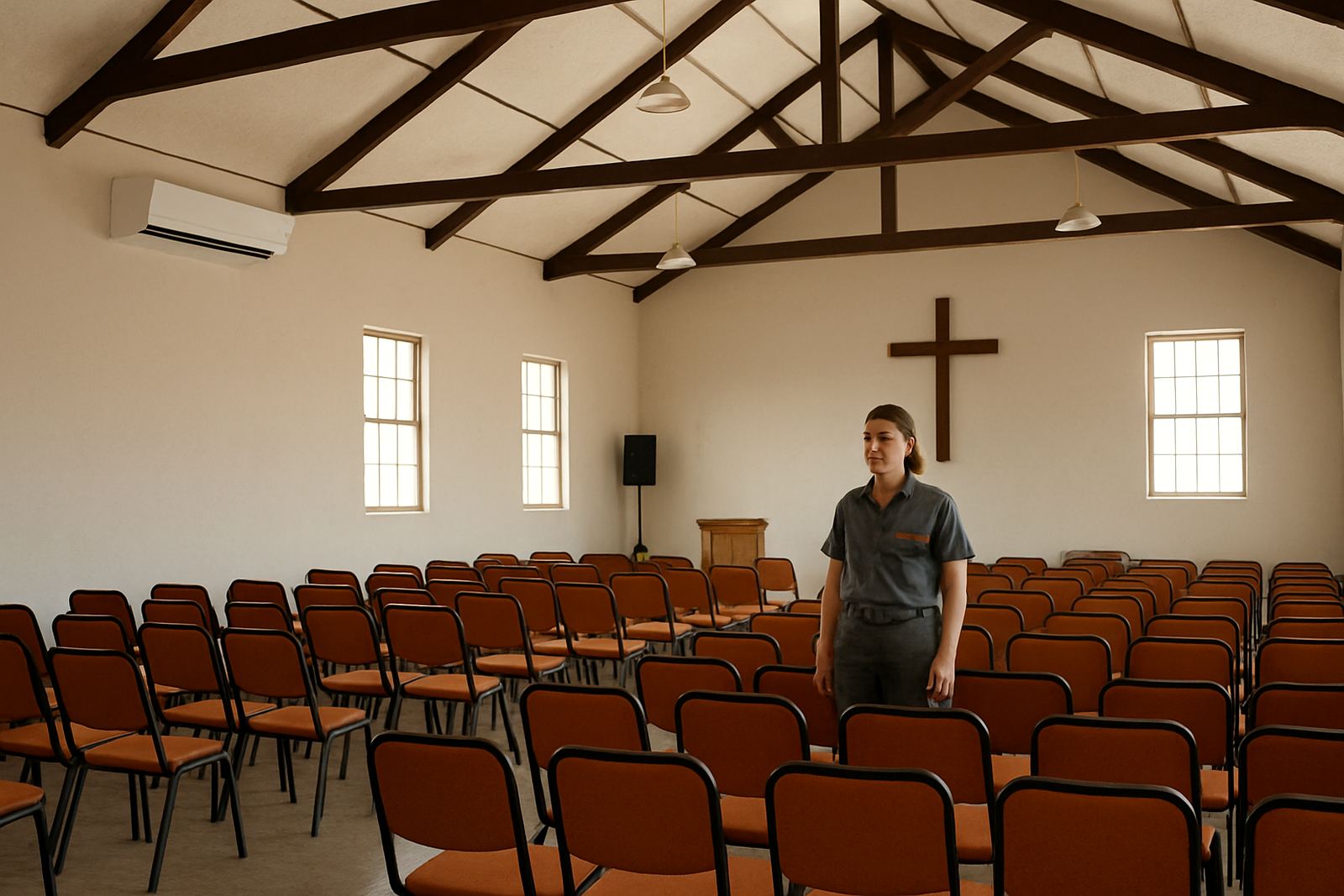
A municipal office block often needs a mix of small and larger capacity units rather than one size for the whole building. We regularly work on split systems for boardrooms and reception areas, ducted or cassette units for open-plan offices, and ventilation extractors for stores, kitchens and ablutions.
Depots and maintenance yards usually need more practical equipment. That can include cold room doors, insulated panels, condensers, pressure pumps, circulation pumps, control panels and auto aircon service points for fleet vehicles. If the site has backup power, the solar or inverter side should be tied into essential loads only, not the full building unless the budget allows for it.
- Split or cassette air-conditioning for offices and waiting rooms
- Extraction fans for workshops and enclosed stores
- Cold room panels, motors and controls for perishables
- Water pumps for supply, boosting or emergency transfer
- Solar backup for admin loads, gate motors and key refrigeration circuits
For a small municipal office upgrade, budgets often start around R25 000 to R80 000 depending on unit count and cabling. Medium depot fitouts can run from R120 000 to R450 000, while larger multi-building projects with pumps, ventilation and backup power can move well above R500 000.
Common Mistakes That Cost Municipal Budgets
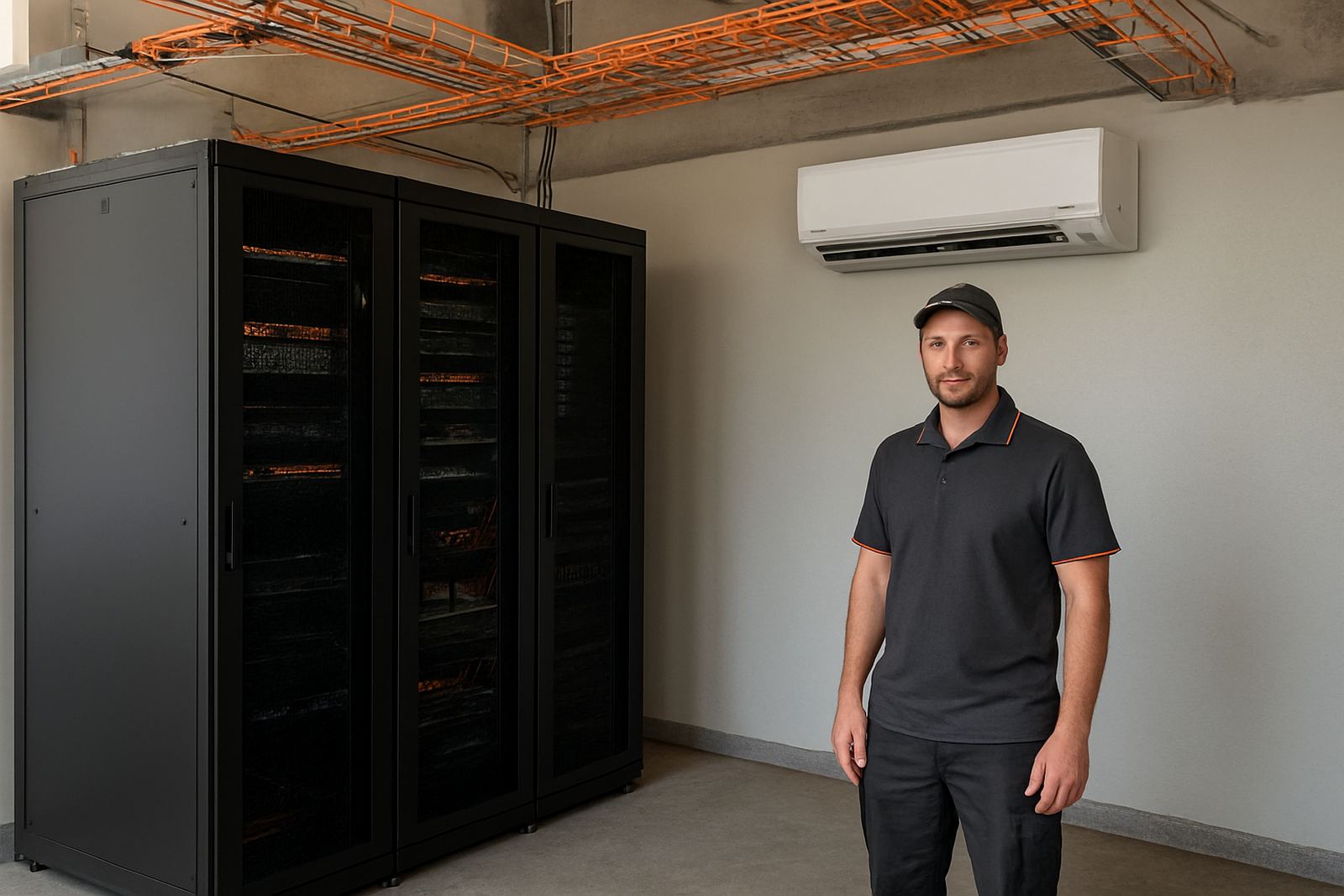
The biggest mistake is buying equipment before measuring the actual heat load and duty cycle. A room that only feels warm at midday might only need one correctly sized unit, while a records store or server room may need constant temperature control and backup arrangements.
Another common issue is poor placement. Units installed too close to high-heat plant rooms, dusty loading bays or direct sun fail sooner and use more power. We also see systems handed over without service access, which makes filter cleaning and fault finding slow and expensive.
- Undersized units that run flat out all day
- Cheap ducting with leaks, sagging or poor insulation
- Pumps installed without strainers or isolation valves
- Cold rooms built without enough clearance around the compressor set
- Backup power added after the main installation, then not matched properly
It also helps to think about the municipal maintenance team. If the system is too complicated for the people on site, small faults become long delays. Simple controls, labelled isolators and clear service records save money over the life of the site.
Layout Advice for Safe, Maintainable Sites
For public buildings, the best layout is one that keeps the public away from mechanical plant but still gives technicians quick access. Roof units, service yards and plant rooms should be grouped where possible, with sensible drain routes and enough space for lifting heavy parts later on.
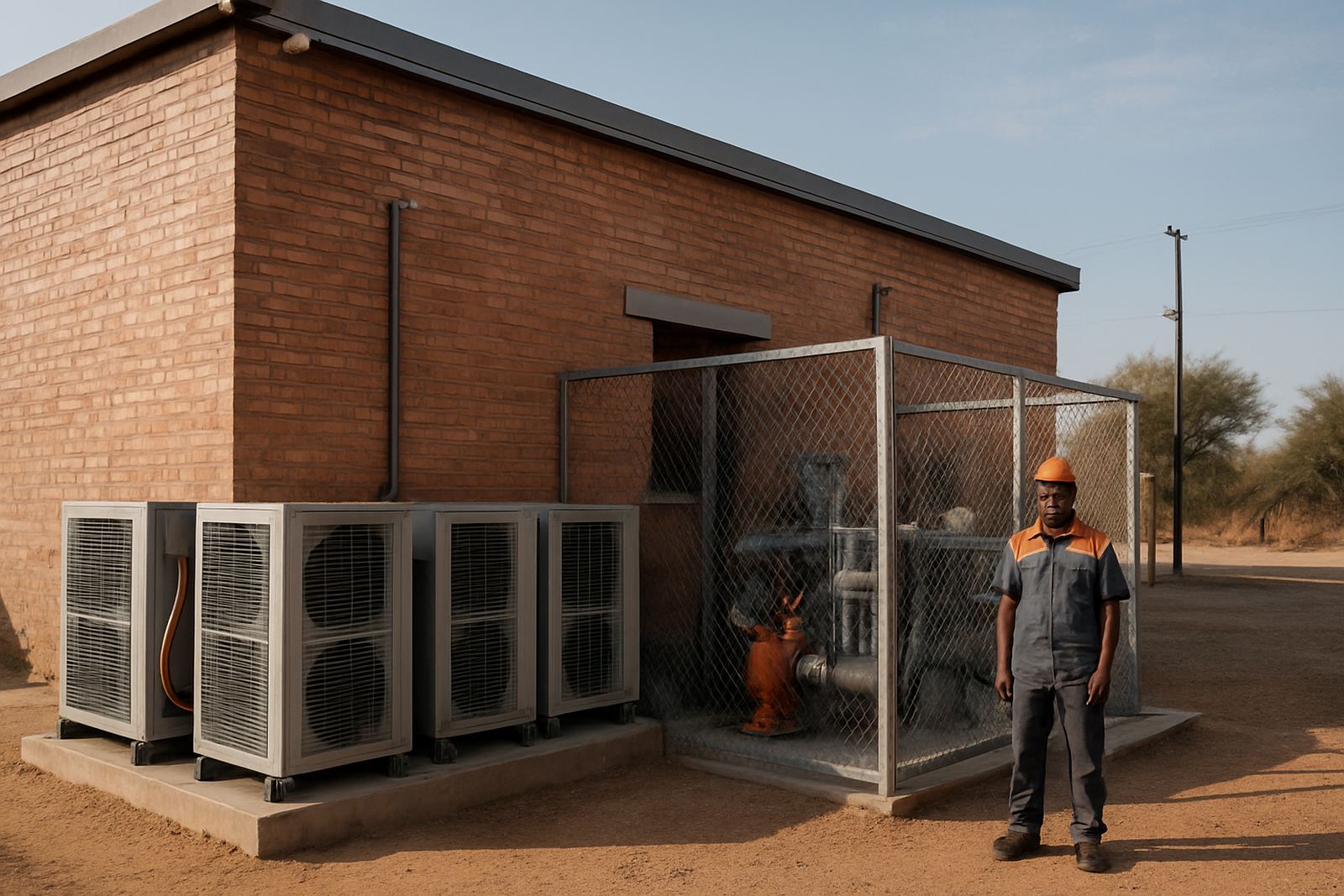
On pump installations, we usually plan for a dry area, low vibration and a practical pipe path back to the point of use. For ventilation, keep intake points away from exhausts and refuse handling areas. If a cold room is part of the site, the loading route should be short so doors are not left open too long.
This is where local knowledge matters. Sites in Kuruman and Upington may face heat and long supply runs, while Kimberley sites can be more exposed to dust and sudden demand changes. A good layout takes all of that into account before any wall is drilled.
Support, Repairs and Commissioning for Ongoing Use
Municipal sites need follow-through after installation. That means proper commissioning, testing, fault checks and handover notes that show what was installed and how it should be maintained. Without that, the first breakdown becomes a guessing game.
We support aircon servicing, refrigeration repairs, cold room builds, ventilation installations, pump installations, pump repairs, solar backup installation, auto aircon service and commissioning support across Kimberley, New Park, Roodepan, Galeshewe, Kuruman and Upington. Our workshop and field team can handle parts, stores, site checks and repairs with the sort of response public facilities need.
For planning, many municipal clients set aside an annual maintenance budget of R18 000 to R60 000 for small sites, R75 000 to R200 000 for larger depots and offices, and more where cold storage or water pumping is mission-critical. The right figure depends on the number of units, access, operating hours and how much downtime the site can carry.