What guesthouses in Kimberley usually need
A guesthouse normally starts with a simple problem: guests expect a quiet room, steady cooling and hot water comfort, even when the weather turns extreme. In Kimberley and surrounding areas, that means air-conditioning in bedrooms and lounges, extraction in bathrooms and kitchens, and backup planning for power dips and outages.
We work with owners who are upgrading a few rooms at a time, as well as properties fitting out a full building. The usual mix is split-type air-conditioning for bedrooms, ventilation for enclosed passage areas, small cold-room or upright refrigeration for kitchen storage, and solar backup for essential loads during load-shedding. If the property also runs a laundry or breakfast kitchen, the power and airflow plan needs to be sized properly, not guessed.
For guesthouse operators, the main concern is comfort without constant call-outs. A unit that is too small runs flat out in the Northern Cape heat and wears out quickly. One that is too large can short-cycle and leave rooms damp and uneven. Getting the sizing right from the start saves money, and a lot of complaints.
Room-by-room equipment that makes sense
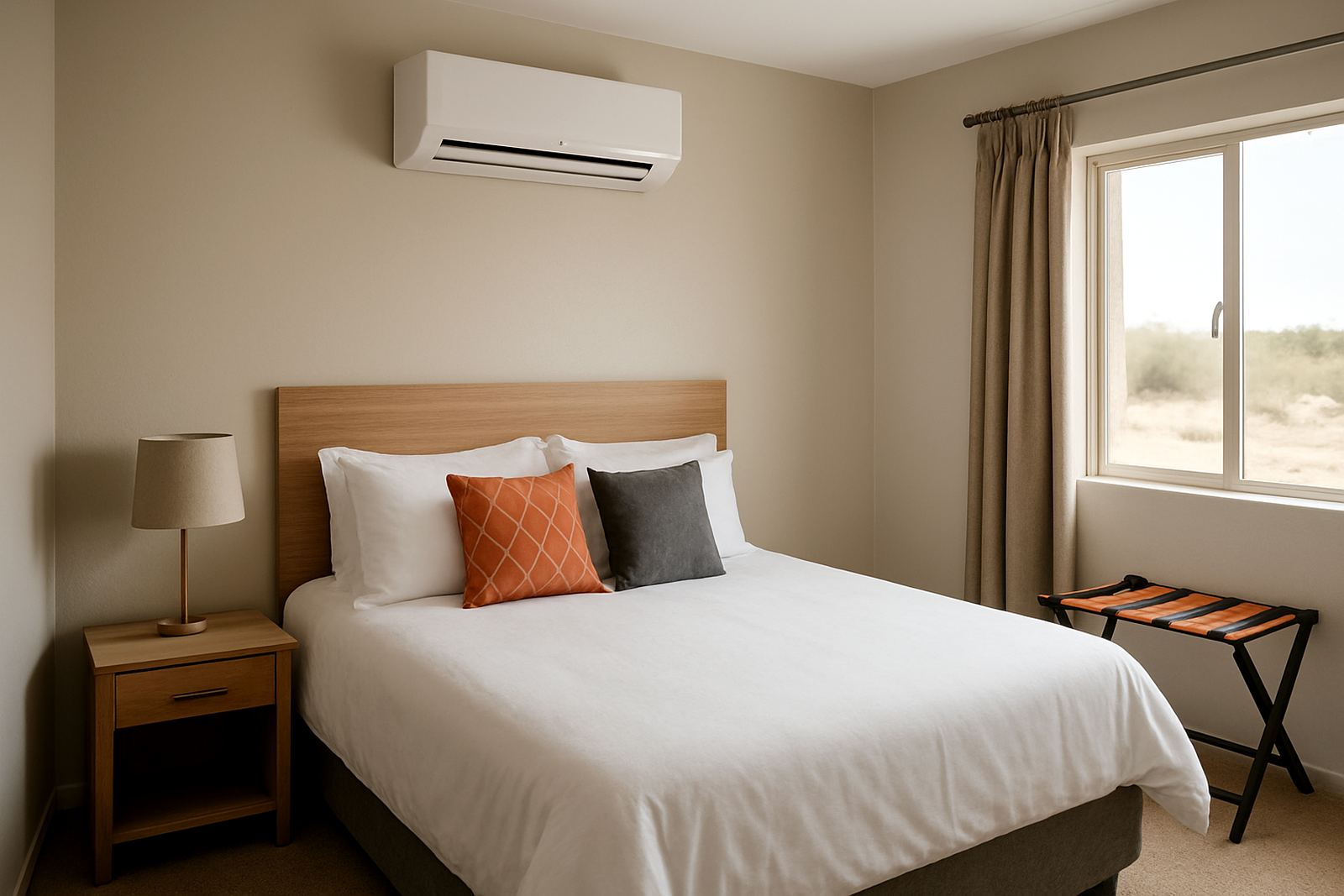
Different areas in a guesthouse need different equipment. Bedrooms need quiet operation and good thermostat control. Reception areas need fast pull-down on hot afternoons. Kitchens need refrigeration that can handle doors opening often and safe airflow around compressors. Staff areas may only need basic comfort cooling, but they still need reliable equipment.
- Bedrooms: wall-mounted split units sized to the room and insulation level
- Passages and shared areas: ventilation fans or ducted fresh air support where needed
- Kitchen and pantry areas: refrigeration, cold-room systems, and extraction where heat builds up
- Utility areas: pumps for pressure boosting, especially where water supply is uneven
- Electrical continuity: solar backup for selected circuits, internet, lights and critical cooling
In older buildings around New Park, Galeshewe and Roodepan, we often find mixed construction and patchwork wiring. That calls for proper assessment before equipment is selected. It is better to plan around the structure you have than to force a standard layout onto a building that doesnt suit it.
Planning for layout, noise and guest movement
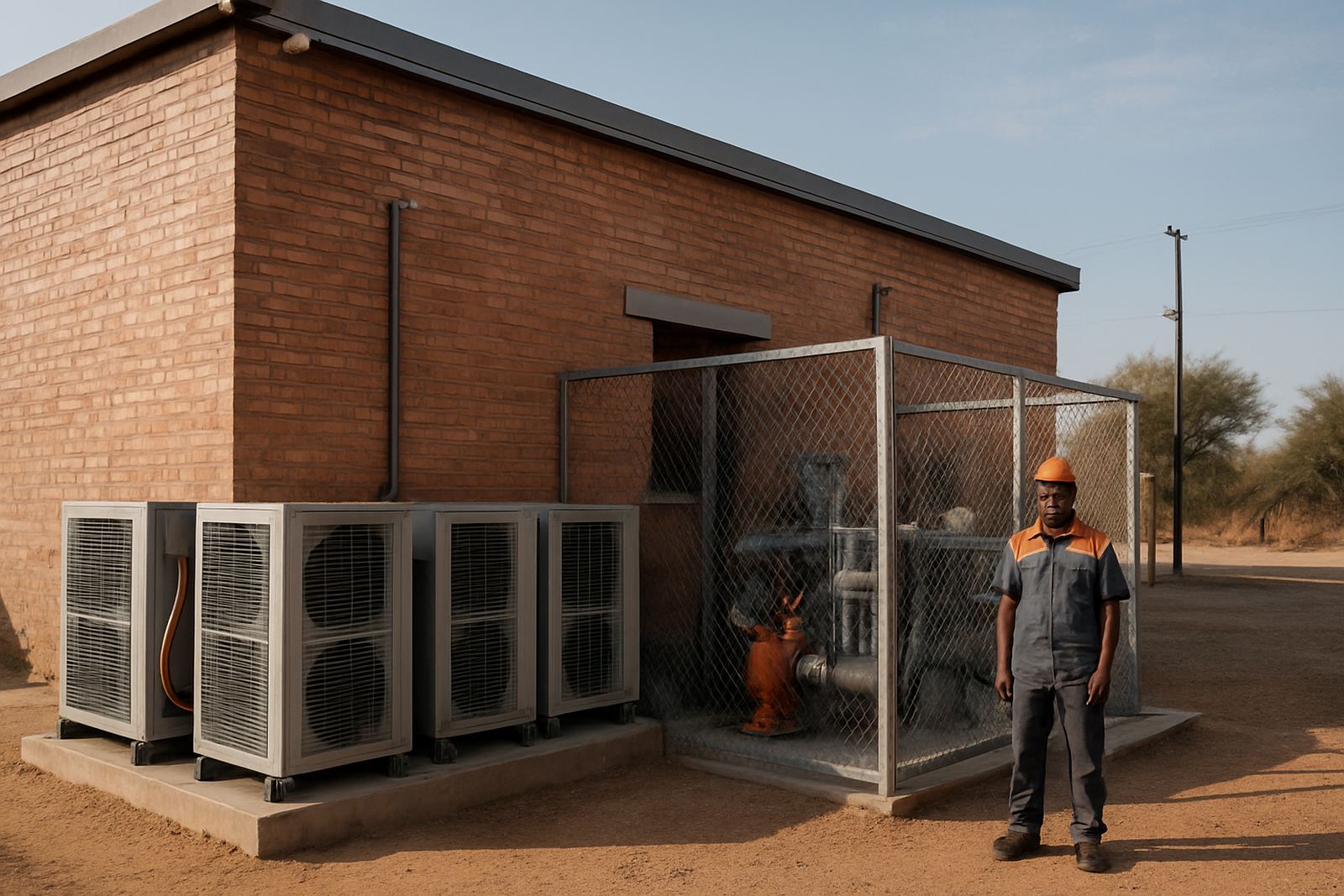
Guesthouse installation work has to respect guest movement, check-in times and sleeping hours. Outdoor units should not be placed where they rattle against bedroom walls or blow hot air into a courtyard. Drainage must be routed so it does not drip across walkways, paving or decorative areas. In dry months, dust is also a real issue, so outdoor placement and regular cleaning matter.
We usually advise owners to map the property into zones before buying equipment. That way you can decide which rooms need independent control, which communal spaces can share a solution, and where a backup system should be focused. A good layout also reduces running costs because you are not cooling empty areas or overworking the system in peak heat.
- Place condensers where service access is easy for cleaning and repairs
- Keep bedroom units away from direct bedhead air blast
- Allow for long cable runs only where they are properly protected
- Check drainage, stormwater paths and any municipal restrictions before starting
In some properties, a small change in unit position can make a room much quieter. That matters in hospitality because one noisy fan can lead to a bad review very quickly.
Common mistakes we see in hospitality upgrades
One of the biggest mistakes is buying by room count instead of by room size, roof exposure and occupancy pattern. A west-facing room in Kimberley needs different treatment from a shaded room in a masonry block. Another common issue is ignoring maintenance access. If a unit can only be reached by climbing over a ceiling void or squeezing behind a wardrobe, servicing becomes slow and expensive.
Guesthouse owners also sometimes forget that ventilation and cooling are related but not the same. A bedroom may feel cold enough while still having stale air, especially when windows stay closed for security. Kitchens and laundry areas can also build heat quickly, which puts strain on the rest of the building. Solar backup is another area where people often undersize the system. It should support the loads that matter most, not just a light or two.
We also see systems installed without proper commissioning. That leads to poor airflow, nuisance tripping and uneven temperatures. A unit can be technically fitted and still not perform correctly if it was not started and checked properly.
Budget ranges for guesthouses in Rand
Budget depends on property size, room count, cable routes, roof access and whether the work is a fresh installation or a replacement. As a broad guide, a single bedroom split air-conditioner supply and install can start from about R8 500 to R18 000, depending on size and site conditions. Larger rooms and longer runs can move higher.
For a small guesthouse doing 4 to 6 rooms plus a common area, owners often plan from around R45 000 to R120 000 for a phased air-conditioning upgrade, excluding major electrical changes. Solar backup for selected essential loads can begin around R35 000 for a modest setup and rise from there if you want longer run time or more circuits covered. Cold-room or specialised refrigeration work is priced according to size, insulation and duty cycle.
- Minor servicing and fault finding: from about R650 per call-out, depending on area
- Replacement of worn parts: priced after inspection and parts availability
- Phased upgrades: useful for owners who want to improve one wing at a time
- Full-property planning: best for new guesthouses or major renovations
These figures are starting points only. We prefer to inspect the site, then quote on the actual rooms, roof space and electrical condition. That avoids surprises once work starts.
How Modern Equipment supports hospitality owners
Modern Equipment has been serving Kimberley and the Northern Cape since 2002, with a base in New Park and work across areas such as Roodepan, Galeshewe, Kuruman and Upington. For guesthouses, that local presence matters because service calls are often time-sensitive and guest bookings cannot wait for slow parts sourcing.
Our team handles aircon installation, servicing, refrigeration repairs, cold room builds, ventilation installations, pump installations, pump repairs, solar backup installation, auto aircon service and commissioning support. For guesthouses, the useful combination is usually a practical mix of cooling, airflow, backup power and maintenance planning. Lerato Mokoena handles sales support, Pieter Johannes Botha oversees the workshop side, Ayanda Ndlovu coordinates projects, Charlene Daniels manages parts and stores, Thabo Molefe handles field service, and Nadia September supports customers day to day.
If you are upgrading a property, opening a new guesthouse or sorting out repeated faults, it helps to have one supplier who understands the rooms, the utility areas and the pressure of keeping guests comfortable. We work in a straightforward way, with clear pricing and proper commissioning, so the system is ready for use and not just switched on.