Clinic work starts with stable air and temperature control
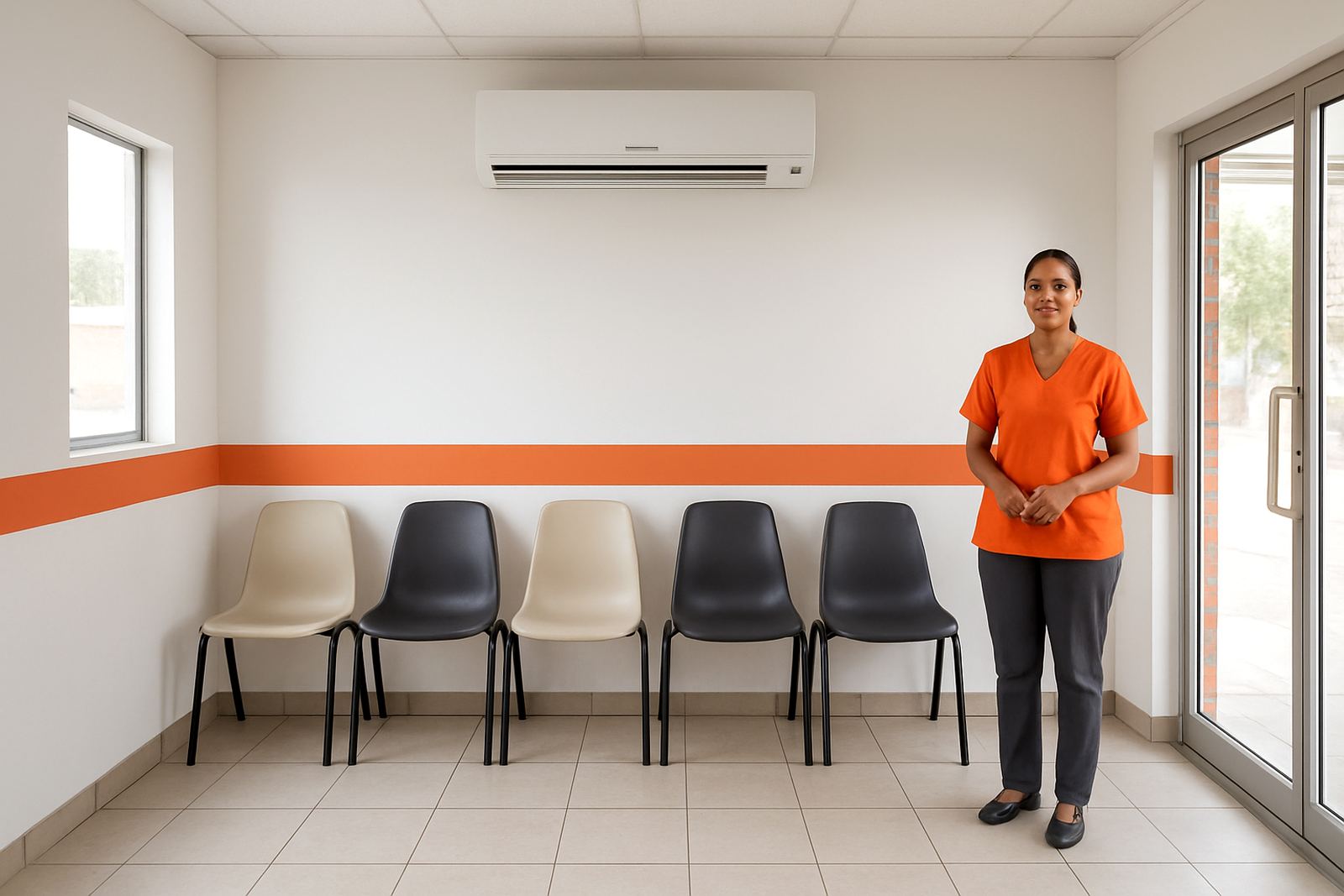
A clinic is not like a house or a shop. People move through waiting rooms, treatment rooms, dispensary areas and sometimes small procedure spaces, so the air has to feel clean, controlled and easy to manage. In Kimberley, where summer heat can push indoor temperatures up quickly, a clinic without proper cooling becomes uncomfortable fast and staff end up fighting the room all day.
For new builds and upgrades, we look at patient flow, room sizes, window exposure, door opening patterns and where heat loads build up. A small consulting room may only need a compact wall unit, while a busy reception area may need a larger split system or ducted solution. In some facilities, extraction and fresh air are just as important as cooling, especially where chemicals, cleaning products or medical waste handling areas are involved.
We work from New Park in Kimberley and support clinics across Roodepan, Galeshewe, Kuruman and Upington. That matters because site conditions differ. A clinic in Upington may need stronger heat handling and backup planning, while a clinic closer to the central business area may need quieter equipment and tidy pipe runs to suit a tighter building layout.
Typical equipment set for a clinic fit-out
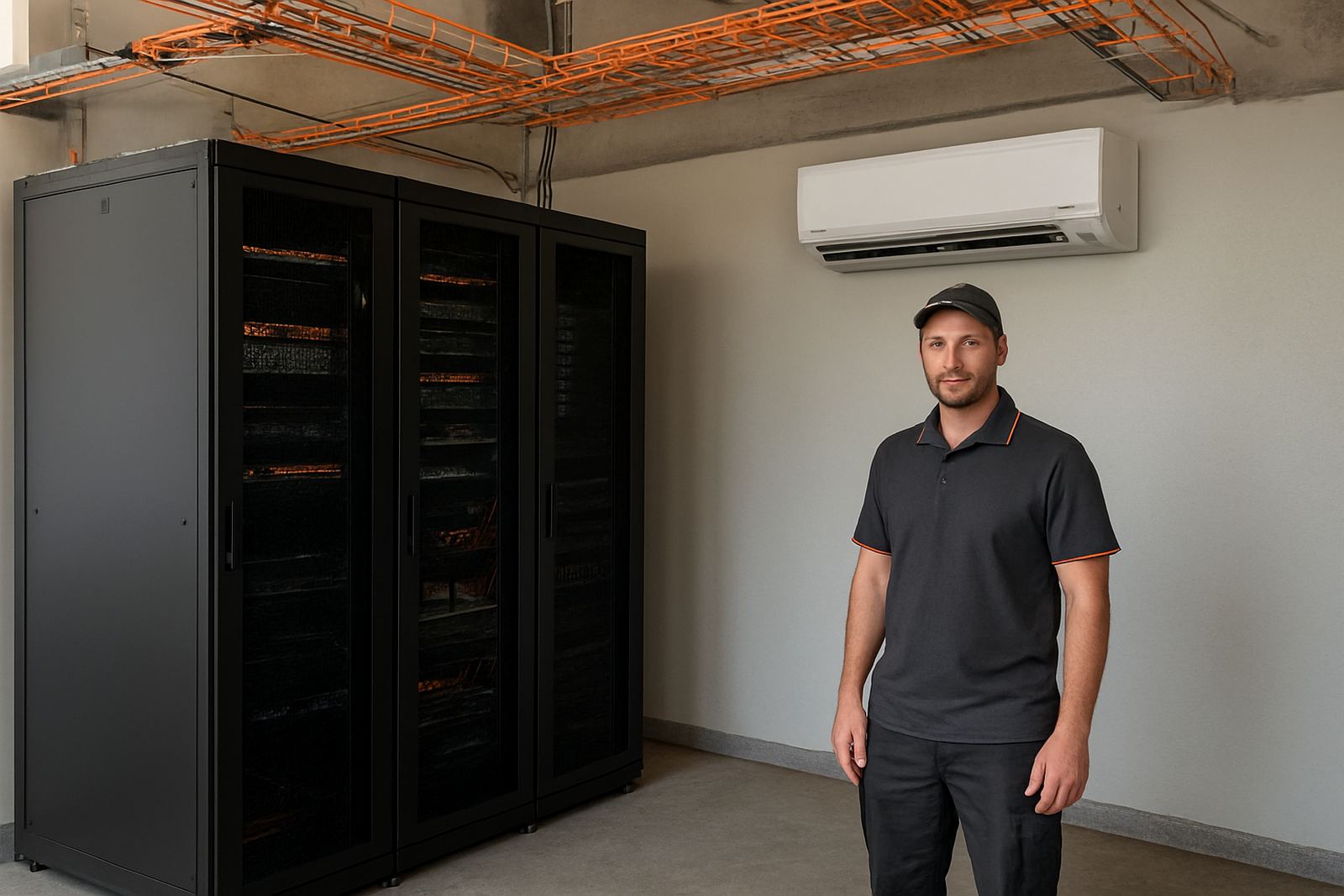
Most clinics need more than one type of equipment, and it is usually better to plan the whole site rather than treat each room on its own. A practical clinic package often includes air-conditioning, ventilation, fridge and cold room support, water pumps and backup power for essential points.
- Split or cassette air-conditioning units for consulting rooms, reception and admin areas
- Ventilation fans or ducted extraction for toilets, treatment rooms and enclosed storage spaces
- Cold room panels and refrigeration equipment for medicine storage or bulk consumables
- Small medical fridge support where secure low-temperature holding is needed
- Water pumps for pressure support where municipal supply is weak or inconsistent
- Solar backup or inverter-linked supply for critical loads during load shedding
- Auto aircon service support for mobile clinic vehicles and outreach units
In many Northern Cape clinics, backup is not optional. Load shedding, municipal interruptions and summer peak demand can all interrupt service. We can size a solution so the most important parts of the building stay running, even if the entire site does not need full backup. That keeps costs under control and gives the clinic a clear priority list.
How to plan the layout before equipment goes in
Good planning saves money because it avoids rework. Before any installation, we check where the sun hits the building, where staff and patients enter, and how the rooms are used during the day. If the reception counter area sits in direct afternoon sun, for example, that room will need a different solution than a shaded consulting room on the south side. If a dispensary opens into a corridor, the air pattern must not dump cold air where people queue.
The biggest gain often comes from matching capacity to usage. A room that sees short patient visits does not need the same setup as a treatment room with equipment running for hours. We also look at maintenance access. Filters must be reachable, drain lines must be clear, and the outdoor units need a position where dust does not block airflow every second week. Kimberley dust and wind can be tough on poorly placed systems.
For refrigeration and cold storage, we check floor space, insulation, door swing, and whether the room can hold temperature during power interruptions. If the clinic handles vaccines or temperature-sensitive stock, the cold space needs proper monitoring and sensible backup. A rushed plan often looks fine on day one, then costs more when the first power cut or heat wave hits.
Common mistakes that cost clinics time and money
We often see the same problems repeat across health facilities. The first is undersized cooling. Someone buys equipment for a room size on paper, but ignores staff count, computer loads, glass areas and patient traffic. The unit then runs flat out and still leaves the room warm.
The second is poor pipe and drain routing. If the drain line is badly placed, it starts leaking into ceilings or walls. In a clinic, that becomes a hygiene issue very quickly. The third is putting in equipment without planning for maintenance access. If filters need a ladder and two people just to service a unit, it will be neglected. That leads to dirty air, higher power use and poor performance.
Other common mistakes include:
- Ignoring backup power for medicine fridges and essential treatment rooms
- Installing ventilation that moves air in the wrong direction
- Using one large system for the whole building when separate zones would work better
- Leaving outdoor units exposed to dust, theft risk or direct hot wind
- Skipping commissioning and then expecting the system to perform correctly from day one
Commissioning support matters. A proper startup checks temperatures, fan operation, controls, condensate drainage and electrical load. Without that, small faults can go unnoticed until the first busy week, and then the sevice call comes at the worst time.
Budget ranges for clinic projects in Rand
Budgets vary a lot depending on room count, backup requirements and whether the work is a small upgrade or a full fit-out. For a basic consulting room air-conditioning installation, a rough range might start from R8 500 to R18 000 per room, depending on capacity, pipe length and access. Reception or larger shared spaces can run from R18 000 to R45 000 per area if bigger units or multiple units are needed.
Ventilation additions for toilets, storerooms or treatment areas can add from R4 500 to R20 000, depending on the ducting, fans and control work. A small cold room or medicine storage setup may begin around R35 000 and can move well beyond R100 000 when insulation, refrigeration plant and controls are included. Solar backup or inverter-linked support for essential clinic loads can start from about R25 000 for a limited setup and increase based on battery size and the number of circuits protected.
For clinics in more remote parts of the Northern Cape, travel, access and response times must also be included in the project thinking. It is usually better to budget for proper installation and maintenance access from the start than to patch problems later. A clinic that stays cool, quiet and stable saves staff hours and avoids medication risk, which is worth more than chasing the cheapest quote.
Local support for health facilities in Kimberley and beyond
Modern Equipment has been serving the region since 2002 from New Park in Kimberley. Our team includes Marius Jacobus van der Merwe, Lerato Mokoena, Pieter Johannes Botha, Ayanda Ndlovu, Charlene Daniels, Thabo Molefe and Nadia September, and we support clients with sales, workshop work, projects, parts and field service. That mix helps when a clinic needs more than a single trade visit.
We handle aircon installation and servicing, refrigeration repairs, cold room builds, ventilation installations, pump installations, pump repairs, solar backup installation, auto aircon service and commissioning support. For clinics, that means one supplier can assist with comfort cooling, cold storage, water pressure support and essential backup planning. It also makes spare parts and follow-up service easier to manage over time.
Whether the project is a small neighbourhood clinic in Galeshewe or a larger facility in Kuruman or Upington, the aim is the same: keep the air moving properly, keep rooms comfortable and protect the equipment that matters to patient care.
- Base: New Park, Kimberley
- Email: info@modernequipment.co.za
- Areas covered: New Park, Kimberley, Roodepan, Galeshewe, Kuruman, Upington